
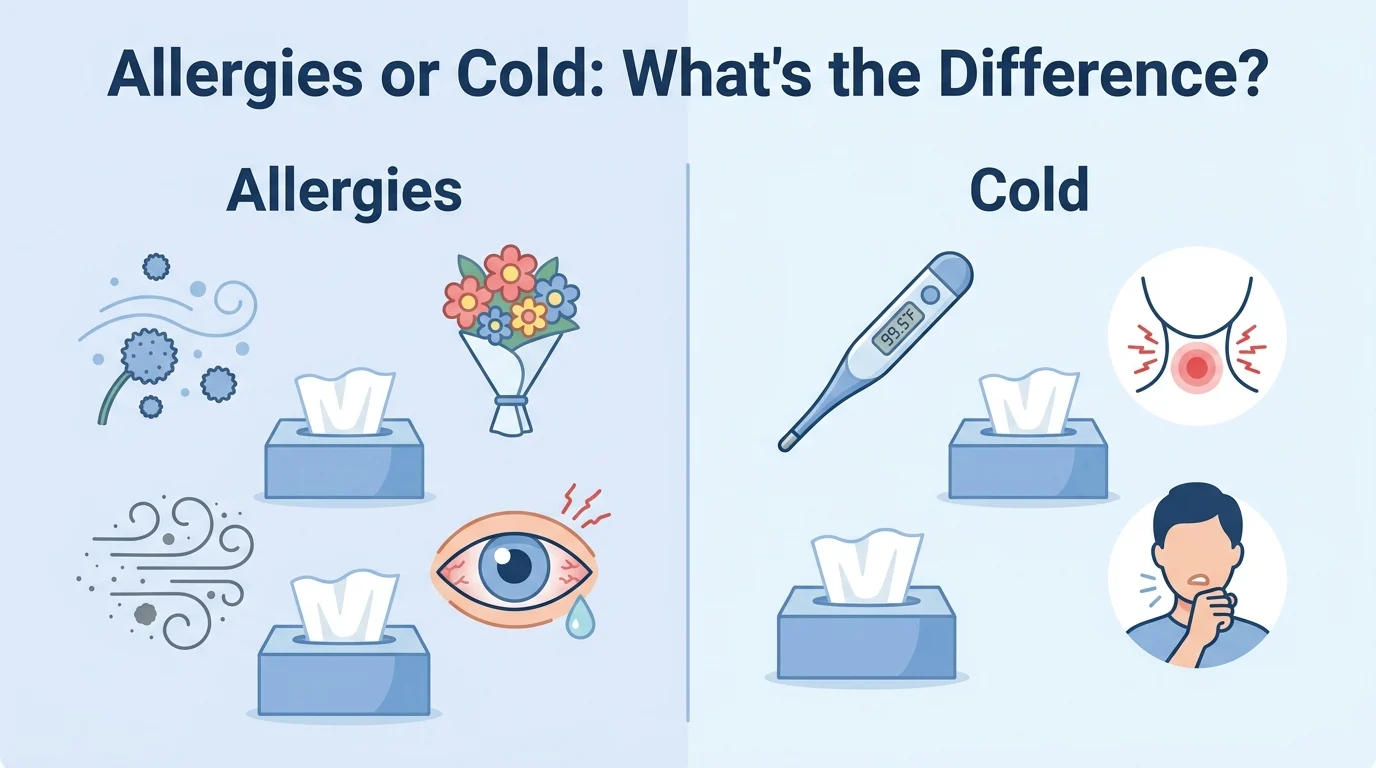
Quick Ans: Allergies and a cold can cause similar symptoms, such as a runny or stuffy nose and sneezing, but they have different causes. A cold is caused by a virus, while allergies happen when the immune system reacts to substances such as pollen, dust, or pet dander. Itchy eyes and recurring symptoms often point toward allergies.
Allergies or cold can be difficult to tell apart because both can make you sneeze, develop a runny nose, or feel congested. The key difference is what causes the symptoms. A cold develops after exposure to a virus, while allergies occur when your immune system reacts to an otherwise harmless substance.
Knowing the difference can help you understand what may be happening when you suddenly feel congested or start sneezing. Colds often develop gradually and may include a sore throat, cough, fatigue, or mild body aches. Allergies can continue for weeks or months when you’re repeatedly exposed to a trigger.
The symptoms can overlap, so no single symptom always provides a definite answer. Looking at the pattern, duration, and combination of symptoms can give you useful clues.
Quick Answer and Key Takeaway
| Feature | Allergies | Cold |
|---|---|---|
| Main cause | Allergens | Virus |
| Fever | Uncommon | Sometimes |
| Itchy eyes | Common | Less common |
| Sneezing | Common | Common |
| Runny nose | Common | Common |
| Body aches | Uncommon | Possible |
| Typical duration | Can persist with exposure | Usually improves within days |
Key takeaway: Itchy eyes, repeated symptoms, and a lack of fever often occur with allergies. A sore throat, cough, fatigue, or body aches are more commonly associated with a cold.
Definition and Explanation
What Are Allergies?
Allergies occur when the immune system reacts to a substance that is usually harmless. Common triggers include pollen, dust mites, mold, and pet dander.
Symptoms can include:
- Sneezing
- Itchy or watery eyes
- Runny nose
- Nasal congestion
- Itchy nose or throat
Allergy symptoms may appear repeatedly when you encounter a particular trigger.
What Is a Cold?
A cold is a viral infection affecting the upper respiratory system. Many different viruses can cause cold symptoms.
Common symptoms include:
- Runny or stuffy nose
- Sneezing
- Sore throat
- Cough
- Mild fatigue
- Headache or body aches
Unlike allergies, a cold is contagious and can spread from person to person.
Is This a Grammar, Usage, or Vocabulary Issue?
Allergies or cold is not a grammar issue. It is a health related comparison involving two different causes of similar symptoms.
The phrase can be used when someone is trying to determine whether their symptoms are more consistent with allergies or a common cold.
For example:
“I keep sneezing and my eyes are itchy. Is it allergies or a cold?”
The question asks about the possible cause of the symptoms.
Real World Usage Examples
Everyday Situation
“I’ve been sneezing all morning, and my eyes are itchy. I think it might be allergies.”
Recap: Itchy eyes and recurring sneezing can occur with allergies.
Workplace
“I’ve had a stuffy nose and sore throat since yesterday, so I may have a cold.”
Recap: A recent onset with a sore throat can occur with a cold.
Seasonal Situation
“My symptoms appear every spring when pollen levels rise.”
Recap: Symptoms that repeatedly appear during exposure to a particular trigger may suggest allergies.
Regional or Global Usage Differences
The terms allergies and cold have the same basic meanings across major varieties of English.
There is, however, a useful vocabulary difference between cold and common cold. The phrase common cold is often used in health information to distinguish this viral illness from other respiratory conditions.
The spelling of allergies does not normally change between American and British English. The word allergy has the plural form allergies.
When NOT to Use It
Avoid assuming that symptoms have only one possible cause.
- Don’t assume every runny nose means you have a cold.
- Don’t assume itchy eyes always prove that you have allergies.
- Don’t use symptom patterns as a substitute for professional medical advice.
- Don’t assume antibiotics treat a common cold because colds are caused by viruses.
- Don’t ignore severe, unusual, or worsening symptoms.
- Don’t assume allergies are contagious.
- Don’t assume every respiratory illness is simply a cold or allergies.
Common Mistakes and Corrections
| Correct Sentence | Incorrect Sentence | Why |
|---|---|---|
| Allergies can cause itchy eyes. | Allergies causes itchy eyes. | Allergies is plural, so use cause. |
| A cold can cause a cough. | A cold can causes a cough. | Use can cause, not can causes. |
| My allergies are worse in spring. | My allergies is worse in spring. | Allergies takes the plural verb are. |
| I think I have a cold. | I think I have cold. | A singular countable illness normally uses an article. |
| She has allergies. | She have allergies. | Use has with she. |
Simple Decision Rule
Think about the pattern: itchy or watery eyes and recurring symptoms may occur with allergies, while sore throat, cough, fatigue, and a recent onset may occur with a cold. Symptoms can overlap, so don’t rely on one sign alone.
Exercises With Answers
Choose allergies or a cold based on the description.
- Her eyes are itchy and watery whenever she is around pollen.
- He developed a sore throat and cough two days ago.
- She gets the same sneezing symptoms every spring.
- He has mild body aches and feels tired.
- Her symptoms continue whenever she is exposed to dust.
Answers
- Allergies
- A cold
- Allergies
- A cold
- Allergies
Related Concepts and Comparisons
Allergies and colds can both affect the nose and throat, but several related conditions can produce similar symptoms.
| Condition | Typical Cause | Common Clues |
|---|---|---|
| Allergies | Allergens | Itching, sneezing, watery eyes |
| Common cold | Virus | Sore throat, cough, congestion |
| Flu | Influenza virus | Fever, fatigue, body aches |
| Sinus infection | Various causes | Facial pressure, congestion |
These patterns are general clues rather than a diagnosis.
FAQs
How can you tell if it is allergies or a cold?
Look at the overall pattern. Itchy eyes and symptoms that return after exposure to a trigger are common with allergies, while sore throat, cough, fatigue, and body aches can occur with a cold.
Can allergies cause a runny nose like a cold?
Yes. Both allergies and colds can cause a runny or stuffy nose. Other symptoms and the timing of symptoms can help distinguish them.
Do allergies cause a fever?
Fever is not a typical allergy symptom. If you have a fever along with respiratory symptoms, an infection may be more likely, although symptoms can have different causes.
How long does a cold usually last?
A common cold generally improves on its own over several days, although some symptoms, especially coughing, can last longer.
Can allergies last for weeks?
Yes. Allergy symptoms can continue for weeks or longer when you’re repeatedly exposed to the substance that triggers them.
Are allergies contagious like a cold?
No. Allergies are an immune response and do not spread from person to person. A cold, however, is caused by a virus and can be contagious.
Can you have allergies and a cold at the same time?
Yes. A person can experience allergies while also having a viral infection. When symptoms overlap, identifying the cause can be difficult.
Are itchy eyes more common with allergies or a cold?
Itchy and watery eyes are more commonly associated with allergies. They can occasionally occur with other conditions, so they aren’t an absolute test.
When should you seek medical advice?
Seek professional medical advice if symptoms are severe, unusual, persistent, or getting worse, or if you have difficulty breathing or other concerning symptoms.
Conclusion
Understanding allergies or cold starts with recognizing that the two conditions have different causes. Allergies result from an immune reaction to substances such as pollen, dust, or pet dander. A cold is caused by a virus and can spread between people.
Both conditions can produce sneezing, congestion, and a runny nose, which is why they are easy to confuse. Itchy or watery eyes and symptoms that repeatedly appear after exposure to a trigger can occur with allergies. A sore throat, cough, fatigue, or body aches can occur with a cold.
Still, symptoms overlap, and these general patterns cannot confirm a diagnosis. If you’re unsure about persistent or severe symptoms, speaking with a healthcare professional is the safest approach.
Practical tip: Instead of focusing on one symptom, consider the entire pattern, including when symptoms started, how long they last, and whether they appear after exposure to a particular trigger.