
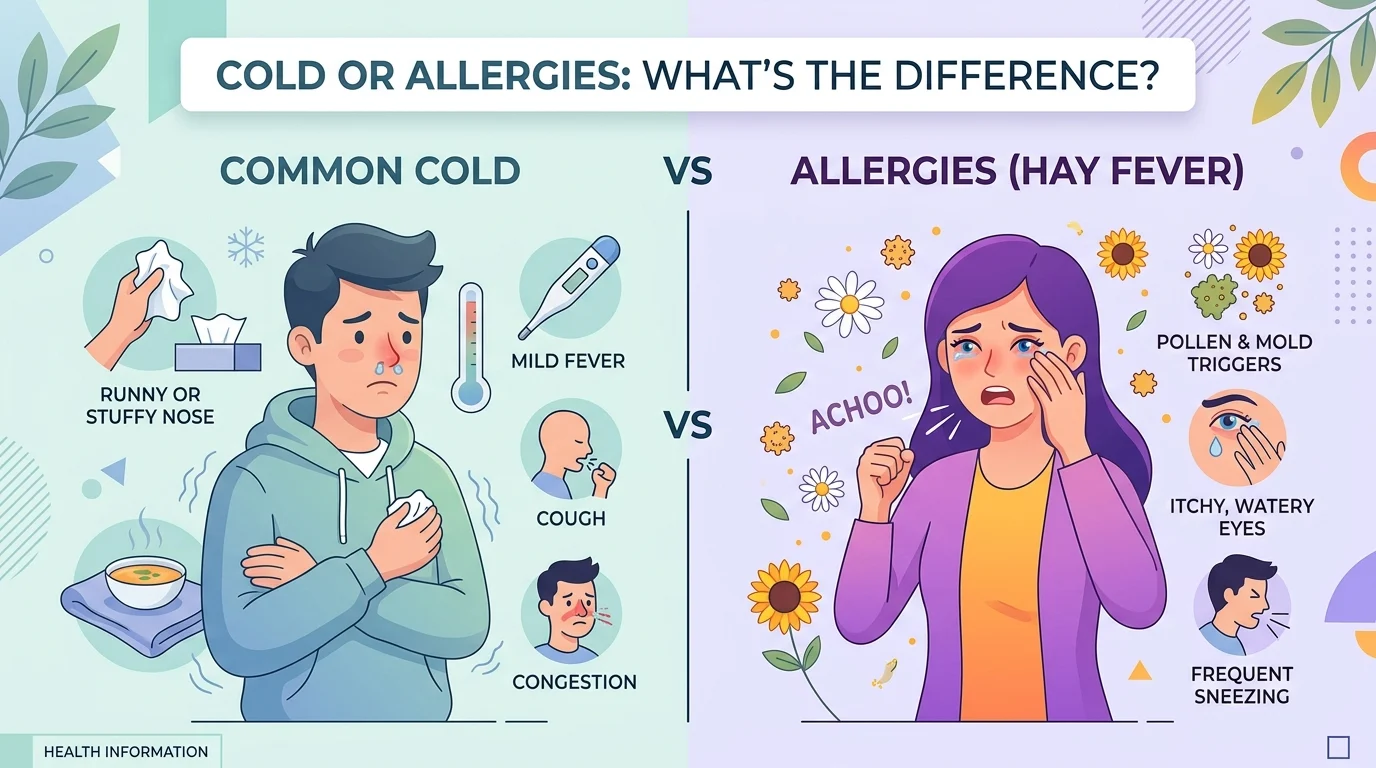
Quick Ans: A cold and allergies can cause similar symptoms, including sneezing, a runny nose, and congestion. However, a cold usually comes from a viral infection and often causes a sore throat, cough, or mild fever. Allergies result from exposure to allergens and commonly cause itchy, watery eyes. Symptoms can overlap, so patterns and duration can provide useful clues.
Cold or allergies can be difficult to tell apart because both can cause sneezing, a runny nose, nasal congestion, and coughing. However, these conditions have different causes. A cold results from a viral infection, while allergies happen when the immune system reacts to an allergen such as pollen, pet dander, or dust.
Fortunately, a few clues can help you understand the difference. For example, itchy and watery eyes often point toward allergies. On the other hand, a sore throat, mild body aches, or a low grade fever can occur with a cold.
Timing also matters. Cold symptoms usually develop after exposure to a virus and improve within days. Meanwhile, allergy symptoms can continue as long as you remain exposed to a trigger.
Still, symptoms alone cannot always identify the cause. If symptoms become severe, last unusually long, or cause breathing problems, seek medical advice.
Quick Answer and Key Takeaway
| Symptom | Cold | Allergies |
|---|---|---|
| Runny nose | Common | Common |
| Stuffy nose | Common | Common |
| Sneezing | Common | Common |
| Itchy eyes | Less common | Common |
| Sore throat | Common | Less common |
| Cough | Common | Sometimes |
| Fever | Sometimes | Usually absent |
| Body aches | Sometimes | Uncommon |
| Symptoms lasting weeks | Less typical | Common with ongoing exposure |
Key takeaway: Itchy eyes and recurring symptoms around a specific trigger often suggest allergies, while sore throat, cough, body aches, or fever can occur with a cold.
Definition and Explanation
What Is a Cold?
A common cold is a viral infection of the upper respiratory tract. Different respiratory viruses can cause colds, and symptoms often include a runny or stuffy nose, sneezing, cough, sore throat, headache, and mild body aches.
Generally, cold symptoms peak within a few days and improve on their own. Most colds last less than a week, although symptoms such as coughing can sometimes continue longer.
What Are Allergies?
Allergies occur when the immune system reacts to substances that are usually harmless, such as pollen, pet dander, or dust mites. As a result, you may experience sneezing, congestion, a runny nose, and itchy or watery eyes.
Unlike a cold, allergies do not come from a virus. Moreover, allergy symptoms can continue for weeks or longer when exposure to the trigger continues.
Is This a Medical or Symptom Difference?
Cold or allergies is a health related comparison rather than a grammar or vocabulary question. Although the symptoms overlap, their causes differ.
A cold involves a viral infection. In contrast, allergies involve an immune response to an allergen. Therefore, the same runny nose can have very different causes.
Real World Examples
Example 1: Sudden Symptoms
You develop a sore throat, cough, and congestion after someone around you becomes sick. These symptoms can fit a cold, although symptoms alone cannot confirm the cause.
Example 2: Seasonal Pattern
Every spring, you develop sneezing, a runny nose, and itchy, watery eyes. If the symptoms return with pollen exposure, allergies become a possible explanation.
Example 3: Recurring Symptoms
Your symptoms improve when you stay away from a particular environment and return when you encounter the same trigger. That pattern can suggest an allergy.
Cold or Allergies: Key Differences
Itchy Eyes
Itchy, watery eyes strongly favor allergies over a typical cold. However, symptoms can overlap, so this sign alone cannot establish a diagnosis.
Fever
A cold can sometimes cause a low grade fever, particularly in children. Seasonal allergies generally do not cause fever.
Sore Throat
A sore throat commonly occurs with a cold. In contrast, allergies can sometimes cause throat irritation, but a sore throat is less typical.
Duration
A cold usually improves within days. Allergy symptoms, however, can continue while you remain exposed to an allergen.
When NOT to Assume It Is Just a Cold or Allergies
Don’t automatically assume that every runny nose or cough comes from a cold or allergies.
Consider medical advice if:
- Your symptoms keep getting worse.
- Symptoms persist longer than expected.
- You develop significant sinus pain.
- You have trouble breathing or shortness of breath.
- You cough up blood.
- You have symptoms that concern you or interfere significantly with daily activities.
Mayo Clinic recommends immediate medical attention for symptoms such as coughing up blood, pain, or shortness of breath.
Also, other respiratory illnesses can produce symptoms similar to a cold or allergies. For example, COVID 19 and flu can overlap with cold symptoms, so testing may sometimes be appropriate.
Common Mistakes and Corrections
| Common Assumption | Better Understanding | Why |
|---|---|---|
| Itchy eyes always mean allergies. | Itchy eyes often occur with allergies. | Symptoms can overlap. |
| A runny nose always means a cold. | A runny nose can occur with both. | Both conditions commonly cause it. |
| Allergies cause fever. | Allergies usually do not cause fever. | Fever can point toward an infection. |
| A cough always means a cold. | Colds commonly cause coughs, but allergies can sometimes cause them too. | Symptoms overlap. |
| Symptoms lasting weeks must be a cold. | Persistent symptoms can occur with allergies. | Ongoing exposure can prolong allergy symptoms. |
Simple Decision Rule
Think about the pattern, not just one symptom. Itchy eyes and recurring symptoms after allergen exposure can suggest allergies, while sore throat, body aches, cough, or fever can occur with a cold. However, only a healthcare professional can determine the cause when symptoms are unclear or concerning.
Exercises With Answers
Choose the condition that best matches each description.
- Sneezing with itchy, watery eyes every spring.
- Runny nose with a sore throat after recent illness exposure.
- Symptoms that return whenever you encounter pet dander.
- Congestion with mild body aches and a cough.
Answers
- Allergies
- Cold
- Allergies
- Cold
These answers describe common patterns rather than definitive diagnoses.
Related Concepts and Comparisons
Cold symptoms can overlap with several other respiratory conditions. For example, flu and COVID 19 can also cause cough, sore throat, congestion, fever, or tiredness. Therefore, symptoms alone may not always distinguish one condition from another.
FAQs
How can I tell if I have a cold or allergies?
Look at the overall pattern. Itchy eyes, recurring seasonal symptoms, and reactions to specific triggers can suggest allergies, while sore throat, body aches, cough, or fever can occur with a cold.
Can allergies cause a runny nose?
Yes. Allergies commonly cause a runny or stuffy nose. However, colds can cause the same symptoms, so a runny nose alone cannot distinguish between them.
Do allergies cause a fever?
Seasonal allergies generally do not cause fever. Therefore, a fever can suggest an infection rather than a typical allergy.
Can a cold cause itchy eyes?
Itchy eyes are less typical of a cold and occur more often with allergies. Still, symptoms can overlap between conditions.
How long does a cold usually last?
Most colds improve within several days and usually last less than a week, although some symptoms can continue longer.
How long can allergies last?
Allergy symptoms can continue as long as you remain exposed to the trigger. Seasonal allergies can therefore last for weeks or longer.
Can allergies cause a cough?
Yes. Allergies can sometimes cause coughing, although cough is generally more common with a cold.
Should I see a doctor for cold or allergy symptoms?
Seek medical advice when symptoms become severe, worsen, persist unexpectedly, or cause breathing problems. In particular, shortness of breath requires prompt medical attention.
Conclusion
Knowing the difference between cold or allergies can help you understand why symptoms appear, but the two conditions can look very similar. Both can cause sneezing, congestion, and a runny nose. However, allergies often bring itchy or watery eyes and can return whenever you encounter a particular trigger. Meanwhile, a cold can cause a sore throat, cough, mild body aches, or fever.
Timing provides another useful clue. A cold usually improves within days, whereas allergies can continue while you remain exposed to an allergen. Still, these patterns cannot replace professional medical evaluation when symptoms are severe or unclear.
Also, remember that flu, COVID 19, and other respiratory conditions can produce similar symptoms. Therefore, don’t rely on one symptom to identify the cause.
Practical tip: Track when your symptoms start, how long they last, and whether a particular trigger makes them worse. This information can help you discuss your symptoms more clearly with a healthcare professional.