
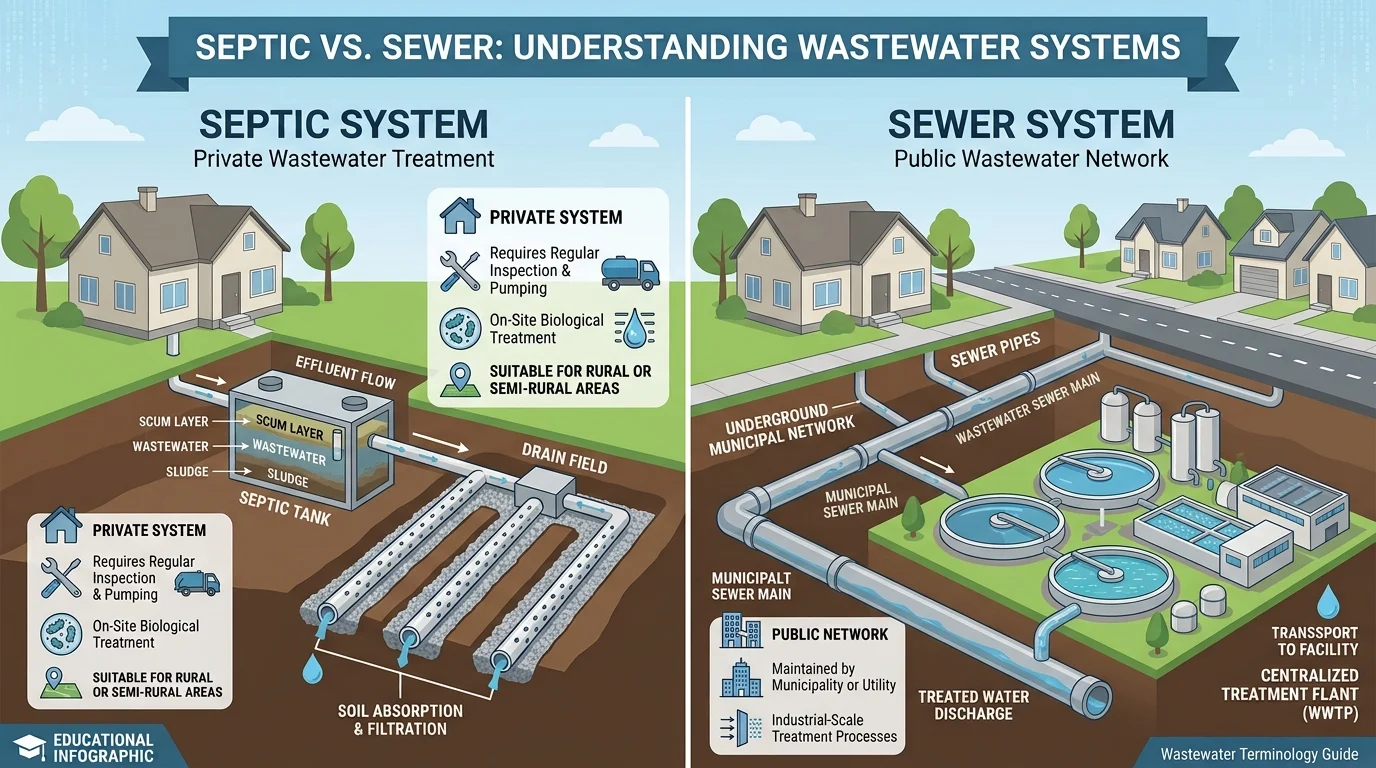
Quick Ans: Septic and sewer systems both manage wastewater, but they work differently. A septic system treats and stores household wastewater on the property using a septic tank and drain field. A sewer system carries wastewater through underground pipes to a centralized treatment facility. The main difference is where wastewater is treated and managed.
Septic vs sewer is an important comparison for homeowners, renters, and anyone buying or building a property. Both systems remove wastewater from homes, but they rely on completely different methods.
A septic system is an independent wastewater treatment system located on or near the property. Wastewater flows into a septic tank, where solids settle and natural treatment occurs. Liquid wastewater then moves into a drain field for further treatment.
A sewer system connects a property to a larger public wastewater network. Household wastewater travels through underground sewer pipes to a centralized treatment plant.
Knowing the difference matters when you’re purchasing a home, estimating maintenance costs, or deciding how a property handles wastewater. The words also appear frequently in real estate listings and home inspection reports.
Quick Answer and Key Takeaway
The main difference between septic and sewer is how and where wastewater is treated.
Septic: Wastewater is treated through a private system located on the property.
Sewer: Wastewater travels through a public or shared underground network to a centralized treatment facility.
In simple terms:
Septic = private wastewater system
Sewer = connected wastewater network
Septic vs Sewer: Definition and Explanation
What Is a Septic System?
A septic system is a private wastewater treatment system commonly used in areas without access to a public sewer network.
Wastewater from toilets, sinks, showers, and other household sources flows into a septic tank. Solid materials settle inside the tank, while liquid wastewater moves toward a drain field.
Homeowners are generally responsible for maintaining their septic system, including regular inspection and pumping.
What Is a Sewer System?
A sewer system is a network of underground pipes that transports wastewater away from individual properties.
Instead of treating wastewater on the property, the system sends it to a centralized wastewater treatment facility. Public sewer systems are commonly found in cities, towns, and densely developed areas.
Property owners connected to public sewer systems usually pay a sewer service charge and do not have to maintain a private septic tank.
Is This a Grammar, Usage, or Vocabulary Issue?
Septic vs sewer is primarily a vocabulary and terminology comparison.
The words are related because both involve wastewater management, but they do not describe the same thing.
Septic usually refers to a private wastewater treatment system or something associated with that system.
Sewer generally refers to the underground pipes and network that transport wastewater.
For example:
The house has a septic system.
The house is connected to the city sewer.
Real World Usage Examples
Home Buying
Before buying the property, we checked whether it uses septic or sewer.
A home inspection may identify the type of wastewater system serving the property.
Recap: Knowing the system can help homeowners understand maintenance responsibilities.
Everyday Conversation
Does this neighborhood have public sewer?
No, most houses here use septic systems.
Recap: Sewer usually refers to a shared network, while septic usually refers to an individual property system.
Property Listings
This rural home has a private septic system.
The new development is connected to municipal sewer.
Recap: Real estate descriptions often mention septic or sewer because the system affects property maintenance and services.
Septic vs Sewer: Key Differences
| Feature | Septic | Sewer |
|---|---|---|
| System type | Usually private | Usually public or shared |
| Treatment | On or near the property | Centralized treatment facility |
| Main components | Septic tank and drain field | Underground sewer pipes |
| Maintenance | Property owner responsibility | Usually managed by utility or municipality |
| Common location | Rural and less developed areas | Cities and developed areas |
| Service charges | Usually no monthly sewer bill | Often includes sewer charges |
| Pumping | Requires periodic pumping | No household septic tank to pump |
Regional or Global Usage Differences
The basic distinction between septic and sewer remains consistent in English speaking regions. However, the availability of each system depends heavily on local infrastructure and development.
Rural properties are more likely to use private septic systems because extending public sewer networks can be difficult or expensive. Urban properties are more commonly connected to centralized sewer networks.
Local regulations, installation requirements, inspection rules, and maintenance responsibilities can vary by location.
When NOT to Use These Words
Avoid using septic when you specifically mean:
- A public underground wastewater network.
- A municipal wastewater treatment system.
- A sewer pipe carrying wastewater away from a neighborhood.
Avoid using sewer when you specifically mean:
- A private septic tank.
- A property’s drain field.
- A household septic treatment system.
Also, don’t assume that every rural property uses septic or that every urban property uses sewer. Local infrastructure can differ.
Common Mistakes and Corrections
| Correct Sentence | Incorrect Sentence | Why |
|---|---|---|
| The house has a septic system. | The house has a sewer tank. | A septic tank belongs to a septic system. |
| The property is connected to the public sewer. | The property is connected to the public septic. | Public wastewater networks are generally called sewer systems. |
| We need to pump the septic tank. | We need to pump the sewer tank. | Septic tanks require pumping. |
| The neighborhood uses municipal sewer. | The neighborhood uses municipal septic. | A shared municipal network is a sewer system. |
Easy Decision Rule
Ask:
Does wastewater stay within a private treatment system on the property?
If yes, think septic.
Does wastewater travel through a shared underground network to a treatment facility?
If yes, think sewer.
Exercises With Answers
Choose septic or sewer.
- The rural house uses a ______ system.
- The city installed new ______ pipes.
- We need to have the ______ tank pumped.
- The neighborhood is connected to municipal ______.
- The property has a private ______ system.
Answers
- septic
- sewer
- septic
- sewer
- septic
Related Concepts and Comparisons
Septic Tank vs Sewer Line
A septic tank is a component of a private wastewater system. A sewer line is a pipe that transports wastewater through a larger network.
Septic System vs Public Sewer
A septic system is maintained by the property owner, while public sewer infrastructure is generally operated by a municipality or utility provider.
Septic vs Drain Field
A septic system can include both a septic tank and a drain field. The drain field receives treated liquid from the tank and allows further treatment in the soil.
FAQs
What is the main difference between septic and sewer?
A septic system treats wastewater through a private system on the property. A sewer system transports wastewater through a shared network to centralized treatment.
Is septic cheaper than sewer?
Costs depend on the property, location, installation, maintenance, utility charges, and local regulations. Neither system is automatically cheaper in every situation.
Do septic systems need electricity?
Some septic systems can operate without electricity, while advanced systems may require electrical components. The exact requirements depend on the system design.
Does sewer mean the same thing as sewage?
No. Sewer generally refers to the pipes or system that carries wastewater. Sewage refers to the wastewater itself.
How often does a septic tank need pumping?
The timing varies depending on tank size, household usage, and the amount of solids accumulated. Homeowners should follow local guidance and recommendations from qualified septic professionals.
Can a house have both septic and sewer?
A property normally relies on one primary wastewater system, but specific properties can have unusual or separate systems for different structures. Local regulations determine what is permitted.
Is septic only used in rural areas?
No. Septic systems can exist in many locations, but they are especially common where public sewer infrastructure is unavailable.
Is city sewer better for a home?
Sewer and septic have different costs, responsibilities, and maintenance requirements. The appropriate system depends on the property and local infrastructure.
Conclusion
Septic vs sewer describes two different ways of managing household wastewater. A septic system generally operates as a private treatment system on the property, using a septic tank and drain field. A sewer system transports wastewater through underground pipes to a centralized treatment facility.
The biggest difference is therefore where wastewater is treated and who manages the system. With septic, the property owner usually has responsibility for inspections, pumping, and maintenance. With public sewer, a municipality or utility generally manages the larger wastewater network.
These terms are especially important when buying a home because the system can affect maintenance responsibilities, service costs, and property care. When you see these words in a property listing, remember the simple rule: septic usually means a private onsite system, while sewer usually means a shared wastewater network.