
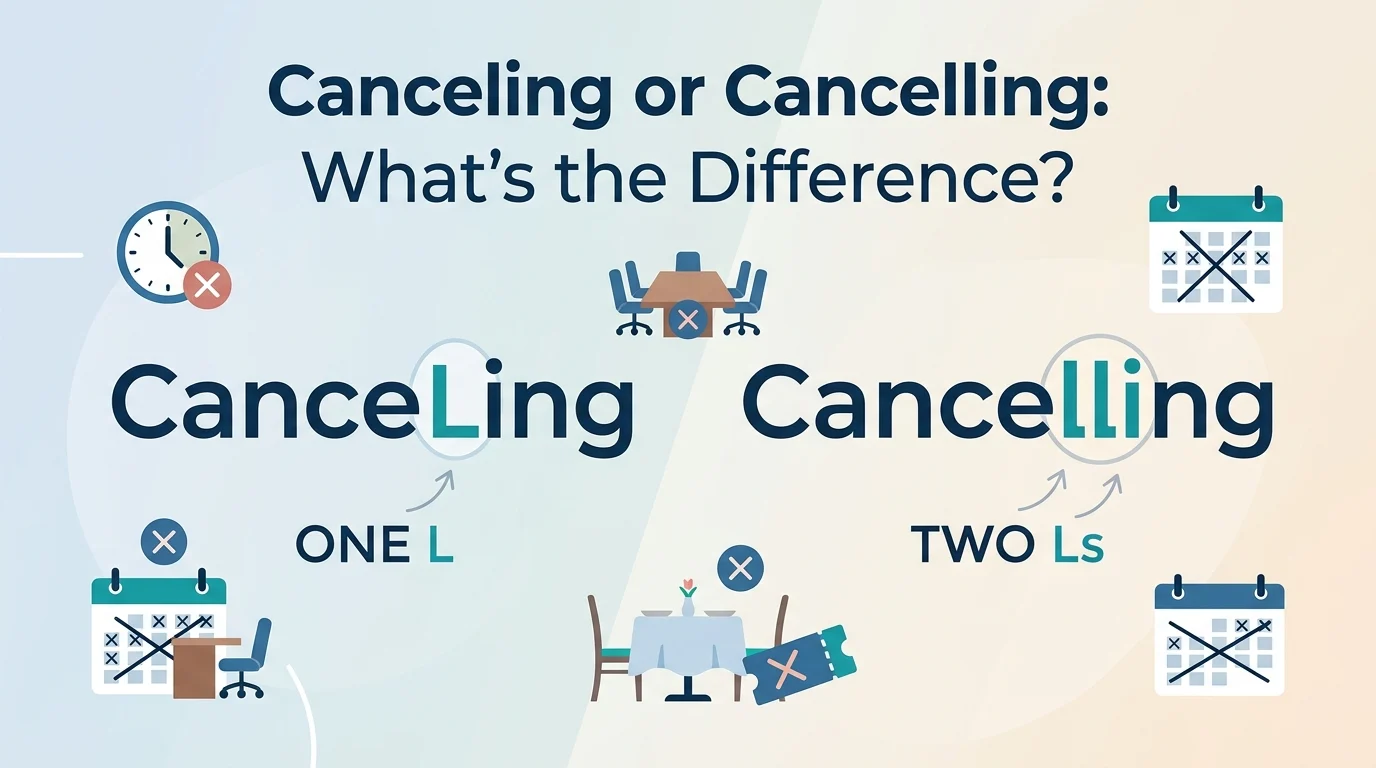
Quick Ans: Canceling and cancelling are both correct spellings of the present participle of cancel. The difference is regional. Canceling is the standard spelling in American English, while cancelling is preferred in British English and many other varieties. Both mean stopping, ending, or calling off something that was planned or arranged.
Canceling or cancelling is a common spelling question because both forms appear in dictionaries, books, websites, emails, and everyday writing. If you see one version with one L and another with two Ls, you may wonder which spelling is correct.
The good news is that both canceling and cancelling are correct. The main difference comes from regional spelling conventions. American writers generally use canceling, while British writers commonly use cancelling.
Knowing this difference can help you choose the right spelling for your audience. It also matters in school assignments, professional writing, online content, and formal documents. Using one spelling consistently makes your writing look more polished and intentional.
In this guide, you’ll learn the difference between canceling and cancelling, when to use each form, common mistakes, examples, and an easy rule to remember.
Quick Answer and Key Takeaway
Canceling vs Cancelling
| Spelling | Common usage | Example |
|---|---|---|
| Canceling | American English | I am canceling the appointment. |
| Cancelling | British English and other varieties | I am cancelling the appointment. |
Key takeaway: Both spellings are correct. Choose canceling for American audiences and cancelling for British audiences or writing that follows British spelling conventions.
Definition and Explanation
Canceling and cancelling are forms of the verb cancel.
To cancel means to stop something that was planned, scheduled, ordered, or arranged.
For example:
- We are canceling the meeting.
- We are cancelling the meeting.
- She is canceling her reservation.
- She is cancelling her reservation.
The meaning stays exactly the same. Only the spelling changes.
The difference comes from how English spelling conventions handle the final consonant when adding ing.
American English generally uses canceling, while British English generally uses cancelling.
Is This a Grammar, Usage, or Spelling Issue?
This is primarily a spelling and regional usage issue, not a grammar mistake.
Both forms use the same verb and grammatical structure. The only difference is the number of Ls.
For example:
Correct: I am canceling my subscription.
Also correct: I am cancelling my subscription.
The important thing is to follow the spelling convention used by your audience or organization.
Real World Usage Examples
Workplace
- The manager is canceling the meeting.
- The company is cancelling the interview.
- We received an email about canceling the event.
Workplace recap: Use the spelling that matches your company’s preferred style.
Academic
- The professor is canceling today’s lecture.
- The university is cancelling classes because of the weather.
- Students were informed about the cancelled examination.
Academic recap: Both forms are acceptable, but consistency matters throughout your writing.
Everyday
- I’m canceling my dinner reservation.
- She is cancelling her gym membership.
- They decided to cancel the trip.
Everyday recap: Choose the regional spelling that feels natural for your audience.
Regional or Global Usage Differences
The main distinction is regional.
Canceling is widely preferred in American English.
Cancelling is widely preferred in British English and is also common in countries and publications that follow British spelling conventions.
| Audience | Preferred spelling |
|---|---|
| United States | canceling |
| United Kingdom | cancelling |
| British style publications | cancelling |
| International audience | Follow the chosen style consistently |
Neither spelling is more grammatically correct than the other.
When NOT to Use It
Avoid switching between the two spellings without a reason.
For example, don’t write:
Incorrect style: The company is canceling the event, but the customer is cancelling the reservation.
If you’re following American spelling, use canceling consistently.
If you’re following British spelling, use cancelling consistently.
Also remember that canceling and cancelling are verb forms. They should not replace other forms of the word when the sentence requires them.
- Present tense: cancel
- Present participle: canceling or cancelling
- Past tense: canceled or cancelled
Common Mistakes and Corrections
| Correct Sentence | Incorrect Sentence | Why |
|---|---|---|
| I am canceling the appointment. | I am cancelling the appointment. | Incorrect only if following American style |
| She is cancelling the order. | She is canceling the order. | Incorrect only if following British style |
| They are canceling the event. | They are cancelingg the event. | Extra letter is incorrect |
| We decided to cancel the trip. | We decided to canceling the trip. | The infinitive requires cancel |
Easy Decision Rule
Remember this simple rule:
American spelling = canceling
British spelling = cancelling
When writing for a specific audience, choose one form and use it consistently.
Exercises With Answers
Choose canceling or cancelling.
- We are ___ the meeting.
- She is ___ her subscription.
- The airline is ___ several flights.
- They are ___ the appointment.
- The school is ___ classes today.
Answers
- canceling or cancelling
- canceling or cancelling
- canceling or cancelling
- canceling or cancelling
- canceling or cancelling
The correct choice depends on the spelling convention you’re following.
Related Concepts and Comparisons
The same regional spelling difference appears with other forms of cancel.
| American spelling | British spelling |
|---|---|
| canceled | cancelled |
| canceling | cancelling |
| cancellation | cancellation |
Notice that cancellation is normally spelled with two Ls in both major varieties.
FAQs
Is canceling or cancelling correct?
Both are correct. Canceling is generally preferred in American English, while cancelling is generally preferred in British English.
Is canceling American or British?
Canceling is the standard American spelling. British English generally uses cancelling.
Is cancelling with two Ls correct?
Yes. Cancelling is the standard spelling in British English and related spelling systems.
Why does canceling have one L?
American spelling conventions generally use one L when forming canceling from cancel. British spelling usually doubles the L.
What is the past tense of cancel?
The past tense can be canceled or cancelled. American English usually uses canceled, while British English commonly uses cancelled.
Should I use canceling or cancelling in formal writing?
Use the form required by your audience, organization, school, or style guide. The key is to remain consistent.
Is canceling or cancelling used in the United States?
In the United States, canceling is the more common standard spelling.
Which is correct for British writing, canceling or cancelling?
Cancelling is the usual British spelling.
Does canceling mean the same as cancelling?
Yes. They have exactly the same meaning. The difference is spelling rather than meaning.
Conclusion
The choice between canceling or cancelling is mainly a matter of regional spelling. Both forms are correct, and neither changes the meaning of the verb.
Use canceling when following American spelling conventions. Use cancelling when following British spelling conventions. The same regional difference appears in the past tense, where American English commonly uses canceled and British English commonly uses cancelled.
For school, work, blogging, or professional communication, the best approach is simple: identify your target audience and follow its preferred spelling style. Most importantly, don’t switch between one L and two Ls randomly in the same piece of writing.
Practical tip: Remember American = canceling and British = cancelling, then apply the same spelling style consistently throughout your document.