
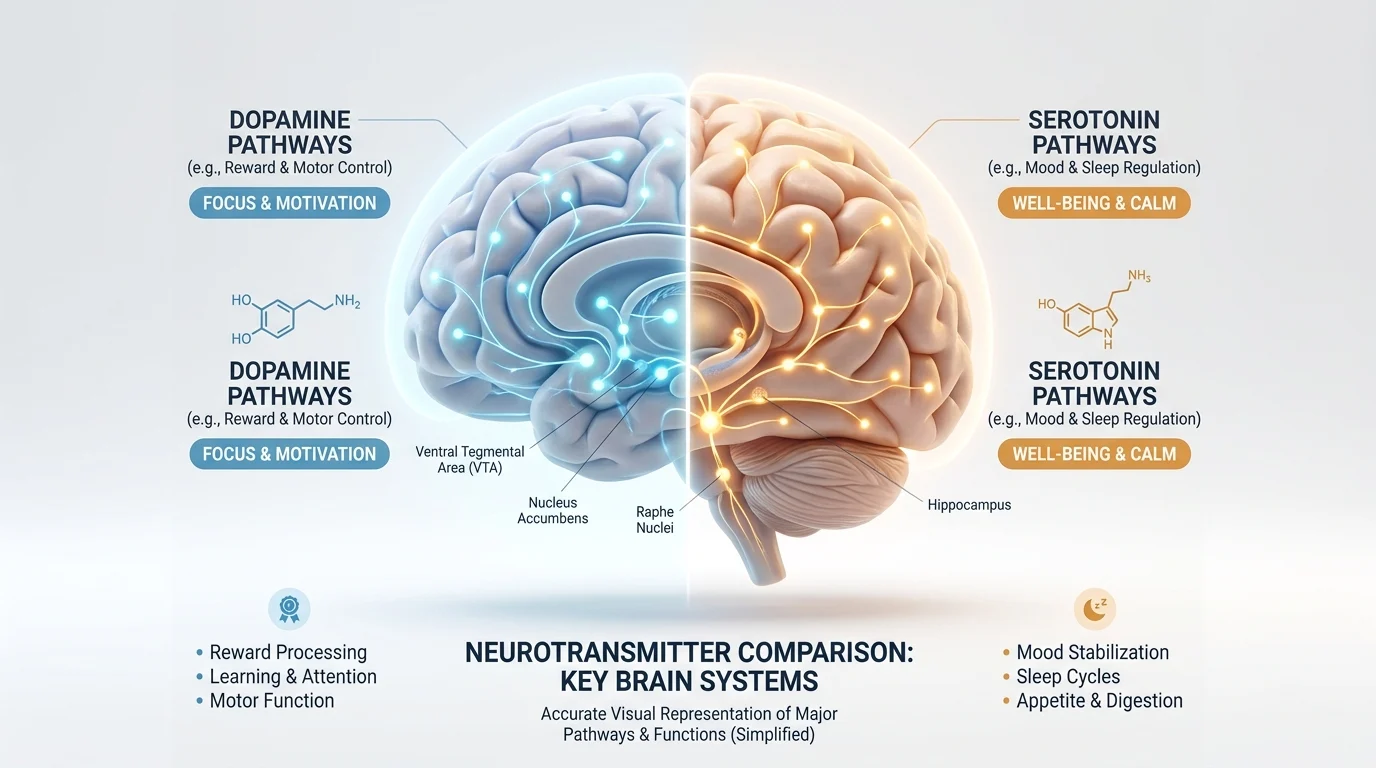
Quick Ans: Dopamine and serotonin are neurotransmitters that help regulate mood, behavior, and several body functions. Dopamine plays a major role in motivation, reward, learning, and movement. Serotonin helps regulate mood, sleep, appetite, and digestion. Although both affect emotional well-being, they perform different functions and also work together.
Have you ever wondered why some activities make you feel excited and motivated while others help you feel calm and emotionally balanced? Two important brain chemicals, dopamine and serotonin, contribute to these experiences.
Although people often call them “feel-good chemicals,” their roles go far beyond happiness. Dopamine helps your brain recognize rewards, learn from experiences, and motivate you to take action. Meanwhile, serotonin supports mood regulation, sleep, appetite, and digestion.
Understanding dopamine vs serotonin can help you learn how your brain and body influence everyday feelings and behaviors. However, these chemicals do not work independently. Instead, they interact with other neurotransmitters, hormones, and body systems to support normal functioning.
In this guide, you will discover their main differences, similarities, effects on mood, and practical ways to support your overall well-being.
What Is Dopamine?
Dopamine is a neurotransmitter, meaning it carries chemical messages between nerve cells. It plays an important role in the brain’s reward and motivation systems.
For example, when you complete a challenging task or make progress toward a goal, dopamine helps reinforce learning and encourages you to repeat useful behaviors.
Main Functions of Dopamine
- Motivation and reward: Encourages goal-directed behavior and helps you learn from rewarding experiences.
- Movement: Supports smooth, coordinated body movements.
- Learning and memory: Helps the brain process information and reinforce certain behaviors.
- Attention: Contributes to focus, decision-making, and cognitive function.
- Mood: Influences emotional responses and feelings of pleasure.
Low dopamine activity is associated with certain health conditions, including Parkinson’s disease. However, symptoms alone cannot confirm a dopamine deficiency.
What Is Serotonin?
Serotonin is another neurotransmitter that helps regulate several physical and emotional processes. Although it plays a role in mood, it also affects sleep, appetite, digestion, and other body functions.
Your body produces serotonin from an amino acid called tryptophan, which you obtain through food. Most of the serotonin in your body exists in the gastrointestinal tract rather than the brain.
Main Functions of Serotonin
- Mood regulation: Contributes to emotional stability and well-being.
- Sleep: Supports sleep-related processes, partly because the body uses serotonin to produce melatonin.
- Appetite: Helps regulate feelings of hunger and fullness.
- Digestion: Supports intestinal movement and other digestive functions.
- Other body processes: Contributes to nausea responses, blood clotting, and additional physiological functions.
Serotonin is associated with several mental health conditions, but scientists cannot explain these conditions through serotonin levels alone.
Dopamine vs Serotonin: Key Differences
| Feature | Dopamine | Serotonin |
|---|---|---|
| Main roles | Reward, motivation, movement | Mood, sleep, appetite |
| Emotional effects | Helps reinforce rewarding experiences | Contributes to emotional regulation |
| Learning | Supports reward-based learning | Contributes to learning and memory |
| Physical functions | Helps control movement | Supports digestion and other body processes |
| Production | Made in specific areas of the brain and elsewhere in the body | Produced in the gut and brain |
| Related health conditions | Parkinson’s disease and other conditions involving dopamine pathways | Several mood and digestive conditions |
In simple terms: Dopamine helps you pursue rewards and learn from experiences, while serotonin supports mood regulation and several essential body functions. However, neither chemical has just one job.
How Do Dopamine and Serotonin Affect Mood?
Both neurotransmitters influence mood, but they contribute in different ways.
Dopamine and Motivation
Imagine you are studying for an important exam. Completing a difficult chapter may feel rewarding and encourage you to continue. Dopamine contributes to the brain processes involved in reward, learning, and motivation.
However, dopamine is not simply a chemical that creates happiness. It also helps the brain learn which actions and experiences deserve attention.
Serotonin and Emotional Well-Being
Now imagine that you have followed a consistent sleep schedule and maintained a balanced daily routine. Serotonin participates in biological processes related to mood and sleep, although your emotional state depends on many factors.
Moreover, neither dopamine nor serotonin works alone. Genetics, environment, stress, physical health, and other brain chemicals also influence how you feel.
Can You Naturally Support Dopamine and Serotonin?
You cannot reliably measure or control brain neurotransmitter levels simply by changing your daily routine. Nevertheless, healthy habits can support overall brain and body function.
- Exercise regularly: Walking, cycling, and other physical activities support physical and mental well-being.
- Eat a balanced diet: Include protein sources, whole grains, fruits, vegetables, and healthy fats. Foods containing tryptophan provide a building block for serotonin.
- Maintain a regular sleep schedule: Consistent sleep and wake times support your body’s natural rhythms.
- Manage stress: Relaxation, mindfulness, and enjoyable activities may help you cope with daily stress.
- Stay socially connected: Positive relationships and meaningful activities can support emotional well-being.
Importantly, avoid taking supplements or changing medication just to increase dopamine or serotonin. Ask a qualified healthcare professional before starting supplements, especially if you take prescription medication.
Frequently Asked Questions
1. Which is more important, dopamine or serotonin?
Neither is more important overall. Dopamine and serotonin serve different purposes, and both contribute to normal brain and body function.
2. Does dopamine make you happy?
Dopamine contributes to reward processing, motivation, and learning. However, happiness involves many biological, psychological, and social factors.
3. Does serotonin make you calm?
Serotonin contributes to mood regulation and other processes associated with emotional well-being. However, it does not guarantee calmness or eliminate anxiety.
4. Can you have low dopamine and serotonin at the same time?
Changes in neurotransmitter activity can occur in complex ways. However, you cannot determine whether either chemical is low based on mood or behavior alone.
5. Which neurotransmitter affects sleep?
Both play a role in sleep-related processes. Serotonin helps the body produce melatonin, while dopamine also influences sleep and wakefulness.
6. Are dopamine and serotonin hormones?
Both primarily act as neurotransmitters, although they can also perform signaling roles outside the brain. Calling them simply “happiness hormones” oversimplifies their functions.
7. Can food increase dopamine and serotonin?
Food provides nutrients that the body uses to produce neurotransmitters. However, eating a particular food does not guarantee a specific increase in brain dopamine or serotonin.
8. Can a neurotransmitter imbalance cause depression?
Neurotransmitter systems are involved in mood disorders, but depression has many contributing factors. It is not accurate to explain every case as a simple deficiency of dopamine or serotonin.
Conclusion
The main difference between dopamine and serotonin lies in their primary roles. Dopamine supports motivation, reward, learning, and movement, while serotonin helps regulate mood, sleep, appetite, and digestion.
Nevertheless, these neurotransmitters interact with each other and with many other systems in your body. Rather than trying to boost one chemical, focus on healthy daily habits and seek professional advice if persistent mood, sleep, or concentration problems affect your life.