
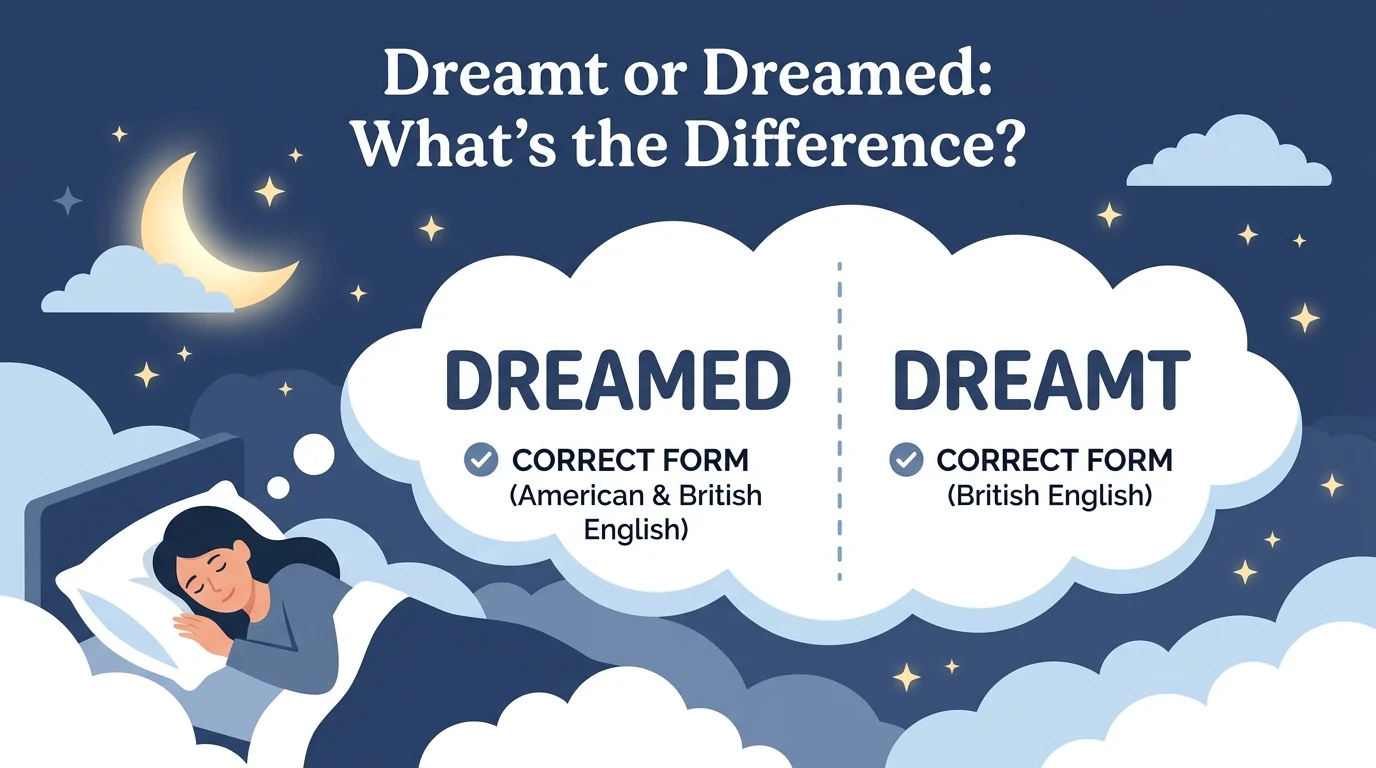
Quick Ans: Dreamt and dreamed are both correct past tense forms of the verb dream. Dreamed is more common in American writing, while dreamt is often used in British English. Both words have the same meaning and can describe sleeping dreams or hopes for the future.
Are you confused about whether to use dreamt or dreamed? Many English learners and writers ask this question because both forms look correct and appear in books, conversations, and online content.
The confusion happens because English has many verbs with two accepted past tense forms. The verb “dream” is one of them. Some speakers prefer the shorter form “dreamt,” while others use “dreamed.”
In most everyday writing, especially in the United States, “dreamed” is more common. However, “dreamt” is still correct and appears frequently in British writing and literature.
Both forms can describe something you imagined while sleeping. They can also describe hopes, goals, or wishes you have for the future. The meaning does not change based on the spelling.
Understanding the difference helps you choose the right word for your audience and writing style. The key is not to think of one as wrong. Instead, learn when each form is commonly used.
Quick Answer and Key Takeaway
| Word | Usage | Example |
|---|---|---|
| Dreamed | More common in American writing | I dreamed about traveling the world. |
| Dreamt | More common in British writing | I dreamt about traveling the world. |
Key takeaway: Both dreamt and dreamed are correct. Choose the form that matches your preferred writing style.
Definition and Explanation
Dreamed
“Dreamed” is the regular past tense and past participle form of the verb dream.
Example:
I dreamed about my childhood home.
It is widely used in modern English, especially in American writing.
Dreamt
“Dreamt” is an irregular style variant of the past tense and past participle of dream.
Example:
She dreamt of becoming a doctor.
It is shorter and often appears in British English, although many British speakers also use “dreamed.”
| Form | Part of Speech | Meaning | Example |
|---|---|---|---|
| Dream | Verb | To imagine during sleep or think about a goal | I dream of success. |
| Dreamed | Past tense | Had a dream | I dreamed last night. |
| Dreamt | Past tense | Had a dream | I dreamt last night. |
Both forms communicate the same idea. The difference mainly comes from spelling preference and regional usage.
Is This a Grammar, Usage, or Vocabulary Issue?
This is mainly a usage and spelling issue.
The grammar is simple because both words are past tense forms of the same verb. The choice depends on style, region, and personal preference.
For formal writing, consistency matters. If you choose “dreamed,” continue using that style throughout your work. If you choose “dreamt,” keep the same pattern.
The same pattern appears with other verbs, such as:
| Verb | Common Forms |
|---|---|
| Learn | learned / learnt |
| Burn | burned / burnt |
| Dream | dreamed / dreamt |
However, “dreamed” is generally more common in modern American writing.
Real World Usage Examples
Workplace Examples
“Our team dreamed of creating a better product.”
This describes a goal or ambition.
“She dreamed about the project before launching it.”
This refers to an actual sleeping dream.
Recap: Both forms work when describing goals or experiences.
Academic Examples
“The researcher dreamed of making a scientific discovery.”
“Students dreamt of solving difficult problems.”
Recap: Academic writing can use either form, but consistency is important.
Everyday Examples
“I dreamed about my old school last night.”
“I dreamt that I was flying.”
Recap: Both forms sound natural in personal conversations.
Regional or Global Usage Differences
The biggest difference between dreamed and dreamt is regional preference.
Dreamed is common in American English and appears often in everyday writing.
Dreamt is more common in British English and some other varieties of English.
| Region | Common Form |
|---|---|
| United States | Dreamed |
| United Kingdom | Dreamt and dreamed |
| Other English varieties | Both forms |
Although preferences differ, both spellings are understood worldwide.
When NOT to Use It
Do not use both forms randomly in the same article or document.
Do not assume “dreamed” is always wrong in British writing.
Avoid changing the meaning of the sentence based on the spelling. Both forms mean the same thing.
Do not confuse “dreamed” with the noun “dream.” The verb form must match the sentence structure.
Common Mistakes and Corrections
| Correct Sentence | Incorrect Sentence | Why |
|---|---|---|
| I dreamed about the ocean. | I dream about the ocean yesterday. | A past event needs a past tense form. |
| She dreamt of becoming a writer. | She dream of becoming a writer yesterday. | Past time requires dreamt or dreamed. |
| They dreamed about success. | They dreamt about success yesterday in American style writing. | Not grammatically wrong, but style should remain consistent. |
| He has dreamed of this moment. | He has dream of this moment. | Use the past participle after “has.” |
Simple Decision Rule
Use dreamed if you want the most common modern form. Use dreamt if you prefer a shorter traditional form or follow British spelling habits.
Exercises With Answers
Fill in the blanks with dreamed or dreamt.
- She _____ about visiting Paris last night.
- He _____ of becoming a writer since childhood.
- They _____ about the future.
- I have _____ of this opportunity for years.
- We _____ about the same place yesterday.
Answer Key
- dreamed or dreamt
- dreamed or dreamt
- dreamed or dreamt
- dreamed or dreamt
- dreamed or dreamt
Related Concepts and Comparisons
Readers searching for dreamt or dreamed may also want to learn about learned vs learnt, burned vs burnt, dreamed meaning, dream past tense, irregular verbs, regular verbs, and British vs American spelling differences.
FAQs
Is dreamt or dreamed correct?
Both are correct past tense forms of “dream.” The choice depends on regional preference and writing style.
Is dreamed more common than dreamt?
Yes. Dreamed is more common in many modern forms of English, especially in American writing.
Is dreamt the British spelling?
Dreamt is often associated with British English, although many British speakers also use dreamed.
Do dreamt and dreamed mean the same thing?
Yes. Both words mean that someone experienced a dream during sleep or imagined a hope or goal.
Should I write dreamed or dreamt in an essay?
Either form can work. The best choice depends on your audience, style guide, and the type of English you are using.
What is the past tense of dream?
The past tense can be either dreamed or dreamt. Both forms are accepted.
Is dreamt a real word?
Yes. Dreamt is a correct past tense and past participle form of the verb dream.
Can I use dreamed in British English?
Yes. Although dreamt is common, dreamed is also accepted in British English.
Conclusion
The difference between dreamt and dreamed is not about correctness. Both words are proper past tense forms of the verb “dream.” The main difference is usage preference.
Dreamed is the more common choice in many modern writing situations, especially in the United States. Dreamt is a shorter form that appears more often in British writing and traditional styles.
Both words can describe sleeping dreams and personal hopes. For example, “I dreamed of becoming a writer” and “I dreamt of becoming a writer” have the same meaning.
The most important rule is consistency. Choose one form and use it throughout your writing to keep your style clear and professional.
Practical tip: If you are unsure, choose dreamed because it is widely recognized and commonly used in modern writing.