
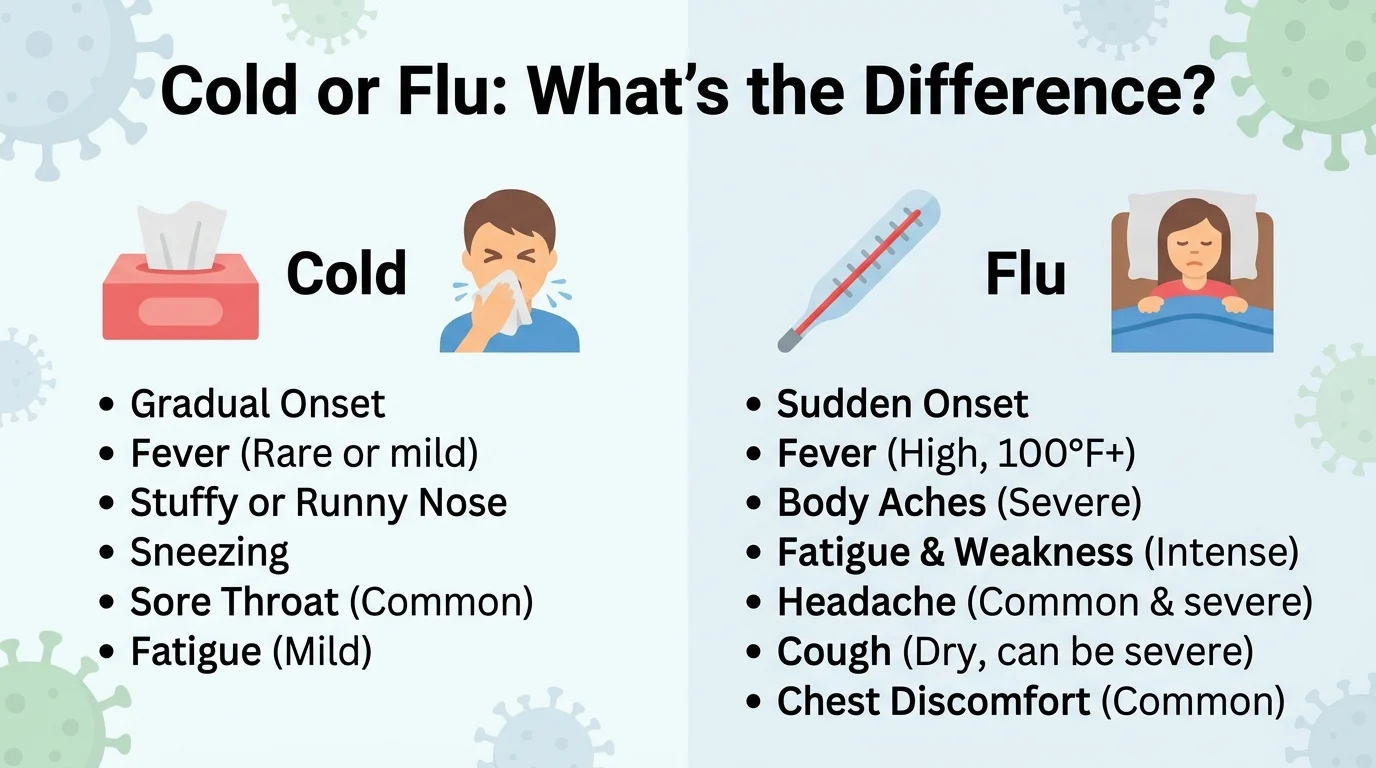
Quick Ans: A cold and the flu are both respiratory illnesses, but they are caused by different viruses and often feel different. Colds usually develop gradually and cause milder symptoms, such as a runny nose and sore throat. Flu symptoms often appear suddenly and can include fever, body aches, chills, and significant tiredness.
Cold or flu is a common question when someone develops a cough, sore throat, congestion, or fever. The two illnesses can look similar because both affect the respiratory system. However, they are not the same condition.
A cold is usually caused by one of many different respiratory viruses. The flu, also called influenza, is caused by influenza viruses. Their symptoms can overlap, which makes it difficult to tell them apart based on one symptom alone.
Knowing the basic difference can help you understand what your symptoms may indicate and when you should consider medical advice. It can also help you use these terms correctly in everyday conversations and writing.
The biggest clue is often how quickly symptoms appear and how severe they become. A cold commonly develops gradually, while the flu can begin quite suddenly.
Quick Answer and Key Takeaway
| Cold | Flu |
|---|---|
| Usually milder | Often more intense |
| Symptoms often develop gradually | Symptoms often appear suddenly |
| Runny or stuffy nose is common | Fever, chills, and body aches are common |
| Sore throat is common | Fatigue can be significant |
| Usually causes fewer severe complications | Can lead to serious complications in some people |
Key takeaway: A cold and the flu are different viral illnesses. The flu often causes a more sudden and intense illness, while a cold usually produces milder respiratory symptoms.
Definition and Explanation
What Is a Cold?
A cold is a common viral infection of the upper respiratory tract. Many different viruses can cause colds.
Typical symptoms include:
- Runny nose
- Stuffy nose
- Sneezing
- Sore throat
- Cough
- Mild tiredness
Most colds improve with time, although symptoms can be uncomfortable.
What Is the Flu?
The flu is a contagious respiratory illness caused by influenza viruses. It can affect people more severely than an ordinary cold.
Common symptoms include:
- Fever or feeling feverish
- Chills
- Cough
- Sore throat
- Muscle or body aches
- Headache
- Tiredness
Not everyone with the flu experiences every symptom.
Is This a Grammar, Usage, or Vocabulary Issue?
Cold or flu is primarily a vocabulary and health terminology distinction.
In everyday English, cold usually refers to the common cold, while flu is the shortened form of influenza.
For example:
- “I have a cold.”
- “She has the flu.”
- “How can I tell whether I have a cold or the flu?”
The terms shouldn’t be treated as interchangeable because they describe different illnesses.
Real World Usage Examples
Workplace
“I stayed home because I had the flu.”
This tells coworkers that the person was experiencing influenza rather than simply using “flu” as a general word for feeling sick.
Recap: Use the specific term when describing an illness.
Academic Writing
“The study examined symptoms associated with influenza and the common cold.”
Academic writing generally benefits from precise terminology.
Recap: Use influenza when a formal medical term is appropriate.
Everyday Conversation
“I think I have a cold because I have a runny nose and sore throat.”
People commonly use “cold” for mild respiratory symptoms.
Recap: Everyday English often uses these terms based on familiar symptoms.
Regional or Global Usage Differences
The words cold and flu have essentially the same meanings across major varieties of English. The main difference is not regional spelling but everyday usage.
Flu is an informal shortened form of influenza and is widely understood in English speaking countries.
You may also hear expressions such as “the flu” or “flu symptoms.” In formal medical or scientific writing, influenza may be preferred.
When NOT to Use It
Avoid these common mistakes:
- Don’t automatically call every cough or fever “the flu.”
- Don’t assume a runny nose proves that you have a cold.
- Don’t use cold and flu as exact synonyms.
- Don’t assume symptoms alone can always identify the specific virus.
- Don’t use “flu” to describe influenza like illnesses as though every case has been confirmed.
- Don’t ignore severe or worsening symptoms simply because you think they are from a cold.
- Don’t describe influenza as merely a more serious version of a cold because they are caused by different viruses.
Common Mistakes and Corrections
| Correct Sentence | Incorrect Sentence | Why |
|---|---|---|
| I have a cold. | I have flu cold. | These describe different illnesses. |
| She has the flu. | She has a flu. | “The flu” is the common everyday expression. |
| He may have influenza. | He may have the influenza. | Influenza is normally used without “the” in this construction. |
| I have cold symptoms. | I have flu symptoms because I sneezed once. | One symptom doesn’t establish the cause. |
| She stayed home with the flu. | She stayed home with flu. | “The flu” is standard in everyday English. |
Simple Decision Rule
Use “cold” for the common cold and “flu” for influenza. Don’t rely on one symptom to determine which illness you have.
Exercises With Answers
Choose cold or flu.
- A runny nose and sneezing are common with a ___.
- Influenza is commonly called the ___.
- The symptoms began suddenly and included chills and body aches, which can occur with the ___.
- She has a stuffy nose and mild sore throat from a ___.
- He was diagnosed with influenza, commonly known as the ___.
Answers
- cold
- flu
- flu
- cold
- flu
Related Concepts and Comparisons
Several respiratory illnesses can have overlapping symptoms.
| Term | Basic Meaning |
|---|---|
| Cold | A common viral respiratory infection |
| Flu | Influenza infection |
| Influenza | Formal name for the flu |
| Respiratory infection | A broader term covering infections affecting the respiratory system |
Because symptoms can overlap, testing or professional medical assessment may sometimes be needed to identify the cause.
FAQs
Is a cold the same as the flu?
No. A cold and the flu are different viral respiratory illnesses. They can share symptoms, but influenza often causes a more sudden and intense illness.
How can you tell the difference between a cold and the flu?
The flu often begins suddenly and may cause fever, chills, body aches, headache, and pronounced fatigue. Colds more commonly cause runny or stuffy noses, sneezing, and sore throats.
Is flu short for influenza?
Yes. Flu is the common shortened form of influenza.
Can a cold turn into the flu?
No. A cold does not transform into influenza because they are caused by different viruses. However, a person can have another infection after or during a cold.
Which is worse, a cold or the flu?
Influenza can cause more severe illness and complications than a typical cold, although the severity varies from person to person.
Can you have a cold and flu at the same time?
It is possible to have more than one respiratory infection, although symptoms alone cannot confirm which viruses are present.
Does a fever mean you have the flu?
Not necessarily. Fever can occur with influenza and other infections. A fever alone cannot establish that someone has the flu.
What does “I have a cold” mean?
It usually means the person has the common cold, a viral infection that commonly causes symptoms such as congestion, sneezing, a runny nose, and sore throat.
What does “I have the flu” mean?
It normally means the person has influenza or believes they have influenza. The phrase is common in everyday English.
Conclusion
Understanding cold or flu becomes easier when you remember that they are two different respiratory illnesses. A cold is usually associated with milder symptoms such as sneezing, congestion, a runny nose, and sore throat. Influenza can begin more suddenly and may cause fever, chills, body aches, headache, and significant tiredness.
In everyday English, cold refers to the common cold, while flu is the familiar shortened form of influenza. These words should not be used as exact synonyms because they describe different illnesses.
Symptoms can overlap, so you cannot always determine the cause from symptoms alone. If symptoms are severe, unusual, or getting worse, consider seeking appropriate medical advice rather than assuming you have a simple cold or flu.
Practical tip: Remember this simple distinction: cold means the common cold, while flu means influenza.
1 thought on “Cold or Flu: What’s the Difference? Easy Rules, Symptoms & Tips”