
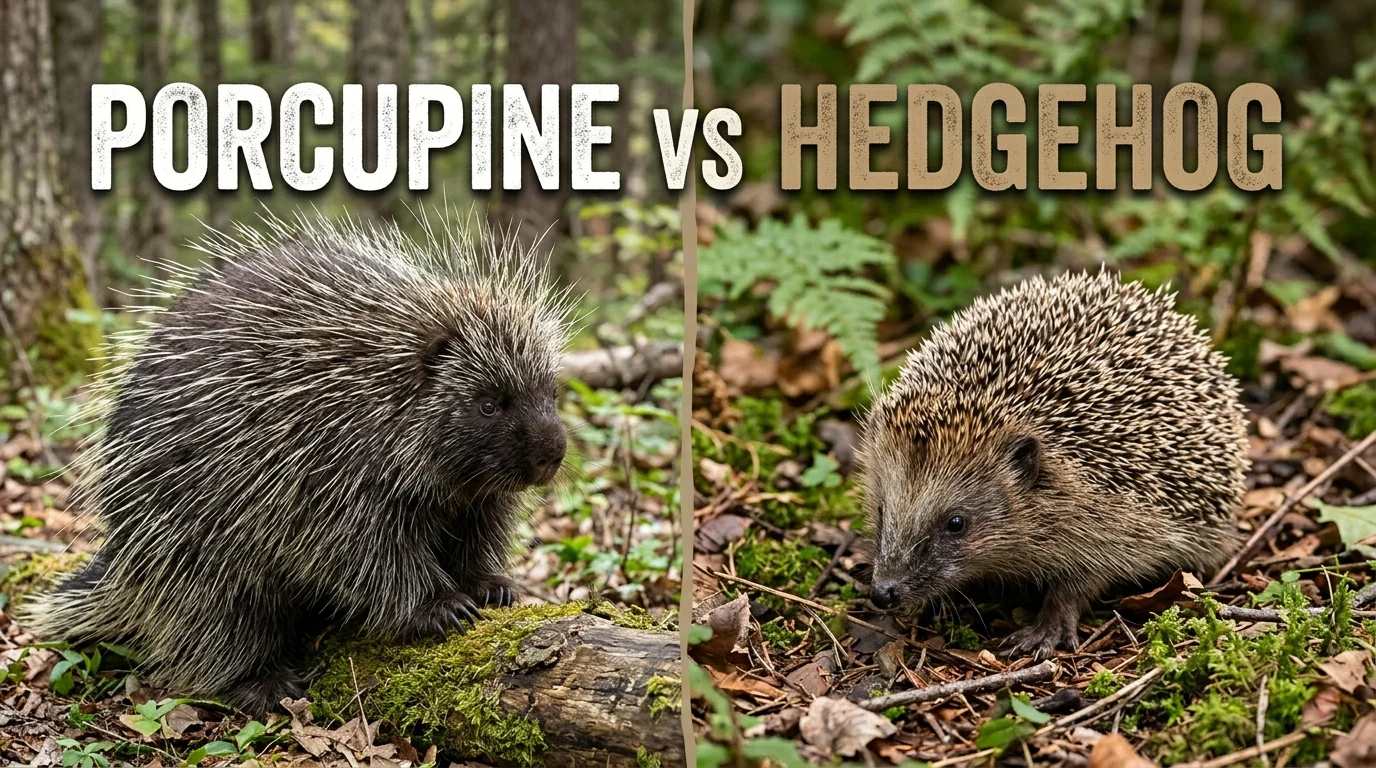
Quick Answer: Porcupines and hedgehogs are small to medium sized mammals known for their sharp spines, but they are different animals. Porcupines are rodents with long, sometimes barbed quills that can detach when they make contact with a threat. Hedgehogs have shorter spines and often curl into a tight ball for protection. They also differ in size, diet, habitat, and behavior.
Porcupines and hedgehogs may look similar because both have bodies covered in sharp spines. However, these animals belong to different mammal groups and use different strategies to protect themselves. Their similar appearance often makes people wonder whether they are related or simply different names for the same animal.
The truth is that porcupines and hedgehogs have several important differences. Porcupines belong to the rodent group, while hedgehogs belong to a separate family of mammals. Their spines also differ in length, structure, and defensive function.
Understanding porcupine vs hedgehog differences can help you identify these animals more easily. Whether you are curious about wildlife, researching animal facts, or comparing their behavior, this guide explains their appearance, size, diet, habitat, and defense mechanisms in simple terms.
Porcupine vs Hedgehog: Quick Answer
The main difference between a porcupine and a hedgehog is their classification and defensive adaptations.
- Porcupine: A rodent with long, sharp quills that can become embedded in a predator or other animal upon contact.
- Hedgehog: A small mammal with shorter spines that often curls into a ball when threatened.
Porcupines are generally larger, although their size varies by species. Hedgehogs are usually small and commonly eat insects and other small animals. Porcupines have a more varied diet that often includes plant material.
1. What Is a Porcupine?
<AsyncImage query=”North American porcupine animal close up quills natural habitat” aspectRatio=”16:9″ width=”100%” />
A porcupine is a rodent recognized by its thick coat of sharp quills. These quills are modified hairs that help protect the animal from predators.
Porcupines live in different regions around the world, depending on the species. Some live in trees, while others spend much of their time on the ground. Their habitats include forests, grasslands, rocky areas, and other environments.
Most porcupines eat plant material, including leaves, bark, twigs, roots, and fruit. Some species climb trees to find food, while others forage on the ground.
When threatened, a porcupine may raise its quills, turn its back toward danger, or move its tail defensively. Its quills can detach when they contact another animal. Contrary to a common myth, porcupines cannot shoot their quills like arrows.
2. What Is a Hedgehog?
<AsyncImage query=”European hedgehog curled slightly in green grass close up natural wildlife photography” aspectRatio=”16:9″ width=”100%” />
A hedgehog is a small mammal covered in short, stiff spines. Unlike porcupines, hedgehogs are not rodents. They belong to the family Erinaceidae.
Hedgehogs live in parts of Europe, Asia, and Africa, and some species have been introduced to other regions. They often inhabit gardens, woodlands, grasslands, and areas with plenty of hiding places.
Many hedgehogs eat insects, worms, and other small invertebrates. Depending on the species and available food, they may also eat other small animals or some plant material.
Their most recognizable defense is curling into a tight ball. This position exposes their spines and protects their softer belly and face from many potential threats.
3. Porcupine vs Hedgehog: Key Differences
| Feature | Porcupine | Hedgehog |
|---|---|---|
| Animal group | Rodent | Erinaceid mammal |
| Spines | Often longer quills, sometimes barbed | Shorter, stiff spines |
| Main defense | Raises quills and uses them defensively | Curls into a protective ball |
| Typical size | Usually larger | Usually smaller |
| Diet | Mostly plant material | Often insects and other small animals |
| Habitat | Varies by species; includes forests and grasslands | Varies by species; includes gardens and woodlands |
| Climbing | Some species are skilled climbers | Generally ground dwelling |
| Geographic range | North and South America, Africa, Asia, and other regions depending on species | Europe, Asia, and Africa, depending on species |
These are general differences. Individual species can vary considerably in size, diet, habitat, and behavior.
4. Porcupine Quills vs Hedgehog Spines
Although both animals have sharp coverings, their spines serve slightly different defensive purposes.
Porcupine quills can be relatively long and, in some species, have barbed tips. When a quill enters an animal’s skin, it may be difficult and painful to remove. The quills do not normally launch from the porcupine’s body; contact causes them to detach.
Hedgehog spines are shorter and are primarily used as protection when the animal curls up. The hedgehog’s muscles help pull its head and limbs inward, creating a compact defensive ball.
Neither animal should be handled casually. Their defensive structures can cause injuries, and wild animals may become stressed when approached.
5. Which Animal Is Bigger?
Porcupines are generally larger than hedgehogs, but the exact difference depends on the species.
Some porcupines have large, heavy bodies and long tails, while others are smaller. Hedgehogs are typically compact animals that can fit into relatively small hiding places.
If you see a large, heavily quilled animal in a tree, it may be an arboreal porcupine species. A much smaller animal with short spines that curls tightly into a ball is more likely to be a hedgehog.
Size alone is not always enough for identification, so consider the animal’s overall shape, behavior, and location as well.
6. Are Porcupines and Hedgehogs Related?
Porcupines and hedgehogs are both mammals, but they belong to different groups.
Porcupines are rodents, making them relatives of animals such as mice, squirrels, and beavers at a broad taxonomic level. Hedgehogs belong to a separate mammal family and are not rodents.
Their similar spines are an example of how different animals can develop comparable features that serve similar purposes. In both cases, spines help discourage predators, but the animals evolved different defensive behaviors.
7. Can You Keep a Porcupine or Hedgehog as a Pet?
Hedgehogs are kept as pets in some places, but their ownership is restricted or prohibited in certain jurisdictions. They also require specialized care, appropriate temperatures, a suitable diet, and a safe enclosure.
Porcupines are wild animals and are generally unsuitable as household pets. Their size, dietary needs, defensive quills, and specialized housing requirements make them difficult to care for safely.
Frequently Asked Questions
Do porcupines and hedgehogs have the same spines?
No. Porcupines have quills that may be longer and barbed, depending on the species. Hedgehogs have shorter, stiff spines that help protect them when they curl up.
Can porcupines shoot their quills?
No. Porcupines cannot shoot their quills. The quills can detach when they contact another animal.
Do hedgehogs shoot their spines?
No. Hedgehogs do not shoot their spines. They primarily defend themselves by curling into a tight ball.
Which animal eats insects?
Hedgehogs commonly eat insects and other small invertebrates. Porcupines generally eat plant material, although diets vary among species.
Are porcupines more dangerous than hedgehogs?
Porcupine quills can cause serious injuries if they become embedded in skin. Hedgehog spines can also cause discomfort or injury. Both animals should be observed without touching or disturbing them.
Can a hedgehog and a porcupine breed together?
No. They belong to different mammal groups and cannot breed together.
Which animal curls into a ball?
Hedgehogs are well known for curling into a tight ball when threatened. Porcupines generally rely on their quills and defensive positioning instead.
Conclusion
The main difference between a porcupine and a hedgehog is that they belong to different mammal groups and use different defensive strategies. Porcupines are rodents with quills that can detach upon contact, while hedgehogs are smaller mammals with short spines that curl into a protective ball.
Their diets, habitats, sizes, and behaviors also differ. Porcupines generally eat plant material, whereas hedgehogs commonly feed on insects and other small animals. Although both animals use spines to discourage predators, their similarities do not mean they are closely related.
Remembering their distinctive defenses makes identification easier: think of the porcupine’s quills and the hedgehog’s protective ball. If you encounter either animal in the wild, observe it from a safe distance and allow it to move away naturally.
2 thoughts on “Porcupine vs Hedgehog: 7 Surprising Differences You Should Know”