
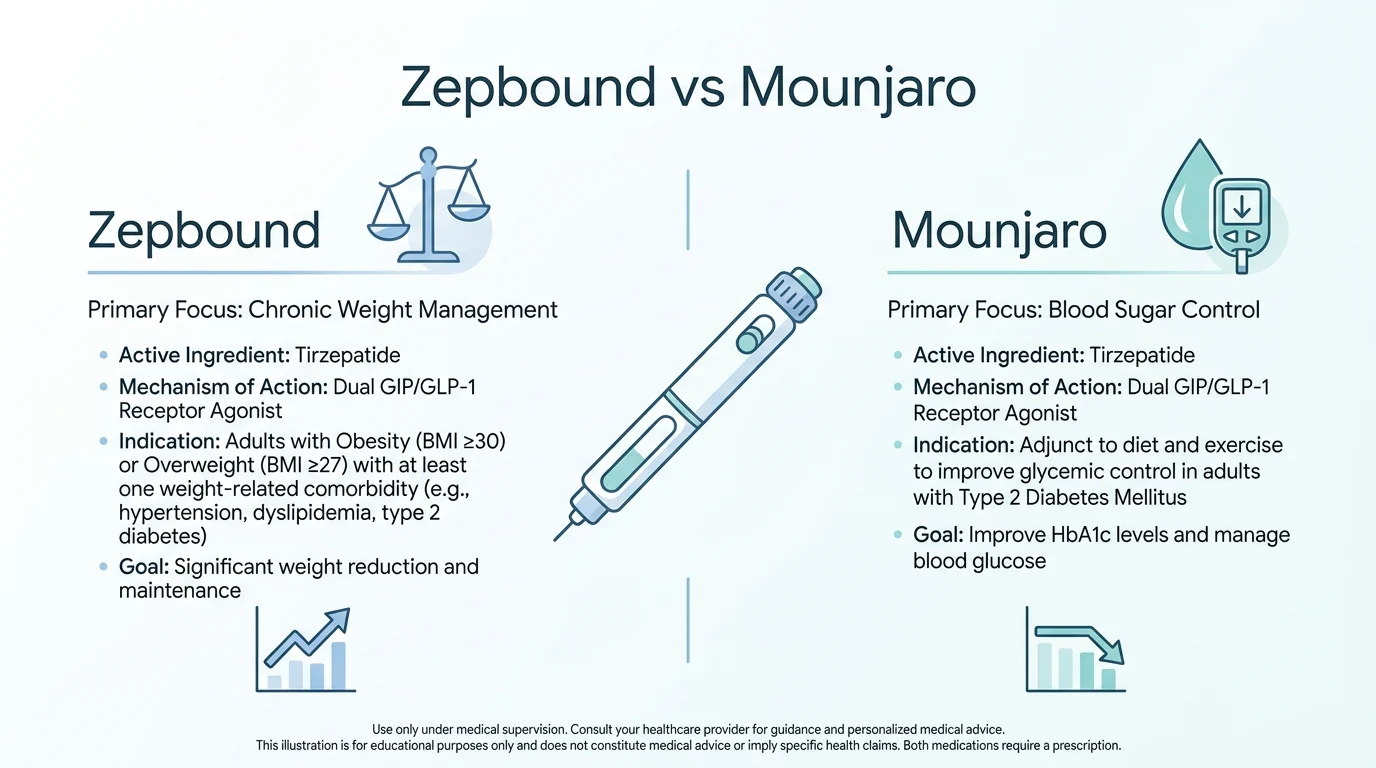
Quick Ans: Zepbound and Mounjaro are prescription medications that contain the same active ingredient, tirzepatide. However, their approved uses differ in the United States. Zepbound treats chronic weight management in eligible adults and certain cases of obstructive sleep apnea, while Mounjaro improves blood sugar control in people with type 2 diabetes.
Zepbound vs Mounjaro is a common comparison for people who want to understand how these two prescription medications differ. Although both contain tirzepatide, they have different approved uses in the United States.
Zepbound helps eligible adults manage their weight over the long term. It also treats moderate to severe obstructive sleep apnea in certain adults with obesity. In contrast, Mounjaro helps improve blood sugar control in adults and children aged 10 years and older with type 2 diabetes.
Both medications act on GIP and GLP 1 receptors, which play important roles in blood sugar regulation and appetite. As a result, they share several effects and potential side effects.
However, the same active ingredient does not mean you should treat these medicines as interchangeable. Their approved uses, prescribing instructions, and individual treatment plans matter. Understanding these differences can help you discuss suitable options with a qualified healthcare professional.
Quick Answer: Zepbound vs Mounjaro
The main difference between Zepbound and Mounjaro is their approved use, not their active ingredient. Both contain tirzepatide and require a prescription in the United States.
| Feature | Zepbound | Mounjaro |
|---|---|---|
| Active ingredient | Tirzepatide | Tirzepatide |
| Main US approved use | Chronic weight management | Blood sugar control in type 2 diabetes |
| Additional approved use | Certain cases of obstructive sleep apnea | No corresponding US sleep apnea indication |
| Administration | Weekly injection | Weekly injection |
| Common side effects | Nausea, diarrhea, vomiting | Nausea, diarrhea, vomiting |
| Prescription required | Yes | Yes |
For complete details, consult the official Zepbound website and Mounjaro medication information.
What Is Zepbound?
Zepbound is a prescription medicine that contains tirzepatide. In the United States, healthcare professionals prescribe it alongside a reduced calorie diet and increased physical activity to help eligible adults with obesity, or higher weight and a weight related medical condition, lose weight and maintain their weight loss.
Additionally, Zepbound treats moderate to severe obstructive sleep apnea in certain adults with obesity. It is not simply a cosmetic weight loss product. A healthcare professional must assess whether it suits the patient’s medical needs.
What Is Mounjaro?
Mounjaro is another prescription medicine that contains tirzepatide. In the United States, it helps improve blood sugar control alongside diet and exercise in adults and children aged 10 years and older with type 2 diabetes.
Although Mounjaro may also affect appetite and body weight, its US approved indication focuses on blood sugar control. Zepbound, by comparison, carries the specific US indication for chronic weight management.
Importantly, approved uses can differ between countries.
How Do Zepbound and Mounjaro Work?
Both medicines activate GIP and GLP 1 receptors. These receptors help regulate blood sugar and appetite. The medications can also slow stomach emptying, especially when treatment begins.
Consequently, some people experience changes in hunger, food intake, and blood sugar levels. However, results vary depending on individual health, dose, treatment goals, and response to medication.
Zepbound vs Mounjaro: Side Effects
Because both medicines contain tirzepatide, they can cause similar side effects.
Common side effects include:
- Nausea
- Diarrhea
- Vomiting
- Constipation
- Abdominal discomfort
- Indigestion
- Reduced appetite
However, both medicines also carry more serious risks, including pancreatitis, gallbladder problems, dehydration that may lead to kidney problems, and severe allergic reactions.
Both US product labels also carry a boxed warning about thyroid C cell tumors observed in animal studies. People with a personal or family history of medullary thyroid carcinoma or multiple endocrine neoplasia syndrome type 2 should not use these medicines.
Seek urgent medical attention for severe or persistent abdominal pain, difficulty breathing, or other serious symptoms. Always review the official medication guide with your healthcare professional.
Is This a Grammar, Usage, or Vocabulary Issue?
Zepbound vs Mounjaro is a medical product comparison rather than a grammar question. Readers use this phrase to compare two brand names, their approved uses, safety information, and potential benefits.
Although the medicines share an active ingredient, their brand specific indications differ in the United States.
Real World Examples
Medical appointment: A person with type 2 diabetes asks a healthcare professional whether Mounjaro may help manage blood sugar.
Weight management: An eligible adult discusses Zepbound as part of a long term weight management plan.
Medication safety: A patient asks a pharmacist whether switching between the two medicines requires a new prescription and a revised treatment plan.
Recap: The right treatment depends on the person’s condition, medical history, treatment goals, and local prescribing rules.
Common Mistakes and Corrections
| Correct Understanding | Incorrect Assumption | Why |
|---|---|---|
| Both medicines contain tirzepatide | They contain different active ingredients | Their active ingredient is the same |
| Their US approved uses differ | They have identical approved indications | Their labeled uses are different |
| Both require medical supervision | Either medicine can be started independently | Both are prescription medicines |
| Both can cause serious side effects | One medicine has no major risks | Both carry important safety warnings |
Decision rule: Compare approved uses, safety information, and personal medical needs instead of choosing a medicine based only on its brand name.
Exercises With Answers
- Do Zepbound and Mounjaro contain the same active ingredient? Yes.
- Does Mounjaro improve blood sugar control in type 2 diabetes? Yes.
- Does Zepbound have a US approval for chronic weight management in eligible adults? Yes.
- Should patients switch between these medicines without medical guidance? No.
- Can both medicines cause gastrointestinal side effects? Yes.
Related Comparisons
Zepbound vs Mounjaro for Weight Loss
Zepbound has a specific US approval for chronic weight management in eligible adults. Mounjaro’s US indication focuses on blood sugar control in type 2 diabetes. Although both contain tirzepatide, their brand specific indications differ.
Zepbound vs Mounjaro for Diabetes
Mounjaro carries the US indication for improving blood sugar control in people with type 2 diabetes. Zepbound does not carry that same specific US indication.
Are the Doses the Same?
Both medicines offer overlapping tirzepatide dose strengths. However, the appropriate dose and dose increases depend on the indication, tolerability, and prescribing instructions. Never convert doses or switch products without guidance from a healthcare professional.
FAQs
Are Zepbound and Mounjaro the same medication?
Both medicines contain tirzepatide, but they have different brand names and approved uses in the United States. A healthcare professional can explain which product fits a patient’s treatment needs.
Which is better for weight loss, Zepbound or Mounjaro?
Zepbound has a specific US approval for chronic weight management in eligible adults. Individual results vary, so a healthcare professional should assess the appropriate treatment.
Can you take Zepbound and Mounjaro together?
No. Both contain tirzepatide, so patients should not use them together. Combining them may increase medication related risks.
Do Zepbound and Mounjaro have the same side effects?
Their side effects overlap because both contain tirzepatide. Common effects include nausea, diarrhea, vomiting, and constipation. Both also carry important safety warnings.
Is Mounjaro approved for weight loss in the United States?
Mounjaro’s US approved indication focuses on blood sugar control in type 2 diabetes. Zepbound is the tirzepatide brand specifically approved for chronic weight management in eligible adults.
Can you switch from Mounjaro to Zepbound?
A healthcare professional may consider a switch when appropriate. However, patients should not switch independently because the decision depends on their treatment goals, current dose, medical history, and safety needs.
Do Zepbound and Mounjaro require a prescription?
Yes. Both are prescription medicines in the United States. Patients should follow their prescriber’s instructions and review the official safety information.
Are Zepbound and Mounjaro approved for the same uses worldwide?
Not necessarily. Regulatory approvals and prescribing rules vary by country. Therefore, patients should check local medicine information and consult a qualified healthcare professional.
Conclusion
Zepbound vs Mounjaro comes down mainly to their approved uses in the United States. Both medicines contain tirzepatide and work through similar biological pathways. However, Zepbound treats chronic weight management in eligible adults and certain cases of obstructive sleep apnea, while Mounjaro improves blood sugar control in people with type 2 diabetes.
Despite these similarities, neither medicine suits everyone. Both can cause gastrointestinal side effects and carry important safety warnings. Patients should not combine them or switch between them without medical guidance.
If you are comparing these medicines for yourself or a family member, start by identifying the treatment goal. Next, discuss your medical history, potential risks, and available options with a healthcare professional. This approach helps you understand the benefits and limitations of each medicine.
The practical takeaway: Choose treatment based on your medical needs and a qualified professional’s advice, not simply on brand popularity or online comparisons.