
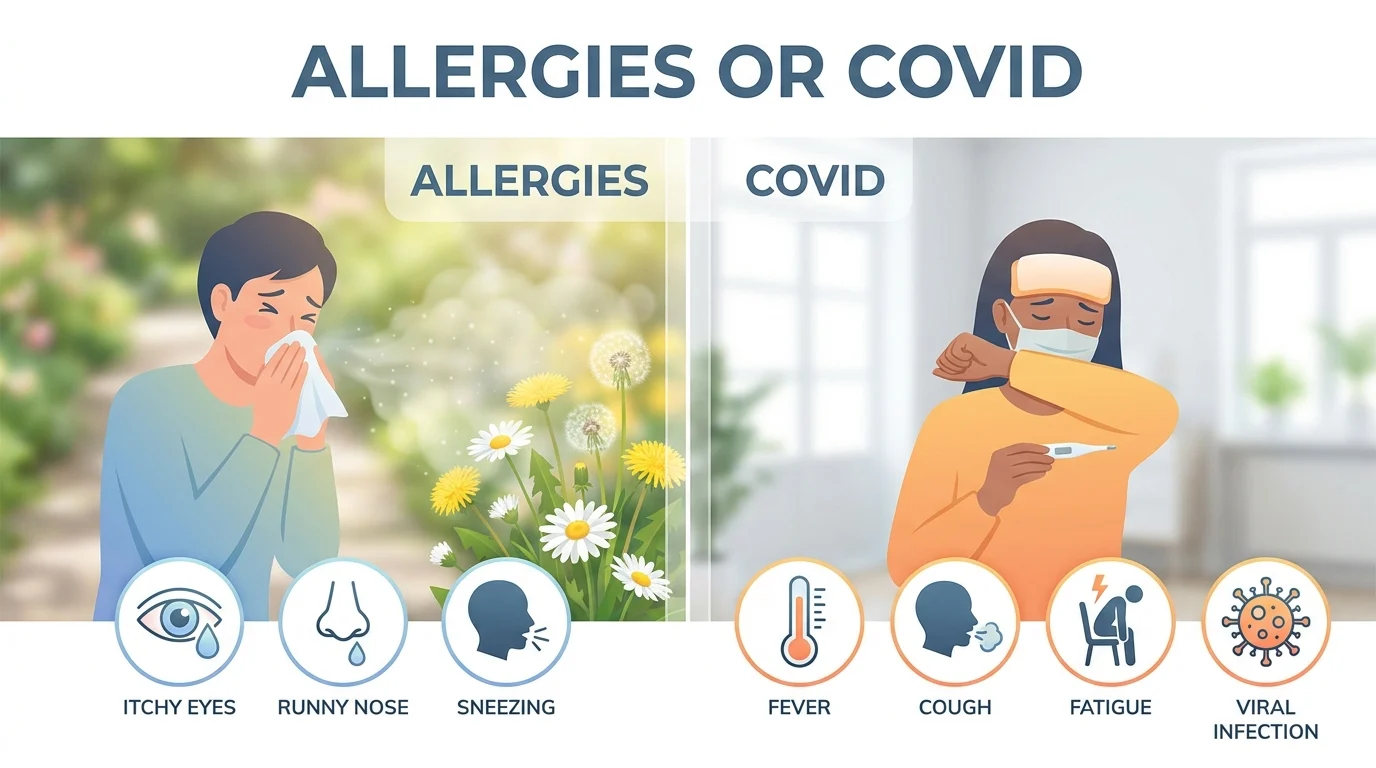
Quick Ans: Allergies and COVID can cause some similar symptoms, including coughing, congestion, headache, fatigue, and a sore throat. However, COVID is caused by a virus, while allergies are usually triggered by substances such as pollen, dust, or pet dander. Symptoms alone cannot always tell them apart, so testing can help when COVID is possible.
Allergies or COVID can be difficult to distinguish because both conditions may cause symptoms that affect the nose, throat, and overall energy levels. A stuffy nose, cough, headache, and fatigue can occur with either one.
The main difference is their cause. Allergies happen when the immune system reacts to substances that are usually harmless, such as pollen, dust mites, mold, or pet dander. COVID is an infection caused by the SARS CoV 2 virus.
Some symptoms provide useful clues. Itchy eyes and repeated sneezing are common with allergies, while fever, chills, body aches, and a sudden change in taste or smell can occur with COVID. However, symptoms can vary from person to person.
Because the symptoms overlap, you should not rely on symptoms alone to determine whether you have COVID. Testing is the more reliable way to check for an active infection.
Quick Answer and Key Takeaway
Allergies and COVID can share symptoms, but they have different causes. Allergies are immune reactions to triggers such as pollen or dust, while COVID is a viral infection.
Itchy eyes and symptoms that appear around a known allergy trigger often point toward allergies. Fever, chills, body aches, or recent exposure to COVID may make an infection more likely.
Allergies or COVID: Definition and Explanation
What Are Allergies?
Allergies occur when the immune system reacts to an allergen. Common triggers include pollen, dust mites, mold, and animal dander.
Typical allergy symptoms include:
- Sneezing
- Runny or stuffy nose
- Itchy or watery eyes
- Itchy nose or throat
- Coughing
- Postnasal drip
Allergies are not contagious.
What Is COVID?
COVID is a respiratory illness caused by infection with the SARS CoV 2 virus. Symptoms can range from mild to severe.
Possible symptoms include:
- Fever or chills
- Cough
- Sore throat
- Congestion or runny nose
- Fatigue
- Headache
- Muscle or body aches
- Nausea or vomiting
- Diarrhea
- Shortness of breath
- Changes in taste or smell
Symptoms can vary, and some people with COVID may have only mild symptoms.
Is This a Grammar, Usage, or Vocabulary Issue?
No. Allergies or COVID is a health related comparison rather than a grammar or vocabulary issue.
People commonly search this phrase when they want to understand whether respiratory symptoms could be caused by allergies or COVID. Because the symptoms can overlap, medical testing and professional advice may be necessary.
Real World Usage Examples
Everyday Symptoms
Allergies:
My eyes are itchy, and I keep sneezing whenever pollen levels are high.
COVID:
I developed a cough, fatigue, and fever after being exposed to someone with COVID.
Recap: Itchy eyes and predictable seasonal symptoms can suggest allergies, while systemic symptoms can occur with COVID.
Workplace or School
If you develop respiratory symptoms at work or school, avoid exposing others until you understand what is causing them. If COVID is possible, follow current local health guidance and consider testing.
Recap: Don’t assume that congestion automatically means allergies.
Seasonal Symptoms
Allergies often return when a person encounters a familiar trigger. COVID can occur at any time of year.
Recap: A recurring seasonal pattern may favor allergies, but it does not completely rule out infection.
Key Differences Between Allergies and COVID
| Feature | Allergies | COVID |
|---|---|---|
| Cause | Allergens | SARS CoV 2 virus |
| Contagious | No | Yes |
| Itchy eyes | Common | Less typical |
| Sneezing | Common | Possible |
| Fever | Usually absent | Possible |
| Body aches | Less typical | Possible |
| Fatigue | Possible | Common |
| Symptoms after allergen exposure | Common | Not applicable |
| Testing | Usually not needed to identify an allergen | COVID testing can help confirm infection |
Symptoms can overlap, so this table should not be used as a diagnosis.
Regional or Global Usage Differences
The words allergies and COVID are used broadly in English speaking regions. Medical recommendations, testing availability, isolation guidance, and vaccination recommendations can differ between countries and can change over time.
For current health decisions, follow guidance from your local health authority or healthcare professional.
When NOT to Assume It’s Allergies
Do not automatically assume symptoms are allergies when:
- You have a fever or chills.
- You develop significant body aches.
- You recently had close contact with someone who has COVID.
- Your symptoms are unusually severe.
- You develop shortness of breath.
- You experience symptoms that are different from your usual allergies.
- You need to know whether you are contagious.
If COVID is possible, testing can provide more useful information than guessing from symptoms.
Common Mistakes and Corrections
| Correct Understanding | Incorrect Assumption | Why |
|---|---|---|
| Allergies are not contagious | Allergies can spread to others | Allergies are immune reactions, not infections |
| COVID can cause congestion | A stuffy nose always means allergies | Respiratory infections can also cause congestion |
| Itchy eyes commonly occur with allergies | Itchy eyes prove you have allergies | Symptoms can overlap |
| Testing can help identify COVID | Symptoms alone confirm COVID | Symptoms are not specific enough for diagnosis |
Easy Decision Rule
Think about the pattern, associated symptoms, and possible exposure, but don’t use symptoms alone to diagnose COVID.
If you’re unsure and COVID is possible, consider an appropriate test and contact a healthcare professional when necessary.
Exercises With Answers
Choose allergies, COVID, or both.
- Can cause a stuffy nose.
- Is caused by an allergen.
- Is caused by a virus.
- Can cause fatigue.
- Is contagious.
Answers
- Both
- Allergies
- COVID
- Both
- COVID
Related Concepts and Comparisons
Allergies or a Cold
Allergies can resemble a common cold. Sneezing, congestion, and a runny nose can occur with both. Itchy eyes and recurring symptoms around known triggers often favor allergies.
Allergies or Flu
Flu commonly causes fever, body aches, chills, and significant fatigue. Allergies are more likely to cause sneezing, itching, and watery eyes without fever.
COVID or Flu
COVID and flu can have very similar symptoms. Testing may be needed to determine which infection is responsible.
FAQs
How can you tell if it’s allergies or COVID?
There is no guaranteed way to distinguish them from symptoms alone. Itchy eyes and recurring exposure related symptoms often occur with allergies, while fever, body aches, and exposure to an infected person can occur with COVID.
Can allergies cause a fever?
Allergies typically do not cause a fever. If you have a fever along with respiratory symptoms, consider an infection or another cause and seek medical advice when appropriate.
Can COVID cause itchy eyes?
COVID can sometimes cause eye related symptoms, but itchy eyes are more commonly associated with allergies. Symptoms alone cannot confirm the cause.
Is a runny nose more likely allergies or COVID?
A runny nose can occur with both allergies and COVID. Other symptoms and the timing of the illness can provide additional clues.
Do allergies make you cough?
Yes. Allergies can cause coughing, particularly when mucus drains down the throat or when an allergen irritates the airways.
Can allergies turn into COVID?
No. Allergies do not turn into COVID because COVID is caused by a viral infection. However, someone with allergies can also become infected with COVID.
Should I test for COVID if I think I have allergies?
If you have symptoms that could be COVID, especially after a known exposure, testing can help determine whether you have an active infection. Follow current local health guidance for testing.
Can you have allergies and COVID at the same time?
Yes. Having allergies does not prevent you from getting COVID. If your symptoms are unusual for your normal allergies, consider testing or speaking with a healthcare professional.
What symptoms are more common with COVID than allergies?
Fever, chills, body aches, and some changes in taste or smell can occur with COVID and are less typical of ordinary allergies. However, symptom patterns vary.
Conclusion
Allergies or COVID can look similar at first because both may cause congestion, coughing, fatigue, headaches, and a sore throat. The biggest difference is their cause. Allergies result from an immune response to an allergen, while COVID results from infection with the SARS CoV 2 virus.
Certain symptoms can offer clues. Itchy eyes, repeated sneezing, and symptoms that appear after exposure to pollen or another known trigger are commonly associated with allergies. Fever, chills, body aches, and recent exposure to someone with COVID can make an infection more concerning.
Still, symptoms are not enough to diagnose COVID reliably. If you think you may have been exposed or your symptoms are unusual, testing can help. Seek medical attention promptly for serious symptoms such as difficulty breathing, chest pain, confusion, or other signs of a medical emergency.
The practical rule is simple: look at the overall symptom pattern, consider your exposure and triggers, and test when COVID is possible rather than relying on symptoms alone.
1 thought on “Allergies or COVID: How to Tell the Difference? Symptoms & Tips”