
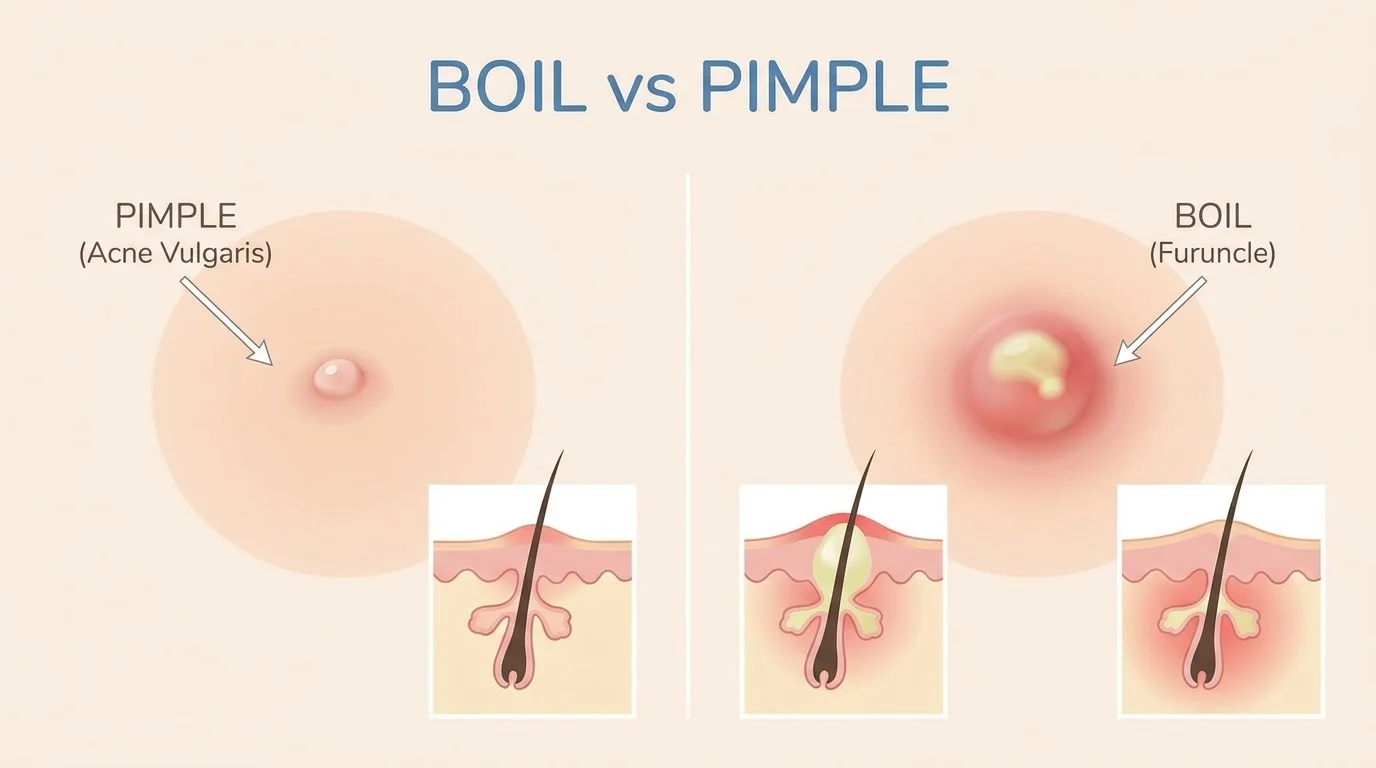
Quick Answer: A boil vs pimple comparison comes down to size, depth, pain, and cause. A pimple usually forms when pores become clogged with oil and dead skin cells, while a boil develops when an infection affects a hair follicle and nearby tissue. Boils often grow larger, feel deeper, and cause more pain than ordinary pimples.
Skin bumps can look similar at first, making it difficult to tell whether you have a boil or a pimple. Both can appear red, swollen, and tender. However, they develop for different reasons and may need different treatments.
A pimple commonly develops when excess oil, dead skin cells, and bacteria clog a pore. You may notice pimples on your face, forehead, chest, shoulders, or back. A boil, on the other hand, usually develops when bacteria infect a hair follicle or the surrounding skin. It often begins as a small, painful lump and gradually becomes larger.
Understanding the difference helps you choose the right care and avoid making the problem worse. For example, squeezing either type of bump can irritate your skin, increase inflammation, or spread infection. In this guide, you will learn how to recognize a boil and a pimple, understand their causes, and identify when medical attention may be necessary.
What Is the Difference Between a Boil and a Pimple?
A pimple is an inflamed skin blemish that usually develops because a pore becomes clogged. A boil is a deeper skin infection that often fills with pus and can become increasingly painful.
What Does a Pimple Look Like?
Pimples are common symptoms of acne. They may appear as small red bumps, whiteheads, blackheads, or pus filled spots. Some pimples remain mild, while deeper acne lesions can become swollen and painful.
Common features include:
- Small or moderately sized bumps
- White or yellow heads in some cases
- Mild to moderate tenderness
- Multiple bumps appearing together
- Frequent occurrence on the face, chest, or back
What Does a Boil Look Like?
A boil, also called a furuncle, develops when an infection affects a hair follicle and nearby tissue. It often starts as a red, tender lump and gradually grows larger. Eventually, it may develop a white or yellow center containing pus.
Common features include:
- A firm, swollen lump beneath the skin
- Noticeable warmth and redness
- Moderate to severe pain
- Increasing size over several days
- Pus that may drain as the boil develops
Boils often occur on the neck, armpits, buttocks, thighs, and other areas where hair follicles experience friction or sweating.
Boil vs Pimple: Key Differences
| Feature | Pimple | Boil |
|---|---|---|
| Main cause | Clogged pores and inflammation | Infection of a hair follicle and surrounding tissue |
| Size | Often small | Can grow larger and deeper |
| Pain | Usually mild, sometimes severe | Often more painful |
| Appearance | Red bump, whitehead, or blackhead | Red, swollen lump that may fill with pus |
| Common locations | Face, chest, back | Armpits, thighs, buttocks, neck |
| Contagiousness | Pimples themselves are not contagious | Bacteria from an infected boil can spread |
| Treatment | Gentle skin care and suitable acne treatments | Warm compresses; medical drainage or antibiotics when needed |
Keep in mind that these are general differences. A deep, painful pimple can resemble a boil, so appearance alone cannot always confirm the diagnosis.
What Causes Boils and Pimples?
Although both conditions affect the skin, their causes differ.
Common Causes of Pimples
Pimples often develop when excess oil and dead skin cells block pores. Hormonal changes can increase oil production, while certain skin care products may contribute to clogged pores.
Other contributing factors include:
- Hormonal fluctuations during puberty
- Stress that may worsen existing acne
- Oil based or pore clogging products
- Friction from clothing or equipment
Common Causes of Boils
Boils usually develop when bacteria, commonly Staphylococcus aureus, enter the skin through a hair follicle or a small break in the skin.
Risk factors include:
- Close contact with someone who has a skin infection
- Shaving or friction that damages the skin
- Heavy sweating
- Diabetes or a weakened immune system
- Previous or recurring skin infections
Therefore, a boil is primarily an infection, whereas a typical pimple is related to blocked pores and inflammation.
How to Treat a Boil vs Pimple
The right treatment depends on the type and severity of the bump.
How to Treat a Pimple
For mild pimples, gentle skin care often helps reduce irritation and prevent new breakouts.
- Wash the affected area gently twice a day.
- Consider an over the counter acne treatment containing benzoyl peroxide or salicylic acid.
- Choose products labeled noncomedogenic.
- Avoid squeezing or picking the pimple.
- Give the treatment time to work and follow the product instructions.
If acne becomes severe, painful, or leaves scars, consult a dermatologist for appropriate treatment.
How to Treat a Boil
For a small boil, a warm, moist compress may encourage natural drainage and ease discomfort.
- Apply a clean, warm compress for 10 to 15 minutes several times daily.
- Keep the area clean and avoid rubbing it.
- Do not squeeze, puncture, or cut the boil.
- If it drains naturally, cover it with a clean dressing and wash your hands afterward.
- Avoid sharing towels, razors, or clothing that touches the infected area.
A healthcare professional may need to drain a larger boil. Antibiotics may also be necessary in certain cases. Do not use leftover antibiotics or attempt to drain the boil yourself.
When Should You See a Doctor?
Although many pimples and small boils improve with home care, some symptoms require medical attention.
Seek medical advice if:
- The boil grows rapidly or causes severe pain.
- Redness or swelling spreads beyond the bump.
- You develop a fever or chills.
- The boil appears on your face, particularly near your nose or eyes.
- You have diabetes or a weakened immune system.
- Boils keep returning or several develop together.
- A skin bump does not improve or you are unsure what it is.
Important: A fever, rapidly spreading redness, or severe swelling may indicate a more serious infection. Seek prompt medical care if these symptoms occur.
Frequently Asked Questions
1. How can I tell if a bump is a boil or a pimple?
A pimple is often smaller and closer to the skin’s surface. In contrast, a boil usually feels deeper, grows larger, and causes more pain. However, deep acne lesions can look similar.
2. Can a pimple turn into a boil?
A typical pimple does not simply turn into a boil because the conditions have different causes. However, an infected hair follicle or another skin infection can develop near an acne lesion and resemble a boil.
3. Should I pop a boil or a pimple?
No. Popping either bump can worsen inflammation and damage the skin. Squeezing a boil may also spread bacteria into nearby tissue.
4. Are boils contagious?
The boil itself does not spread through the air, but the bacteria and infected drainage can spread through direct contact or contaminated items. Keep the area covered and avoid sharing personal items.
5. Do boils go away on their own?
Some small boils drain and heal without medical treatment. Nevertheless, larger, worsening, or persistent boils may require professional care.
6. Can a boil appear on the face?
Yes. Boils can develop on the face, but facial boils deserve particular caution. Seek medical advice, especially for a boil near the nose or eyes.
7. Why do I keep getting boils?
Recurring boils may be associated with bacterial colonization, friction, skin conditions, or certain health factors, including diabetes. A healthcare professional can help identify the cause and recommend prevention.
8. Is a painful pimple always a boil?
No. Deep acne, including nodules and cysts, can cause significant pain. If a bump grows quickly, feels unusually deep, or shows signs of infection, have it assessed by a healthcare professional.
Conclusion
The main difference between a boil and a pimple is the underlying cause. Pimples generally develop when pores become clogged, while boils usually result from an infection involving a hair follicle and surrounding tissue. Boils often feel deeper, grow larger, and cause more pain.
Although gentle skin care and warm compresses can help in appropriate cases, avoid squeezing either bump. Most importantly, seek medical advice if you notice spreading redness, severe pain, fever, recurring boils, or other signs of infection.
2 thoughts on “Boil vs Pimple: How to Tell the Difference, Causes, and Treatment”