
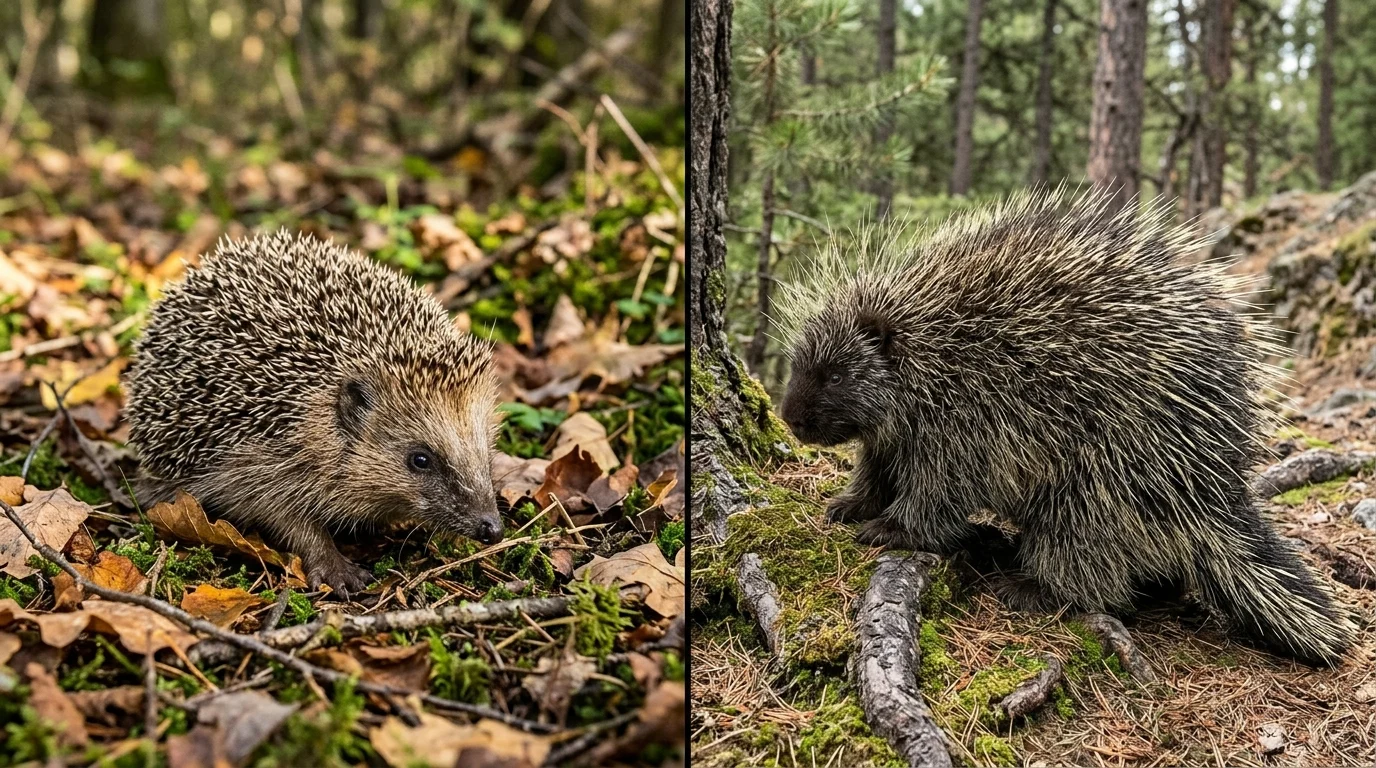
Quick Answer: The main difference between a hedgehog and a porcupine is their size, defense system, and animal family. Hedgehogs are small mammals that curl into a tight ball when threatened, while porcupines are larger rodents with sharp quills that can detach and become lodged in an attacker’s skin. Both use spines for protection, but they are not closely related.
At first glance, hedgehogs and porcupines may look like the same animal. Both have sharp spines covering their bodies, and both use these spines to protect themselves from predators. However, several important differences set them apart.
A hedgehog is a small mammal known for its round body, pointed snout, and habit of curling into a ball. In contrast, a porcupine is a rodent that often has a larger body and long, sharp quills. Although both animals rely on their spines for defense, they use them in different ways.
Understanding the differences between a hedgehog and a porcupine can help you identify each animal more easily. In this guide, you’ll learn about their appearance, size, diet, habitats, behavior, and defensive abilities. You’ll also discover whether porcupines can shoot their quills and which animal makes a better pet.
What Is a Hedgehog?
A hedgehog is a small mammal with short, stiff spines across its back. These spines are modified hairs made of keratin, the same protein found in human hair and fingernails.
Hedgehogs usually have a pointed snout, small eyes, short legs, and a rounded body. When danger approaches, they contract special muscles to curl into a tight ball, protecting their face, belly, and legs.
Most hedgehogs eat insects and other small invertebrates. However, they may also eat worms, snails, eggs, and other available food.
Example: If a hedgehog encounters a predator, it may curl up and present its spines as a barrier.
What Is a Porcupine?
A porcupine is a rodent covered in sharp quills. Depending on the species, it may have a stocky body, a long tail, and strong claws for climbing or digging.
Unlike hedgehogs, porcupines do not belong to the same animal family. They belong to the rodent group, which also includes mice, squirrels, and beavers.
Porcupines eat mostly plant material, including bark, leaves, twigs, roots, and fruit. Their exact diet depends on the species and its environment.
When threatened, a porcupine may raise its quills, turn its back toward danger, or lash its tail. Its quills can detach when they make contact with an attacker.
Hedgehog vs Porcupine: Key Differences
| Feature | Hedgehog | Porcupine |
|---|---|---|
| Animal group | Small spined mammal | Rodent |
| Typical size | Small | Usually much larger |
| Body covering | Short, stiff spines | Sharp quills |
| Defense | Curls into a ball | Raises quills and may lash its tail |
| Can spines detach? | No, not like porcupine quills | Yes, quills can detach |
| Main diet | Insects and other small animals | Mostly plants |
| Habitat | Europe, Asia, and Africa, depending on species | Africa, Asia, and the Americas, depending on species |
| Climbing ability | Generally limited | Some species climb trees well |
| Pet suitability | Sometimes kept as a pet where legal | Generally unsuitable as a household pet |
1. Size and Appearance
Size is one of the easiest ways to distinguish these animals. Hedgehogs are generally compact, often measuring around 6 to 12 inches long, depending on the species.
Porcupines vary considerably in size. Some are relatively small, while others can grow several feet long, including the tail. Their bodies often appear heavier than those of hedgehogs.
Moreover, a hedgehog usually has short spines and a pointed face. A porcupine often has longer quills that stand out more visibly from its body.
2. Spines vs Quills
Although both animals have sharp body coverings, their defenses work differently.
A hedgehog’s spines stay attached to its skin. When it senses danger, it curls into a ball so that predators face a prickly barrier.
A porcupine’s quills have tiny barbs on many species, which can make them difficult and painful to remove after they penetrate the skin. Contact can leave quills embedded in an attacker.
Important fact: Porcupines cannot shoot their quills. The quills detach through physical contact, not by being launched through the air.
3. Diet and Feeding Habits
Hedgehogs mainly eat insects, beetles, worms, and other small invertebrates. Some species also consume small vertebrates or other foods when available.
Porcupines, on the other hand, mostly eat plants. They may feed on bark, stems, leaves, fruit, and roots. Some species also chew wood or visit trees to find food.
Therefore, their diets reflect different feeding habits: hedgehogs often search for small prey, while porcupines usually forage for vegetation.
4. Habitat and Behavior
Hedgehogs live in various environments, including grasslands, woodland edges, gardens, and scrubland. Many are active at night and spend daylight hours resting in sheltered places.
Porcupines occupy a wider range of habitats, including forests, deserts, grasslands, and rocky areas. Some species live mainly on the ground, while others spend considerable time in trees.
In addition, hedgehogs often rely on curling up for protection. Porcupines generally depend on their quills and defensive positioning to discourage predators.
5. Which Animal Is More Dangerous?
Neither animal usually seeks to attack humans. However, both can cause injuries if someone handles them carelessly.
A hedgehog’s spines can prick the skin, especially if the animal curls up in response to stress. A porcupine can cause a more serious injury because its quills may penetrate deeply and become embedded.
Consequently, keep your distance from wild animals and never try to pick one up without appropriate training.
6. Can You Keep a Hedgehog or Porcupine as a Pet?
Hedgehogs are sometimes kept as pets, but their legality varies by location. They also need specialized care, suitable temperatures, proper nutrition, and gentle handling.
Porcupines are wild animals that require much more space and specialized care. Their size, behavior, and dangerous quills make them unsuitable for most households.
Before considering a hedgehog, check local wildlife and pet regulations. Also, make sure you can meet its long-term needs.
Common Mistakes to Avoid
- Assuming they are related: Hedgehogs and porcupines belong to different mammal groups.
- Thinking porcupines shoot quills: Their quills detach through contact.
- Believing both eat the same food: Hedgehogs mainly eat small animals and invertebrates, while porcupines mostly eat plants.
- Assuming every porcupine climbs trees: Climbing habits vary by species.
Frequently Asked Questions
Is a hedgehog the same as a porcupine?
No. They are different mammals with different evolutionary backgrounds, diets, sizes, and defensive behaviors.
Who has sharper spines, a hedgehog or a porcupine?
Both have sharp defenses. However, porcupine quills can penetrate skin and detach, sometimes causing serious injuries.
Can a hedgehog shoot its spines?
No. A hedgehog cannot shoot its spines, and its spines do not detach like porcupine quills.
Can a porcupine shoot its quills?
No. This is a common myth. Quills can detach when an attacker touches the porcupine.
Do hedgehogs and porcupines eat the same food?
No. Hedgehogs mainly eat insects and other small animals, while porcupines primarily eat plant material.
Which animal is bigger?
Porcupines are generally much larger than hedgehogs, although the size of both animals varies by species.
Are hedgehogs and porcupines dangerous to humans?
They usually avoid people. However, their spines or quills can cause painful injuries if someone handles them carelessly.
Which animal makes a better pet?
A hedgehog may be suitable for an experienced owner where keeping one is legal. Porcupines are wild animals and are generally not suitable household pets.
Conclusion
The main difference between a hedgehog and a porcupine lies in their size, diet, and defense system. Hedgehogs are small mammals that protect themselves by curling into a ball, while porcupines are larger rodents that defend themselves with detachable quills.
Although they share a spiny appearance, they are not closely related and behave differently. Remembering these key features makes it much easier to tell them apart.