
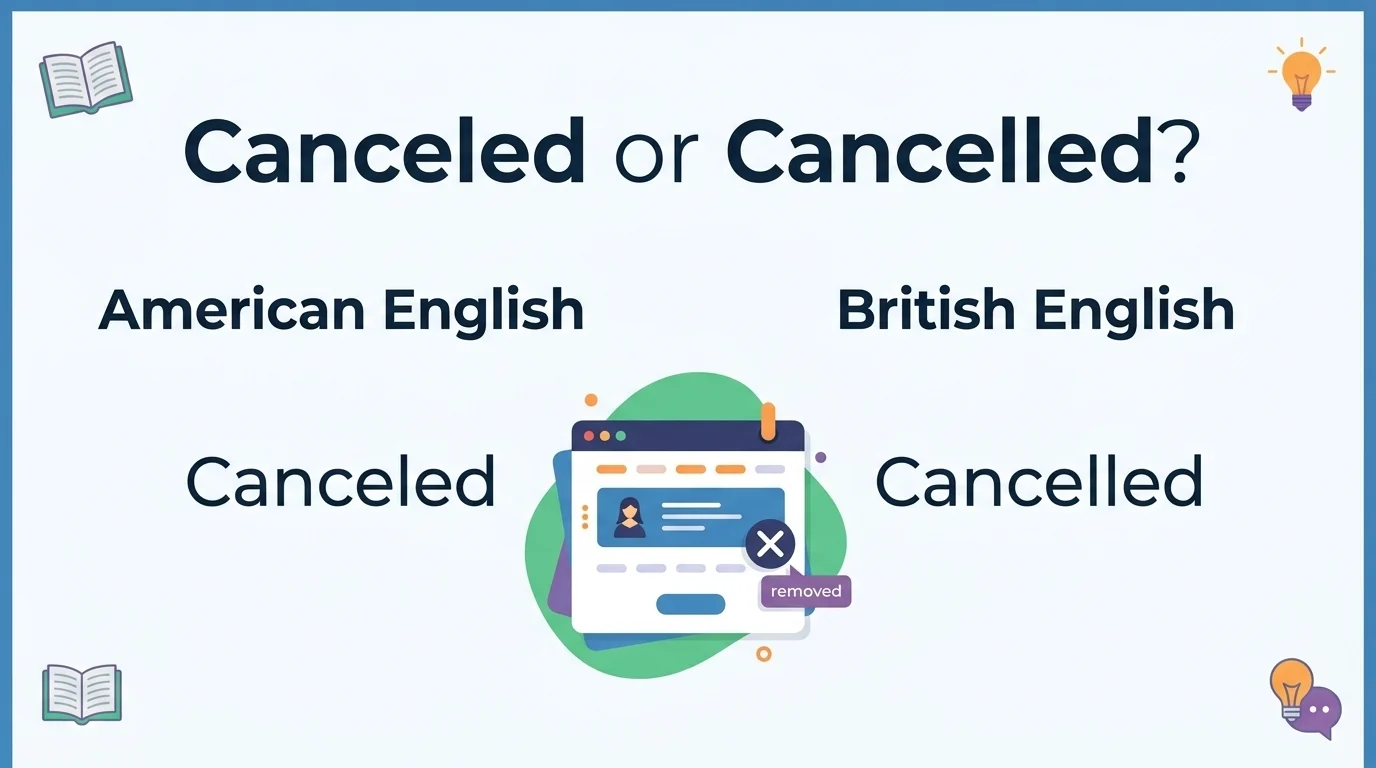
Quick Ans: Both “canceled” and “cancelled” are correct spellings. The difference depends on the variety of English you use. American English usually uses “canceled” with one “l,” while British English, Canadian English, and many other varieties use “cancelled” with two “l”s.
Are you confused about whether to write “canceled or cancelled”? Both forms are correct, but your choice depends on regional spelling conventions.
American English generally uses “canceled” and “canceling.” British English usually uses “cancelled” and “cancelling.” The difference comes from different spelling conventions for words ending in “l.”
You may see both spellings in emails, news articles, websites, school assignments, and business documents. Neither spelling is automatically wrong. However, mixing the two styles in the same piece of writing can make your work look inconsistent.
For English learners, the easiest approach is to choose one English variety and follow its spelling rules. If you are writing for an American audience, use “canceled.” If you are following British English, use “cancelled.”
Quick Answer and Key Takeaway
| Spelling | English Variety | Example |
|---|---|---|
| Canceled | American English | The flight was canceled. |
| Cancelled | British English | The flight was cancelled. |
The simple rule is: American English uses “canceled,” while British English uses “cancelled.”
Definition and Explanation
Canceled
“Canceled” is the past tense and past participle of “cancel” in American English.
Example: The company canceled the meeting.
American English usually keeps one “l” before “ed.”
Cancelled
“Cancelled” is the standard British spelling of the same word.
Example: The company cancelled the meeting.
The meaning does not change. Only the spelling differs.
| Form | Meaning | Common Usage |
|---|---|---|
| Canceled | Called off or stopped | American English |
| Cancelled | Called off or stopped | British English |
Both forms mean that something planned will no longer happen. The difference is mainly regional spelling.
Is This a Grammar, Usage, or Vocabulary Issue?
This is a spelling and regional usage issue, not a difference in meaning.
For example, “The concert was canceled” and “The concert was cancelled” communicate exactly the same idea.
However, consistency matters. If your article follows American English, use “canceled” throughout. If it follows British English, use “cancelled.”
The same difference appears in the present participle. American English commonly uses “canceling,” while British English uses “cancelling.”
Real World Usage Examples
Workplace Example
American English: “The manager canceled the meeting.”
British English: “The manager cancelled the meeting.”
Recap: Both sentences are correct. Choose the spelling that matches your English variety.
Academic Example
American English: “The experiment was canceled because of equipment problems.”
British English: “The experiment was cancelled because of equipment problems.”
Recap: Academic writers should follow the spelling style required by their institution or publication.
Everyday Example
“The game was canceled because of rain.”
A British writer would normally spell this as “The game was cancelled because of rain.”
Recap: The meaning stays the same across both varieties.
Regional or Global Usage Differences
American English generally prefers “canceled” with one “l.” British English usually prefers “cancelled” with two “l”s.
Canadian English commonly uses “cancelled,” although Canadian spelling contains influences from both British and American English.
Australian and New Zealand English generally follow the British form, so “cancelled” is common.
Therefore, the best spelling depends on your audience and the style guide you follow.
When NOT to Use It
Do not use both spellings randomly in the same article.
Avoid “cancelled” if your publication specifically requires American English.
Avoid “canceled” if your school, employer, or publication follows British English.
Do not assume that one spelling is universally correct and the other is a spelling mistake.
When writing professionally, check the required style before choosing a regional spelling.
Common Mistakes and Corrections
| Correct Sentence | Incorrect Sentence | Why |
|---|---|---|
| The flight was canceled. | The flight was cancelled. | The first spelling follows American English. |
| The flight was cancelled. | The flight was canceled. | The first spelling follows British English. |
| She canceled the appointment. | She cancelled the appointment. | “Canceled” is standard in American English. |
| She cancelled the appointment. | She canceled the appointment. | “Cancelled” is standard in British English. |
Decision Rule: Writing in American English? Choose “canceled.” Writing in British English? Choose “cancelled.”
Exercises With Answers
Choose the spelling that matches the stated English variety.
- American English: The event was _____.
- British English: The event was _____.
- American English: She _____ the appointment.
- British English: She _____ the appointment.
- Which spelling uses two “l”s?
- Which spelling is common in American English?
Answer Key
- canceled
- cancelled
- canceled
- cancelled
- cancelled
- canceled
Related Concepts and Comparisons
Readers may also search for canceling or cancelling, canceled vs cancelled, American vs British spelling, traveling or travelling, labeled or labelled, modeling or modelling, enrollment or enrolment, and spelling differences between American and British English.
FAQs
Is canceled or cancelled correct?
Both spellings are correct. “Canceled” is standard in American English, while “cancelled” is standard in British English.
Is cancelled the British spelling?
Yes. “Cancelled” is the usual British spelling. British English doubles the “l” before the “ed” ending in this word.
Is canceled the American spelling?
Yes. American English normally uses “canceled” with one “l.” For example, “The meeting was canceled.”
Which is correct, canceled or cancelled in formal writing?
Both can be correct in formal writing. Your choice should match the English variety and style guide you are following.
Why does British English use cancelled?
British spelling commonly doubles the final “l” when adding certain endings to words such as “cancel.” Therefore, “cancel” becomes “cancelled” and “cancelling.”
Do canceled and cancelled have the same meaning?
Yes. They have exactly the same meaning. The difference is spelling rather than meaning.
Is canceling or cancelling correct?
Both are correct. American English usually uses “canceling,” while British English generally uses “cancelling.”
Should I use canceled or cancelled on my website?
Choose the spelling that matches your target audience. If your website primarily serves American readers, use “canceled.” For British, Australian, or similar audiences, “cancelled” is usually the better choice.
Conclusion
When choosing between “canceled or cancelled,” remember that both spellings are correct. The main difference is regional.
American English usually writes “canceled” with one “l.” British English generally writes “cancelled” with two “l”s. Other varieties, such as Australian and New Zealand English, commonly follow the British spelling.
The meaning remains exactly the same. In both forms, “cancel” means to call off, stop, or decide that something planned will not happen.
The same pattern appears with “canceling” and “cancelling.” American English normally uses one “l,” while British English uses two.
Consistency is the most important rule. Once you choose an English variety, follow its spelling throughout your article, assignment, email, or website.
Practical tip: remember American = canceled and British = cancelled. This quick association will help you choose the correct spelling every time.
3 thoughts on “Canceled or Cancelled: Which Spelling Is Correct?”