
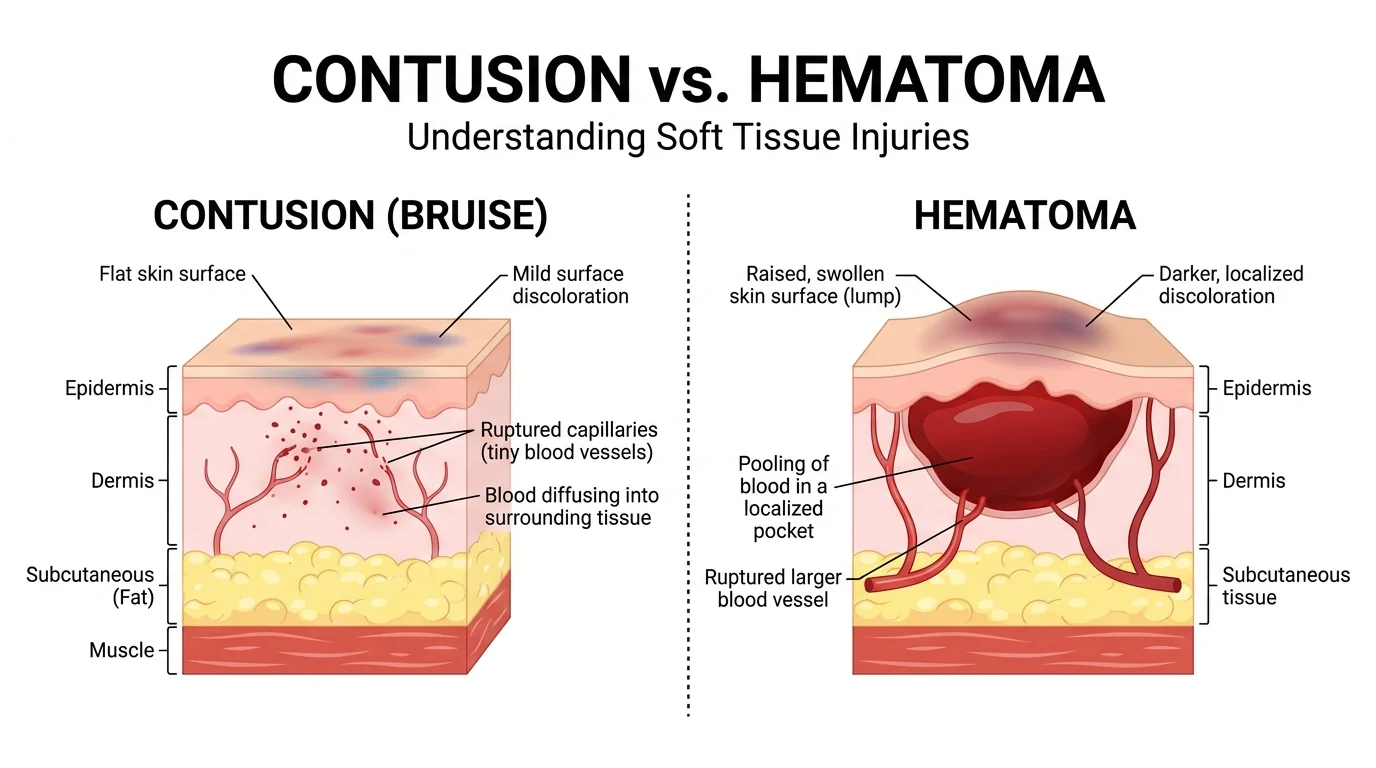
Quick Answer: A contusion is an injury caused by blunt force that damages tissues and often produces a bruise. A hematoma is a collection of blood that pools outside damaged blood vessels. Both can cause pain, swelling, and discoloration, and they can occur together. The main difference is that a contusion describes the injury, while a hematoma describes the collected blood.
A bump, fall, sports injury, or accidental blow can leave the body sore and swollen. Sometimes, the affected area develops a familiar purple or blue mark. In other cases, a noticeable lump forms beneath the skin. These injuries may be described as a contusion or a hematoma, but the terms do not mean exactly the same thing.
Understanding contusion vs hematoma can help you recognize the difference between tissue damage and blood collecting in one area. A contusion commonly affects the skin, muscles, or bones. A hematoma can develop under the skin, inside a muscle, around an organ, or in other parts of the body.
Although both injuries may look similar, their severity can vary considerably. A small bruise may heal with simple care, while a large or deep hematoma may need medical attention. This guide explains their definitions, symptoms, causes, treatment options, and warning signs.
Contusion vs Hematoma: Quick Answer
A contusion is an injury to body tissue caused by a direct impact or blunt force. It often damages small blood vessels, causing blood to leak into surrounding tissue and produce a bruise.
A hematoma is a localized collection of blood outside blood vessels. It can create swelling or a firm lump and may occur beneath the skin or deeper inside the body.
For example, hitting your thigh against a table may cause a contusion. If blood collects in a pocket beneath the skin or within the injured muscle, a hematoma may also develop.
What Is a Contusion?
A contusion is the medical term for a bruise caused by blunt force. The impact damages small blood vessels without necessarily breaking the skin. Blood then leaks into nearby tissues, producing discoloration, tenderness, and swelling.
Contusions can affect different parts of the body.
Common types include:
- Skin contusion: A bruise that causes visible discoloration beneath the skin.
- Muscle contusion: An injury to muscle tissue that may cause pain, swelling, and difficulty moving the affected area.
- Bone contusion: Also called a bone bruise, this injury affects the bone and can cause deep pain that lasts longer than an ordinary skin bruise.
Common causes include falls, sports collisions, accidental knocks, and direct blows.
A mild contusion often improves gradually as the body absorbs the trapped blood. However, a deep muscle or bone contusion can be more serious and may require medical evaluation.
What Is a Hematoma?
A hematoma forms when blood escapes from damaged blood vessels and collects in a localized area. Unlike a simple surface bruise, it may create a distinct lump or a pocket of pooled blood.
Hematomas can develop in several locations, including:
- Beneath the skin
- Within muscles
- Around or inside certain organs
- Inside the skull following a head injury
Symptoms depend on the location and size of the collection. A superficial hematoma may cause visible bruising, tenderness, and swelling. A deeper hematoma may cause significant pain or pressure without obvious discoloration on the skin.
Small hematomas may resolve naturally. Larger collections or those pressing on nearby nerves, organs, or other structures may require medical treatment.
Contusion vs Hematoma: Key Differences
| Feature | Contusion | Hematoma |
|---|---|---|
| Meaning | Injury caused by blunt force | Localized collection of blood |
| Main problem | Tissue damage | Blood pooling in one area |
| Appearance | Often a flat bruise | May produce a lump or swelling |
| Pain | Tenderness or soreness | Pain or pressure, depending on location |
| Common causes | Falls, blows, sports injuries | Injury or damaged blood vessels |
| Treatment | Often rest and ice | Depends on size, location, and severity |
Important: These conditions can overlap. A contusion can cause a hematoma, so they are not always separate injuries.
Contusion vs Hematoma: Symptoms to Watch For
Both injuries may cause pain, swelling, and tenderness. The appearance of the affected area can provide clues, but it cannot always establish which injury is present.
A contusion often produces skin discoloration that changes from reddish or purple to greenish or yellowish as it heals. Movement may also hurt when the injury affects a muscle or joint.
A hematoma may produce a more defined swelling or lump. The area can feel tight, tender, or painful because blood has accumulated in the tissue.
Seek medical advice if swelling becomes increasingly painful, the injured area feels unusually tight, numbness develops, or movement becomes difficult. A clinician may use an examination or imaging tests to assess a deeper injury.
How Are Contusions and Hematomas Treated?
Treatment depends on the injury’s severity and location.
For a minor contusion or superficial hematoma, these measures may help:
- Rest: Avoid activities that worsen the pain.
- Apply ice: Wrap an ice pack in a towel and apply it for about 15 to 20 minutes at a time during the first day or two.
- Elevate the area: If practical, raise the injured limb to help reduce swelling.
- Protect the injury: Avoid further impacts and strenuous activity while the area heals.
Do not place ice directly on the skin or attempt to puncture or drain a lump yourself.
A large or deep hematoma may need medical assessment. Depending on its location and severity, treatment may involve monitoring, addressing a bleeding problem, or a medical procedure to remove accumulated blood.
When Should You Seek Medical Help?
Get urgent medical care if the injury causes severe or rapidly increasing pain, substantial swelling, numbness, weakness, or difficulty moving the affected body part.
A head injury requires particular caution. Seek emergency care after a head impact if there is worsening headache, repeated vomiting, confusion, unusual drowsiness, seizures, weakness, or loss of consciousness. Internal bleeding may not produce a visible bruise.
You should also contact a healthcare professional if bruises appear without a clear cause, occur frequently, or develop while taking blood thinning medication.
Frequently Asked Questions
Is a contusion the same as a hematoma?
No. A contusion describes an injury caused by blunt force, while a hematoma is a localized collection of blood. A contusion may lead to a hematoma.
Which is more serious, a contusion or a hematoma?
Neither is always more serious. Severity depends on the location, depth, amount of bleeding, and damage to surrounding tissue.
Can a contusion turn into a hematoma?
Yes. A contusion can damage blood vessels and cause blood to collect in nearby tissues, forming a hematoma.
How long does a contusion take to heal?
A mild contusion may improve within days and heal over a few weeks. Deeper muscle or bone contusions can take considerably longer.
Do hematomas go away on their own?
Many small hematomas resolve as the body gradually absorbs the blood. Larger, painful, or deep hematomas may require medical evaluation and treatment.
Can you have a hematoma without a visible bruise?
Yes. A hematoma located deep within a muscle or inside the body may not cause obvious discoloration on the skin.
Conclusion
The main difference between contusion vs hematoma is what each term describes. A contusion is tissue damage caused by blunt force, while a hematoma is blood that has collected outside damaged blood vessels. Both may cause pain, swelling, and bruising, and they can occur together.
Minor injuries often improve with rest, ice, and protection from further impact. However, the appearance of a bruise alone cannot reveal how serious an injury is. Deep hematomas and severe contusions may require medical assessment, especially when pain or swelling increases.
If you experience unusual bruising, a growing lump, significant pain, or symptoms after a head injury, seek appropriate medical care. Recognizing the difference between these injuries can help you understand what may be happening and when professional evaluation is important.