
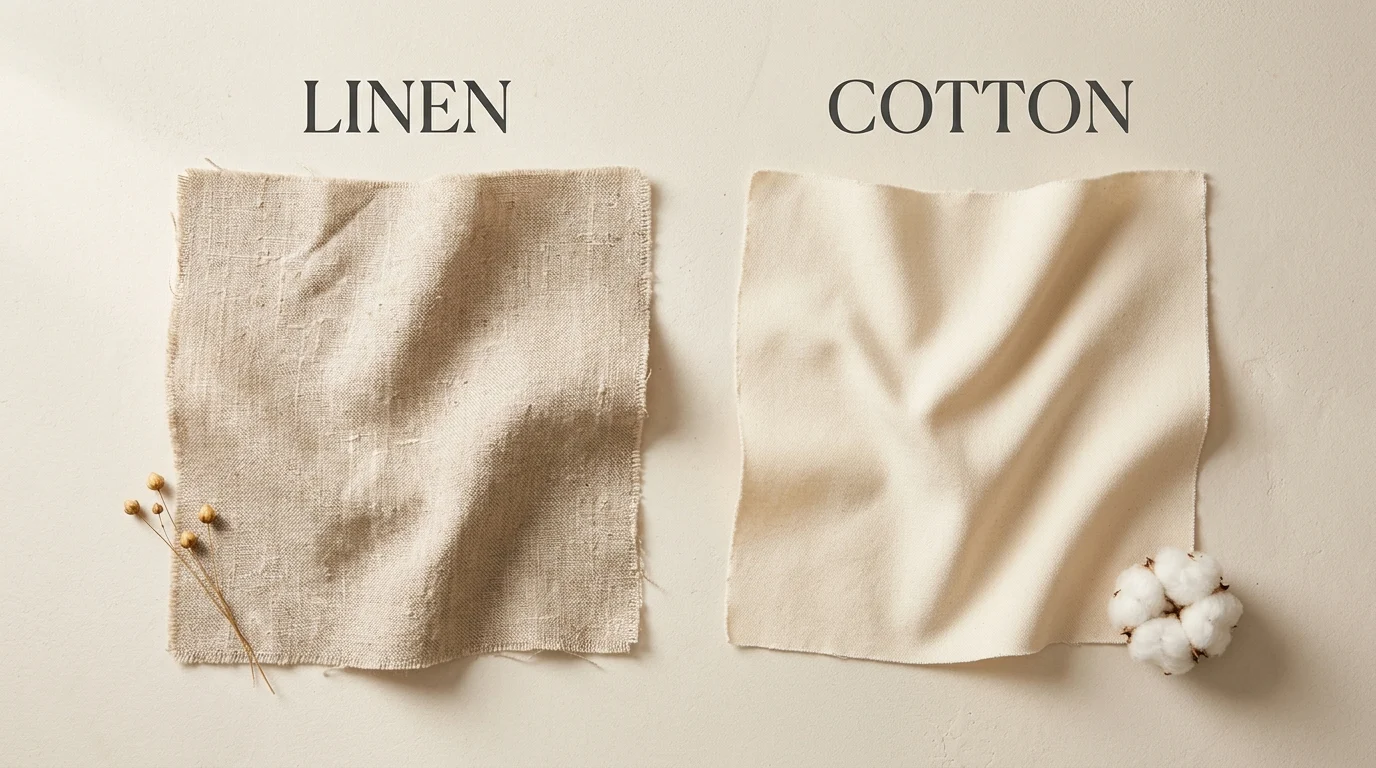
Quick Answer: Linen vs cotton comes down to comfort, breathability, durability, and care. Linen is highly breathable, absorbs moisture well, and works especially well in hot, humid weather. Cotton is generally softer from the start, versatile, and easier to find in different textures and prices. The better fabric depends on your climate, budget, and intended use.
Choosing between linen and cotton can be confusing because both fabrics are popular for clothing, bedding, towels, and home decor. They are natural fibers, feel comfortable against the skin, and come in different weights and textures. However, they have distinct qualities that can affect how they feel, look, and perform.
Linen is made from the fibers of the flax plant. People often choose it for summer clothing, lightweight bedding, and relaxed home decor because of its airy texture and excellent breathability. Cotton comes from the cotton plant and is widely used in everything from everyday T shirts to bedsheets and bath towels.
Neither fabric is automatically better in every situation. Linen may be ideal when airflow and a relaxed appearance matter most, while cotton can be a practical choice when softness, variety, and affordability are priorities.
In this guide, you will learn the key differences between linen and cotton, compare their comfort and durability, and discover which fabric suits your needs best.
Linen vs Cotton: Quick Comparison
| Feature | Linen | Cotton |
|---|---|---|
| Source | Flax plant | Cotton plant |
| Texture | Crisp, textured, and relaxed | Often soft and smooth |
| Breathability | Excellent | Good to excellent, depending on weave |
| Moisture absorption | High | High |
| Wrinkling | Wrinkles easily | Depends on the weave and finish |
| Durability | Strong when properly cared for | Varies by fiber quality and construction |
| Price | Often more expensive | Available across a wide price range |
| Best known for | Summer clothing and airy bedding | Everyday clothing, bedding, and towels |
What Is Linen Fabric?
Linen is a natural fabric made from fibers found in the stems of the flax plant. Manufacturers process these fibers into yarn and weave them into fabric.
Linen is known for its breathable structure, natural texture, and relaxed appearance. It allows air to circulate, making it a popular choice for warm weather. It can also absorb moisture without feeling as clingy as some fabrics.
However, linen wrinkles easily. Its natural creases are part of its appearance, although some people prefer a smoother fabric for formal clothing or neatly made beds.
Common uses of linen include:
- Summer shirts, dresses, and trousers
- Lightweight bedsheets and pillowcases
- Tablecloths and napkins
- Curtains and decorative home textiles
Linen can feel somewhat crisp at first, but it often becomes softer with repeated washing and use.
What Is Cotton Fabric?
Cotton is a natural fiber obtained from the fluffy seed fibers of the cotton plant. It is one of the most widely used textile materials because it is versatile, comfortable, and available in many forms.
Cotton can feel soft, smooth, lightweight, thick, or fluffy depending on how manufacturers spin, weave, or finish it. For example, cotton jersey is commonly used for T shirts, while cotton percale and sateen are popular choices for bedding.
Cotton absorbs moisture and is generally comfortable for everyday wear. However, thick cotton fabrics may retain heat, and some cotton items can shrink if washed or dried improperly.
Common uses of cotton include:
- T shirts, jeans, and underwear
- Bedsheets and pillowcases
- Towels and bathrobes
- Baby clothing and everyday household textiles
Its wide range of styles and prices makes cotton a practical option for many households.
Which Fabric Is More Breathable?
Linen is often the preferred choice for breathability, particularly in hot and humid conditions. Its fiber structure and common lightweight weaves allow good airflow, helping clothing feel less stuffy.
Cotton can also be highly breathable. Lightweight cotton fabrics, such as voile and certain types of percale, can feel cool and airy. However, thick cotton fleece or heavy flannel behaves differently because its construction can trap more warmth.
If you live in a hot climate or want clothing for summer, lightweight linen is an excellent option. Still, the fabric’s thickness, weave, and fit also influence comfort.
Which Is Softer: Linen or Cotton?
Cotton is often softer straight from the package, especially when it has a smooth finish. This makes it a popular choice for people who prefer a gentle, familiar feel against their skin.
Linen can feel more textured or crisp at first. However, good quality linen usually softens with regular washing and use while maintaining much of its strength.
For sensitive skin, neither fabric is automatically the better option. Softness depends on the quality of the fibers, the fabric construction, dyes, and finishing treatments.
If immediate softness is your priority, cotton may be the easier choice. If you enjoy a natural texture that becomes softer over time, linen may suit you well.
Which Fabric Lasts Longer?
Both linen and cotton can last for years when made well and cared for properly.
Linen fibers are known for their strength, making quality linen a durable option for clothing and household textiles. However, repeated hard creasing in the same area and rough washing can damage linen over time.
Cotton durability depends on the fiber quality, yarn, weave, and fabric weight. High quality cotton can be extremely durable, while thin or loosely constructed cotton may wear out more quickly.
To extend the life of either fabric, follow the care label, avoid excessive heat when drying, and use washing settings suitable for the material.
Linen vs Cotton for Bedding
The best choice for bedding depends on your sleeping preferences and budget.
Choose linen bedding if you:
- Prefer an airy, relaxed texture
- Often feel hot while sleeping
- Like a naturally wrinkled appearance
- Want bedding that can soften with use
Choose cotton bedding if you:
- Prefer a smoother feel from the beginning
- Want many weave and thread count options
- Need bedding at different price points
- Prefer a more traditional, neat appearance
Remember that thread count alone does not determine quality. Fiber quality, weave, finishing, and construction also matter.
Linen vs Cotton: Which Should You Choose?
Linen is a strong choice for summer outfits, warm climates, and bedding when breathability and natural texture are important. Cotton is often better for everyday basics, soft T shirts, towels, and shoppers who want a wide range of affordable options.
Consider your main priority before buying. If you want a fabric that feels crisp and relaxed, linen may be right for you. If you prefer softness and versatility, cotton is a reliable choice.
You can also choose a linen cotton blend. These fabrics combine properties of both fibers, although the final feel and performance depend on the blend ratio and construction.
Frequently Asked Questions
Is linen better than cotton?
Neither is universally better. Linen often excels in breathability and natural texture, while cotton offers softness, versatility, and a wider range of prices.
Is linen cooler than cotton?
Linen often feels cooler in hot weather because it allows good airflow. However, lightweight cotton can also be very breathable.
Does linen wrinkle more than cotton?
Yes. Linen usually wrinkles more noticeably. Cotton can wrinkle too, but its behavior depends on the weave, finish, and fabric weight.
Is cotton cheaper than linen?
Cotton is generally available at more affordable prices, although premium cotton products can be expensive. Linen often costs more because of fiber processing and production factors.
Does linen get softer after washing?
Yes. Linen often becomes softer with repeated washing and use. Follow the care instructions to prevent unnecessary wear.
Which fabric is better for sensitive skin?
Both can be comfortable for sensitive skin. Look for a soft, well finished fabric and consider whether dyes or finishing treatments cause irritation.
Is linen more durable than cotton?
Quality linen is strong, but high quality cotton can also last a long time. Durability depends on construction, use, and care.
Can you wear linen and cotton all year?
Yes. Lightweight linen and cotton work well in warm weather, while heavier cotton and layered linen garments may suit cooler conditions. Fabric weight and garment design matter.
Conclusion
The choice between linen vs cotton depends on how you plan to use the fabric. Linen is an excellent option for breathable summer clothing, airy bedding, and a relaxed natural look. Cotton is a versatile choice for everyday clothing, soft bedding, towels, and a wide range of budgets.
Both fabrics have strengths, and neither wins in every category. Linen often stands out for airflow and durability, while cotton offers variety and softness from the start. Quality and construction can make a major difference in how either fabric feels and performs.
Before buying, consider your climate, preferred texture, maintenance needs, and budget. For hot weather, linen is worth considering. For everyday comfort and versatility, cotton is a dependable choice. If you want qualities from both, a linen cotton blend may provide a useful middle ground.
5 thoughts on “Linen vs Cotton: Which Fabric Is Better for Your Needs?”