
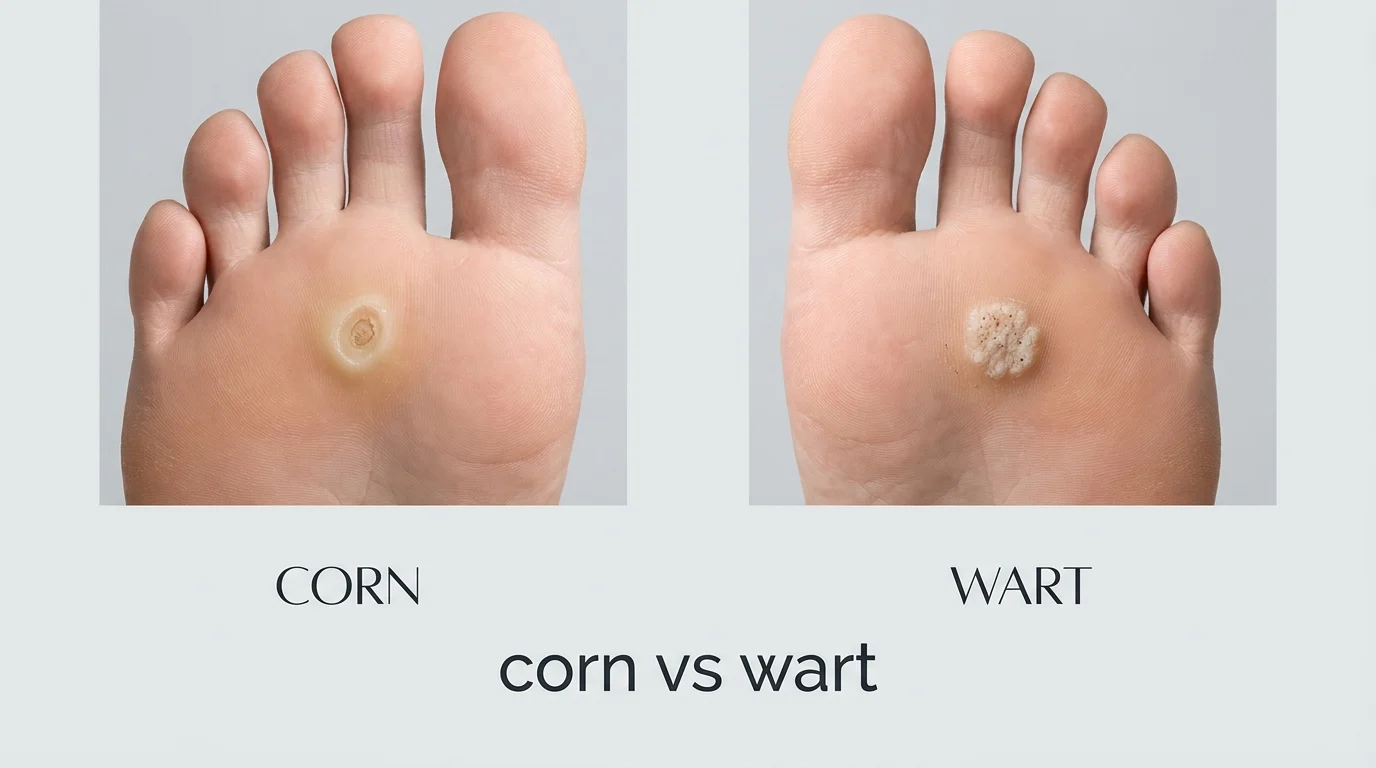
Quick Answer: A corn is a thickened area of skin caused by repeated pressure or friction, usually on the toes or soles of the feet. A wart is a skin growth caused by certain types of human papillomavirus (HPV). Although both can look similar, their causes, appearance, and treatments differ.
Corns and warts can both develop on the feet, causing discomfort while walking or standing. However, they are different skin conditions, so identifying the right one matters. A corn usually forms when footwear, pressure, or repeated rubbing causes the skin to thicken. In contrast, a wart develops when certain types of human papillomavirus (HPV) infect the skin.
At first glance, these growths may look almost identical. Both can appear as small, hard spots, particularly on the soles of the feet. Nevertheless, a few clues can help you distinguish between them. For example, a corn often has a hard central core, while a plantar wart may show tiny dark dots.
In this guide, you will learn the main differences between a corn and a wart, how to recognize their symptoms, what causes each condition, and which treatments may help. You will also discover when it is best to seek medical advice instead of treating the growth at home.
What Is a Corn?
A corn is a small, concentrated area of thickened skin that develops in response to repeated pressure or friction. It commonly appears on the tops or sides of toes, between toes, or on weight-bearing areas of the feet.
Corns often develop because of tight shoes, poorly fitting footwear, or repeated pressure on a particular spot.
Common signs of a corn:
- A small, round area of hard, thick skin.
- A firm central core.
- Pain when direct pressure is applied.
- Skin that may look yellowish or gray.
- A location where shoes rub or pressure builds up.
For instance, a corn may form on the side of a toe that repeatedly rubs against a tight shoe.
What Is a Wart?
A wart is a noncancerous skin growth caused by certain types of HPV. Plantar warts develop on the soles of the feet and may grow inward because of the pressure placed on them while walking.
Unlike corns, warts result from a viral infection and can spread to other areas of skin or to other people through direct contact or contaminated surfaces.
Common signs of a wart:
- A rough or grainy surface.
- Tiny black or dark red dots, which may be small blood vessels.
- Interrupted skin lines across the growth.
- Pain when walking or squeezing the area from the sides.
- One growth or several clustered together.
However, not every wart has visible dark dots, and some warts look smooth or resemble thickened skin.
Corn vs Wart: Key Differences
| Feature | Corn | Wart |
|---|---|---|
| Main cause | Pressure or friction | HPV infection |
| Typical appearance | Hard, thickened skin with a central core | Rough growth, sometimes with dark dots |
| Skin lines | Often continue across the area | Often interrupted |
| Pain pattern | Often hurts with direct pressure | May hurt when squeezed from the sides or during walking |
| Common location | Toes and pressure points | Soles of the feet or toes |
| Contagious | No | Yes |
| Main treatment approach | Reduce pressure and friction | Wart treatments or professional care |
These signs can help you make an initial distinction, but they cannot confirm a diagnosis in every case.
How to Tell a Corn from a Wart
1. Look for tiny dark dots
A plantar wart may contain tiny black or dark red dots. These represent small blood vessels, not dirt. A corn typically has a firm central core without this characteristic pattern.
2. Check the skin lines
The natural lines on your skin may continue across a corn. In contrast, a wart often interrupts these lines. This clue can be useful, although it is not always easy to see.
3. Notice where the growth appears
Corns commonly develop where shoes rub against the toes or where pressure repeatedly affects the foot. Plantar warts can occur on the soles, including areas that bear weight.
4. Consider how it feels
A corn often hurts when you press directly on its center. A plantar wart may feel particularly tender when you gently squeeze it from the sides. Still, pain patterns overlap, so do not rely on this test alone.
Important: Avoid cutting, digging into, or aggressively scraping either growth to identify it. Doing so can cause bleeding, infection, or further skin damage.
Corn Treatment vs Wart Treatment
How to Treat a Corn
The main goal is to remove the pressure that caused the corn.
- Wear comfortable shoes with enough room for your toes.
- Use protective padding to reduce friction.
- Keep your feet clean and moisturized.
- Ask a pharmacist or healthcare professional about suitable corn treatments.
- Seek professional foot care if the corn is painful or persistent.
Avoid cutting a corn yourself. If you have diabetes, poor circulation, reduced sensation in your feet, or a weakened immune system, consult a healthcare professional before using medicated corn removers or attempting home treatment.
How to Treat a Wart
Some plantar warts disappear without treatment, although this can take months or longer. Treatment options include:
- Salicylic acid: An over-the-counter treatment that gradually removes wart tissue when used as directed.
- Cryotherapy: Freezing treatment performed by a healthcare professional.
- Other professional treatments: A clinician may recommend another option for persistent or painful warts.
Do not share files, pumice stones, or other tools used on a wart. Also, avoid picking at it, as this may help spread the virus.
If you are unsure whether the growth is a corn or a wart, get it checked before using a medicated treatment.
When Should You See a Doctor?
Consult a healthcare professional if the growth is very painful, bleeds, changes in appearance, becomes red or swollen, or shows signs of infection. You should also seek advice if it does not improve with appropriate care or if you are uncertain about the diagnosis.
People with diabetes, poor circulation, nerve damage, or weakened immunity should avoid self-treating foot growths without professional guidance.
Frequently Asked Questions
Is a corn or wart more painful?
Either can hurt. A corn often causes pain with direct pressure, while a plantar wart may hurt when squeezed from the sides. Location and severity also affect discomfort.
Can a corn turn into a wart?
No. A corn does not turn into a wart because the two conditions have different causes. A corn results from pressure or friction, whereas a wart results from HPV.
Are warts contagious but corns are not?
Yes. Warts can spread through direct contact or contaminated surfaces. Corns are not infectious and do not spread from person to person.
Can I remove a corn or wart at home?
Some mild cases can be managed with appropriate over-the-counter products. However, you should not cut or dig into either growth. People with diabetes or circulation problems should seek professional advice first.
Do plantar warts go away on their own?
Yes, some plantar warts disappear naturally. However, they may persist for months or years, and treatment can help relieve discomfort or speed up removal.
What happens if I mistake a wart for a corn?
You may use a treatment that does not address the actual problem. For that reason, seek a professional assessment if the growth looks unusual, keeps returning, or does not respond to treatment.
Conclusion
The main difference between a corn and a wart is the cause. Corns develop because of repeated pressure or friction, while warts result from an HPV infection. Dark dots, interrupted skin lines, location, and pain patterns can provide helpful clues. Nevertheless, these signs are not definitive. If you cannot identify the growth confidently, consult a healthcare professional before treating it.