
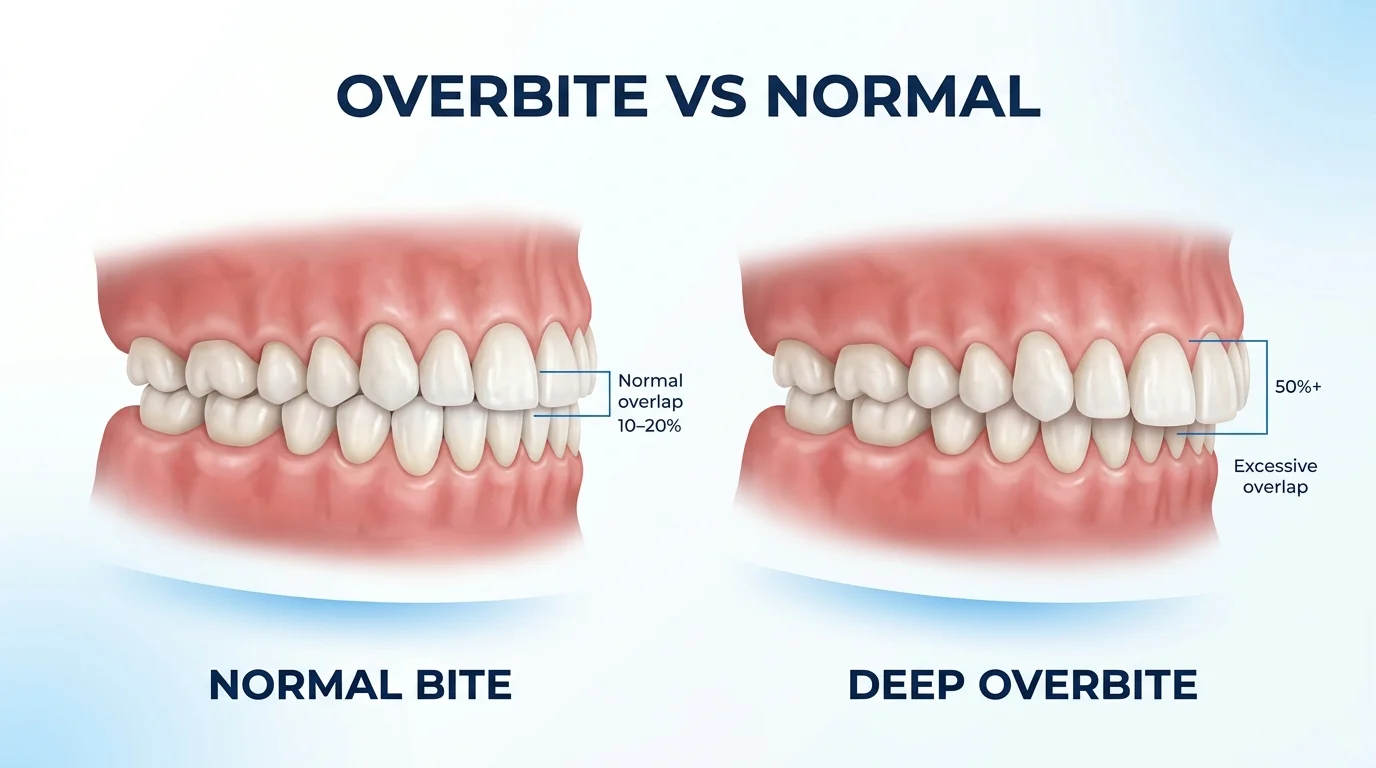
Quick Ans: Overbite vs normal: A normal bite usually has a small overlap, with the upper front teeth covering part of the lower front teeth. An overbite becomes a concern when this overlap is excessive or affects chewing, tooth health, or jaw comfort. However, a mild overbite is common and does not always require treatment.
Have you ever looked in the mirror and wondered whether your upper teeth cover too much of your lower teeth? You are not alone. Many people search for overbite vs normal because they want to understand whether their teeth align correctly or if they may need braces.
The good news is that a small overbite is a normal part of many healthy smiles. Your upper front teeth naturally sit slightly in front of and overlap your lower front teeth. This arrangement helps your teeth work together when you bite and chew.
However, the amount of overlap matters. If your upper teeth cover most of your lower teeth, you may have a deep overbite. In some cases, this can lead to tooth wear, gum irritation, or jaw discomfort.
In this guide, you will learn what a normal bite looks like, how to recognize a deep overbite, and when you should consider seeing a dentist. You will also discover common causes and possible treatment options.
What Is a Normal Bite?
A normal bite occurs when your upper and lower teeth fit together comfortably. Your upper front teeth generally overlap your lower front teeth slightly, while your back teeth meet in a way that supports effective chewing.
A small vertical overlap is healthy and expected. Dentists often assess this relationship by measuring how far the upper teeth cover the lower teeth. The exact range can vary depending on the individual’s tooth size, jaw structure, and dental alignment.
Common signs of a normal bite include:
- Your upper front teeth cover only part of your lower front teeth.
- Your teeth meet comfortably when you close your mouth.
- You can bite and chew without difficulty.
- Your lower teeth do not injure the gums behind your upper teeth.
- You do not experience persistent jaw discomfort related to your bite.
Keep in mind that teeth do not need to look perfectly straight to function well. A dentist can determine whether your bite is healthy.
What Is an Overbite?
An overbite describes the vertical overlap of the upper front teeth over the lower front teeth. A slight overbite is normal. However, an excessive overlap may be described as a deep overbite or deep bite.
For example, if your upper front teeth cover nearly all your lower front teeth when you close your mouth, you may have a deep overbite. In more severe cases, the lower teeth can press against the gums behind the upper teeth.
Common Causes of an Overbite
Several factors can contribute to an excessive overbite, including:
- Genetics: Your inherited jaw shape and tooth alignment can influence your bite.
- Childhood habits: Prolonged thumb-sucking or pacifier use may affect dental development.
- Jaw growth patterns: The upper and lower jaws may develop at different rates.
- Tooth alignment: Crowding and the position of individual teeth can affect how they meet.
- Teeth grinding: Grinding can contribute to tooth wear and may complicate existing bite problems.
Not every overbite develops for the same reason. Therefore, a dental examination is the best way to identify the underlying issue.
Overbite vs Normal: Key Differences
| Feature | Normal Bite | Excessive Overbite |
|---|---|---|
| Tooth overlap | Slight, natural overlap | Upper teeth cover too much of the lower teeth |
| Chewing | Usually comfortable | May cause difficulty in some cases |
| Tooth wear | No unusual wear from the bite | Increased wear may occur |
| Gum contact | Lower teeth do not usually injure the gums | Lower teeth may press against the upper gums |
| Jaw comfort | Generally comfortable | Some people experience discomfort |
| Treatment | Usually unnecessary | May be recommended depending on severity |
The most important difference is not simply appearance. Instead, dentists consider how your teeth function and whether the overlap threatens your oral health.
How Can You Tell If You Have an Overbite?
You can look at your teeth in a mirror for a general idea. Close your mouth naturally and observe how your upper front teeth sit over your lower front teeth.
If the upper teeth cover a small portion of the lower teeth, your bite may fall within a typical range. On the other hand, if they hide most of the lower front teeth, you may have an excessive overbite.
However, a mirror cannot provide an accurate diagnosis. Tooth angles, jaw position, and other alignment issues can make the overlap difficult to judge. A dentist or orthodontist can measure your bite and assess your overall oral health.
Does an Overbite Need Treatment?
Not always. A mild overbite often causes no problems and may not need correction. However, a dentist may recommend treatment when the overlap affects your teeth, gums, chewing, or comfort.
Possible treatment options include:
- Braces: Gradually move teeth into a better position.
- Clear aligners: Offer another option for correcting certain bite problems.
- Other orthodontic appliances: May help guide tooth or jaw development in suitable cases.
- Jaw surgery: May be considered for selected severe cases involving significant jaw misalignment.
The right approach depends on your age, bite severity, jaw structure, and symptoms. Therefore, avoid choosing treatment based only on photographs or online comparisons.
Common Mistakes About Overbites
Mistake 1: Assuming every overbite is abnormal.
A small overlap is natural and helps your teeth function properly.
Mistake 2: Thinking appearance tells the whole story.
A bite that looks unusual does not automatically require treatment.
Mistake 3: Confusing overbite with overjet.
An overbite describes vertical overlap. In contrast, overjet describes how far the upper front teeth extend horizontally beyond the lower front teeth.
Mistake 4: Delaying an examination despite symptoms.
If you experience tooth damage, gum injury, chewing difficulties, or persistent jaw discomfort, arrange a dental assessment.
Frequently Asked Questions
1. What does a normal overbite look like?
A normal overbite usually involves a small vertical overlap of the upper front teeth over the lower front teeth. The exact amount varies from person to person.
2. Is a slight overbite normal?
Yes. A slight overbite is common and usually does not require treatment if your teeth function comfortably and remain healthy.
3. How do I know if my overbite is severe?
Your upper teeth may cover most or nearly all of your lower front teeth. However, only a dental professional can accurately assess its severity.
4. Can an overbite damage teeth?
A significant overbite can increase tooth wear or cause the lower teeth to contact the gums. However, complications do not occur in every case.
5. Can braces fix an overbite?
Yes. Braces can correct many overbites. Some people may benefit from clear aligners or other orthodontic treatment, depending on the cause and severity.
6. Does an overbite get worse with age?
It can change as teeth wear, shift, or respond to changes in the jaw and surrounding tissues. Regular dental checkups can help identify concerning changes.
7. Is an overbite the same as buck teeth?
No. Buck teeth usually refer to increased overjet, where the upper front teeth stick out horizontally. An overbite refers to vertical overlap.
8. When should I see an orthodontist?
Consider an assessment if your teeth overlap excessively, your gums become injured, chewing feels difficult, or your dentist identifies a bite problem.
Conclusion
Understanding overbite vs normal starts with recognizing that some overlap between the upper and lower front teeth is natural. A mild overbite often supports normal biting and chewing, while an excessive overlap may create dental problems in certain cases.
If your upper teeth cover most of your lower teeth or you notice tooth wear, gum irritation, or discomfort, schedule a dental examination. A dentist or orthodontist can assess your bite and explain whether treatment would benefit your oral health.