
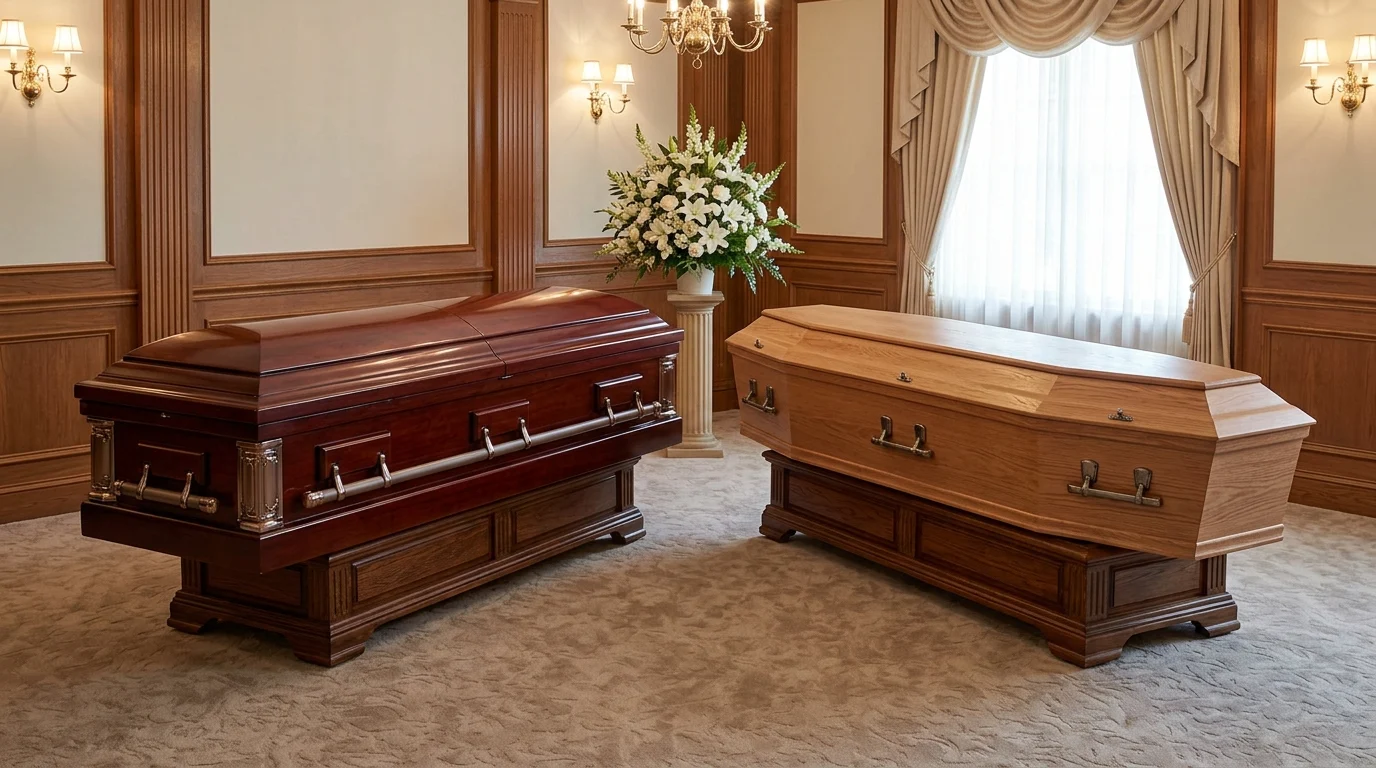
Quick Answer: The main difference between a casket and a coffin is their shape. A casket typically has a rectangular design with four straight sides, while a coffin usually has six sides and a tapered shape that narrows near the feet. Both serve as containers for the deceased and are used in funeral and burial services.
When planning a funeral or learning about burial traditions, you may come across the terms casket and coffin. Although people often use these words interchangeably, they describe two slightly different types of burial containers.
The main distinction comes down to shape. A casket usually has a rectangular form with a lid that opens along the top. In contrast, a coffin has a distinctive six-sided shape that follows the general outline of the human body.
However, their differences go beyond appearance. Materials, prices, cultural traditions, and regional language preferences can also influence which term people use. For example, the word casket is more common in the United States, while coffin is widely used in the United Kingdom and other countries.
Understanding these differences can help you make informed decisions when arranging a funeral or researching burial customs.
What Is a Casket?
A casket is a container designed to hold a deceased person for viewing, transportation, or burial. It usually features a rectangular shape with four straight sides and a hinged lid.
Caskets come in several materials, including wood, metal, and other manufactured materials. Their designs range from simple and affordable to elaborate and decorative.
Common features of a casket:
- Rectangular shape with straight sides
- Hinged lid, sometimes with separate sections for viewing
- Materials such as wood, steel, or other composites
- Decorative finishes, handles, and interior lining
Example: A family may choose a polished wooden casket for a traditional funeral service that includes a viewing before burial.
What Is a Coffin?
A coffin is also a container used to hold a deceased person. However, it traditionally has six sides, with a wider section around the shoulders and a narrower section near the feet.
This tapered design gives a coffin its recognizable shape. Coffins can be made from wood, metal, or other materials, depending on local traditions and the intended use.
Common features of a coffin:
- Six-sided, tapered design
- Wider upper section and narrower lower section
- Simple or decorative construction
- Materials that vary by region and budget
Example: A family in the United Kingdom might select a traditional wooden coffin for a burial service.
Casket vs Coffin: Key Differences
| Feature | Casket | Coffin |
|---|---|---|
| Shape | Rectangular | Six-sided and tapered |
| Sides | Usually four straight sides | Usually six angled sides |
| Width | Generally consistent from head to foot | Wider at the shoulders |
| Lid | Often hinged, sometimes split for viewing | Often a single lid, depending on design |
| Common term in | United States | United Kingdom and many other countries |
| Materials | Wood, metal, and composites | Wood, metal, and other materials |
| Cost | Depends on material and design | Depends on material and design |
Although shape provides the clearest distinction, the materials and features of both containers can overlap considerably.
Why Do Caskets and Coffins Have Different Shapes?
The difference largely reflects changes in funeral customs and design preferences over time.
Traditional coffins often followed the body’s outline, creating a tapered shape. Meanwhile, the rectangular casket became popular in the United States, offering a broader interior and more space for decorative features.
Today, both designs remain available. Families can choose between them based on personal preferences, cultural traditions, religious practices, and funeral arrangements.
Is a Casket More Expensive Than a Coffin?
Not necessarily. The price of either option depends on its construction, materials, finish, and additional features.
For instance, a basic wooden coffin may cost less than an elaborate metal casket. However, a premium handcrafted coffin could cost more than a simple casket.
When comparing prices, consider the following factors:
- Material: Solid hardwood and premium metals often increase the price.
- Design: Decorative finishes and detailed craftsmanship can add costs.
- Interior: Special linings and padding may affect the final price.
- Local availability: Prices vary by country, supplier, and funeral provider.
Therefore, compare specific models rather than assuming one type always costs more. You should also ask whether the quoted price includes delivery, handling, or other funeral-related charges.
Casket vs Coffin: Which One Should You Choose?
The right choice depends on your needs and preferences.
Choose a casket if you prefer a rectangular design, want a style commonly offered by American funeral providers, or need particular viewing features.
Choose a coffin if you prefer a traditional tapered shape or want a design associated with funeral customs in the United Kingdom and other regions.
However, neither option is universally better. Both can serve the same basic purpose, and local burial regulations, cemetery requirements, and personal traditions may influence your decision.
Common Misconceptions
1. Caskets and coffins are made from different materials.
Not necessarily. Both can use wood, metal, and other materials.
2. Coffins are always cheaper than caskets.
This is incorrect. The price depends on craftsmanship, materials, and design.
3. A casket is only used in the United States.
Although the term is especially common in the United States, caskets are available elsewhere.
4. Every coffin has exactly the same shape.
Traditional coffins are usually tapered and six-sided, but designs can vary.
Frequently Asked Questions
1. Is a casket the same as a coffin?
They serve the same general purpose, but their traditional shapes differ. A casket is usually rectangular, while a coffin is typically six-sided and tapered.
2. Why do Americans say casket instead of coffin?
The term casket became widely established in American funeral practices. Today, it is the more common term used by many American funeral providers.
3. Why are coffins wider at the top?
Their traditional tapered design provides more width around the shoulders and less around the feet, following the general outline of the body.
4. Which is better for a funeral, a casket or a coffin?
Neither is inherently better. The decision depends on personal preference, cultural traditions, budget, and local requirements.
5. Are caskets and coffins both used for burial?
Yes. Both can be used for burial, subject to applicable cemetery rules and local regulations.
6. Can a coffin be rectangular?
Some designs may look closer to rectangular containers. However, the traditional distinction is that coffins have tapered sides, while caskets usually have straight sides.
7. Do caskets and coffins have different lids?
Often, yes. Many caskets feature hinged lids, sometimes divided into sections for viewing. Coffins may have a single lid, although designs vary.
8. Is a coffin always made of wood?
No. Although wooden coffins are traditional in many places, other materials may also be used.
Conclusion
The main difference between a casket and a coffin is their shape. A casket usually has four straight sides and a rectangular design, whereas a coffin traditionally has six sides and tapers toward the feet.
Both serve similar purposes, and neither is automatically more expensive or better than the other. Ultimately, the best choice depends on your preferences, budget, and local funeral customs.