
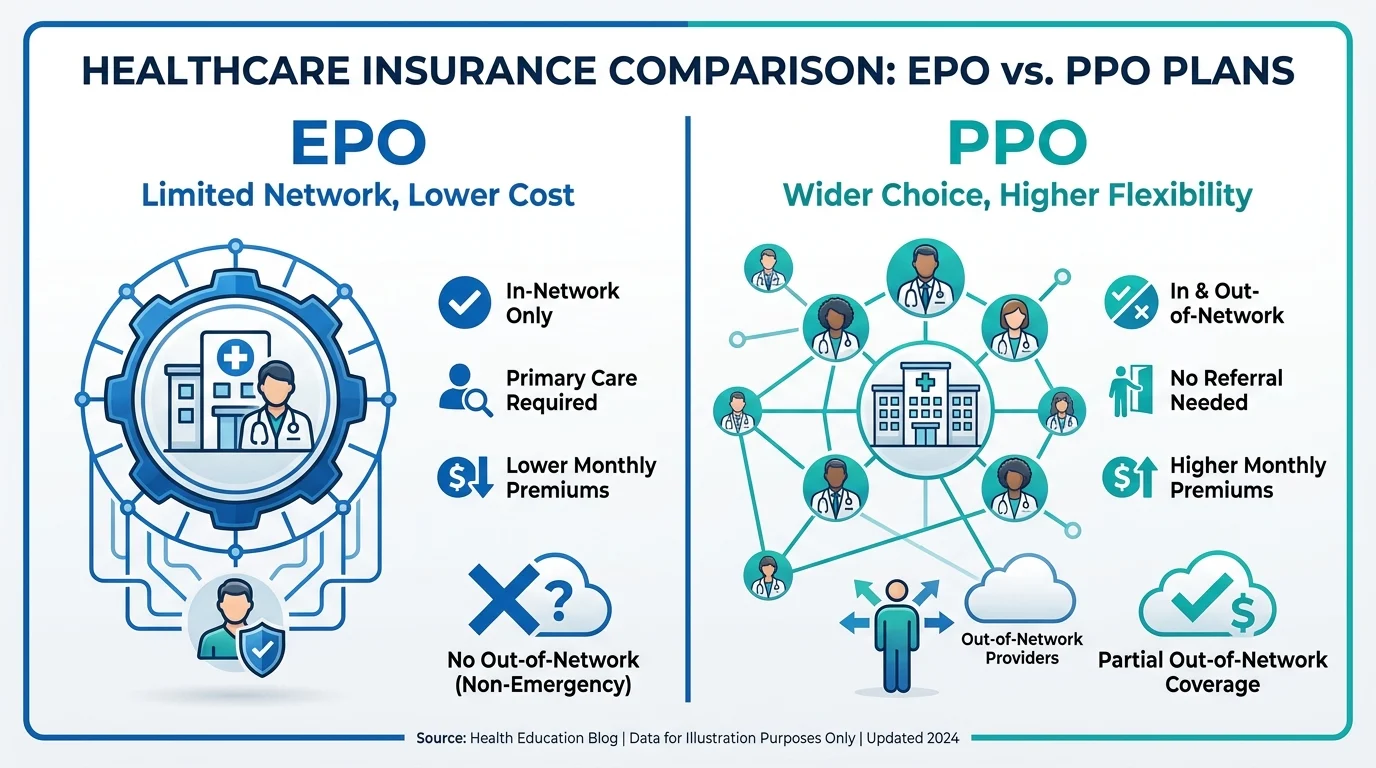
Quick Ans: EPO vs PPO health insurance plans differ mainly in provider flexibility and out-of-network coverage. An EPO generally requires you to use in-network doctors, except for emergencies, while a PPO usually lets you visit out-of-network providers at a higher cost. The better option depends on your budget, preferred doctors, and healthcare needs.
Choosing health insurance can feel confusing, especially when two plans offer similar benefits but follow different rules. If you are comparing an EPO with a PPO, understanding their differences can help you make a more informed decision.
Both plans provide access to healthcare services through provider networks. However, they differ in how much freedom you have to choose doctors, specialists, and hospitals outside those networks. They can also differ in monthly premiums, deductibles, copayments, and overall out-of-pocket expenses.
For example, an EPO may appeal to someone who wants to keep premiums manageable and feels comfortable using a specific network of doctors. In contrast, a PPO may suit someone who wants more flexibility when choosing healthcare providers.
Let’s explore how each plan works, compare their costs and coverage, and identify which option may fit your situation.
What Is an EPO Health Insurance Plan?
EPO stands for Exclusive Provider Organization. This type of health insurance generally covers non-emergency care only when you use healthcare providers within its network.
You can usually visit in-network specialists without a referral, although plan rules may vary. However, if you receive routine care from an out-of-network provider, your plan generally will not cover the cost.
Example: Suppose your EPO network includes your primary care doctor and a nearby hospital. You can receive covered services from those providers according to your plan’s rules. However, if you choose an out-of-network specialist, you may have to pay the full cost.
An EPO may suit you if:
- You want to focus on in-network healthcare providers.
- Your preferred doctors and hospitals participate in the network.
- You want an alternative to a PPO’s broader provider flexibility.
What Is a PPO Health Insurance Plan?
PPO stands for Preferred Provider Organization. This plan gives you more flexibility when choosing healthcare providers.
You generally pay less when you visit in-network doctors and hospitals. However, unlike an EPO, a PPO usually provides some coverage for eligible out-of-network care. You will typically pay more for that care through higher coinsurance, deductibles, or other out-of-pocket costs.
PPO plans also generally allow you to see specialists without referrals, although specific benefits and requirements depend on the policy.
Example: Imagine your preferred specialist does not participate in your PPO network. Your plan may still cover part of the eligible expense, but you could pay substantially more than you would for an in-network visit.
A PPO may suit you if:
- You want more freedom to choose doctors.
- You travel frequently or receive care in different locations.
- You want the option to use out-of-network providers when necessary.
EPO vs PPO: Key Differences
| Feature | EPO | PPO |
|---|---|---|
| Full form | Exclusive Provider Organization | Preferred Provider Organization |
| In-network care | Generally covered according to plan benefits | Generally covered according to plan benefits |
| Out-of-network routine care | Usually not covered | Often covered at a higher cost |
| Specialist referrals | Often not required | Usually not required |
| Monthly premiums | Often lower | Often higher |
| Provider flexibility | More limited | Greater flexibility |
| Best for | People comfortable with a network | People who value provider choice |
Actual premiums, benefits, and referral requirements depend on the specific plan.
EPO vs PPO: Which Plan Costs Less?
An EPO often has lower monthly premiums than a comparable PPO. However, the premium alone does not tell you which plan offers the best value.
Consider the following expenses before choosing:
- Monthly premium: The amount you pay to maintain coverage.
- Deductible: The amount you generally pay for covered services before your plan starts paying for certain expenses.
- Copayments and coinsurance: Your share of eligible healthcare costs.
- Out-of-pocket maximum: The limit on covered, in-network cost sharing for eligible essential health benefits under applicable rules. Premiums and some other expenses do not count toward this limit.
- Out-of-network costs: These can be much higher under a PPO and may not count toward your in-network out-of-pocket maximum.
For instance, an EPO with a lower premium may save money if your preferred providers are in-network. On the other hand, a PPO could offer better value if you regularly need eligible out-of-network care.
Therefore, compare the total estimated yearly cost rather than focusing only on the monthly payment.
Pros and Cons of EPO and PPO Plans
EPO Pros and Cons
Advantages
- Premiums may be lower than those of comparable PPO plans.
- In-network care can help keep expenses predictable.
- Specialist referrals are often unnecessary.
Disadvantages
- Routine out-of-network care generally is not covered.
- Your choice of doctors and hospitals is more limited.
- You must check the network carefully before receiving care.
PPO Pros and Cons
Advantages
- Offers greater freedom to choose healthcare providers.
- Often covers eligible out-of-network services.
- Usually allows specialist visits without referrals.
Disadvantages
- Premiums may be higher.
- Out-of-network care can involve substantial additional costs.
- Deductibles and coinsurance can make healthcare expensive.
EPO or PPO: Which One Should You Choose?
The right choice depends on your healthcare habits, budget, and preferred providers.
Choose an EPO if your preferred doctors and hospitals are in-network and you rarely need out-of-network care. It may help you manage costs without sacrificing access to the providers you use most.
Choose a PPO if you value flexibility, travel often, or want the option to receive eligible care outside your network. Although you may pay more for that flexibility, it can be useful when your healthcare needs change.
Before enrolling, verify your doctors’ network status, prescription coverage, deductible, and out-of-pocket maximum. Also, check whether the plan covers emergency care and what rules apply when you receive treatment away from home.
Frequently Asked Questions
1. Is an EPO better than a PPO?
Neither plan is automatically better. An EPO may work well if your preferred providers are in-network and you want lower premiums. A PPO may be better if provider flexibility matters more to you.
2. Can you see a specialist with an EPO?
Yes. Many EPO plans allow you to visit in-network specialists without a referral. However, confirm the requirements in your specific policy.
3. Does a PPO cover out-of-network doctors?
Generally, yes. PPO plans often cover eligible out-of-network care, but you usually pay more. Some providers may also bill you for amounts beyond what your insurer allows.
4. Is an EPO cheaper than a PPO?
EPO premiums are often lower than those of comparable PPO plans. Still, compare deductibles, copayments, coinsurance, and potential out-of-network expenses before deciding.
5. Do EPO and PPO plans require referrals?
Both commonly allow specialist visits without referrals. Nevertheless, individual plans may have different requirements for certain services or treatments.
6. Can you change from an EPO to a PPO?
You may be able to switch during your employer’s open enrollment period or an applicable health insurance enrollment period. Eligibility and timing depend on your coverage.
7. What happens if you need emergency care outside your EPO network?
Emergency services generally receive special protections under applicable U.S. health insurance rules. However, rules for follow-up treatment and other services can differ, so review your plan and applicable protections.
8. Which plan is better for families?
A PPO may benefit families who need flexibility across different providers. However, an EPO can be a practical option when the family’s preferred doctors and hospitals are all in-network.
Conclusion
When comparing EPO vs PPO plans, focus on the balance between cost and flexibility. An EPO generally works best for people who are comfortable staying within a provider network, while a PPO offers more freedom to seek eligible care outside that network.
Ultimately, compare the actual plan documents, confirm provider participation, and estimate your total healthcare expenses before enrolling. The best plan is the one that fits your budget while giving you access to the care you need.