
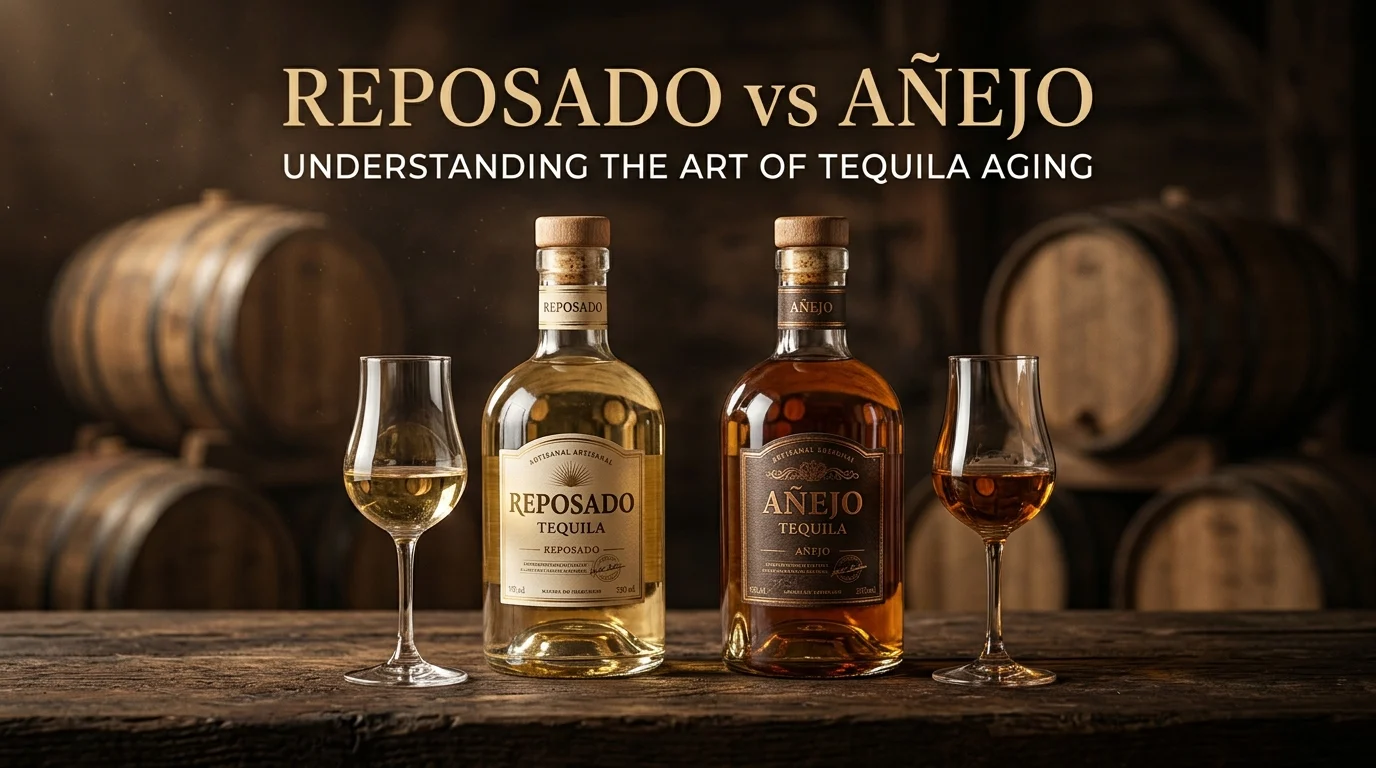
Quick Answer: Reposado vs añejo tequila comes down mainly to aging time, flavor, and how people enjoy each style. Reposado tequila is aged in oak barrels for at least two months but less than one year, giving it a smooth taste with fresh agave notes. Añejo tequila is aged for at least one year but less than three years, often developing richer notes of oak, vanilla, caramel, and spice.
When comparing reposado vs añejo tequila, the biggest difference is how long each type spends aging in oak barrels. That extra time can change the spirit’s color, aroma, texture, and flavor. Although both styles begin with blue agave, they can offer noticeably different drinking experiences.
Reposado usually keeps more of the fresh, earthy character associated with agave. Barrel aging adds gentle notes of vanilla, oak, and spice without completely covering the plant’s natural flavor. Añejo spends longer in barrels, so its flavor often becomes deeper and more complex, with stronger wood influences.
Neither style is automatically better. The right choice depends on your taste preferences and the kind of experience you want. This guide explains the differences between reposado and añejo, including their aging requirements, flavor profiles, appearance, and common uses.
Reposado vs Añejo: Quick Answer
Reposado and añejo are both categories of tequila defined partly by their aging periods.
- Reposado: Aged in oak or other permitted wood containers for at least two months but less than one year.
- Añejo: Aged in oak or other permitted wood containers for at least one year but less than three years.
Añejo generally has a more developed wood influence, which can bring notes of vanilla, caramel, toasted oak, and baking spices.
What Is Reposado Tequila?
Reposado means “rested” in Spanish. This tequila spends a minimum of two months and less than one year aging in permitted wood containers.
During this period, the spirit interacts with the wood, which can soften its flavor and introduce new aromas. However, the shorter aging period often allows the natural character of the agave to remain prominent.
Common Flavor Notes
Reposado tequila may feature:
- Cooked agave
- Light vanilla
- Mild oak
- Pepper and gentle spice
- Citrus or herbal notes
The exact taste depends on the producer, the agave, the distillation process, and the type of barrel used. Some reposados are bright and peppery, while others are rounder and sweeter.
How Is Reposado Commonly Used?
Reposado can be enjoyed on its own or used in cocktails. Its agave character and moderate barrel influence make it a versatile option for drinks that benefit from a little extra depth.
For example, some people choose reposado for a Margarita or a Paloma when they want more oak character than a typical unaged tequila provides.
What Is Añejo Tequila?
Añejo means “aged” or “old” in Spanish. Añejo tequila must spend at least one year but less than three years aging in oak barrels or other permitted oak containers.
This longer aging period allows the tequila to develop more pronounced wood related flavors. It may also change the spirit’s color and mouthfeel.
Common Flavor Notes
Añejo tequila may feature:
- Vanilla
- Caramel
- Toasted oak
- Cinnamon and other spices
- Dried fruit
- Rich cooked agave
These are common possibilities, not guaranteed characteristics. The final flavor depends on how the tequila is made and aged.
How Is Añejo Commonly Used?
Many people prefer sipping añejo slowly to appreciate its aroma and layered flavors. It can also be used in cocktails, particularly when a richer, more oak influenced taste is desired.
However, longer aging does not automatically make a tequila better. Some drinkers prefer a fresher agave profile, while others enjoy the deeper character that barrel aging can create.
Reposado vs Añejo: Key Differences
| Feature | Reposado | Añejo |
|---|---|---|
| Aging period | At least 2 months, less than 1 year | At least 1 year, less than 3 years |
| Typical color | Pale gold to light amber | Amber to deeper gold |
| Agave flavor | Often more prominent | Often balanced with stronger oak notes |
| Barrel influence | Light to moderate | Moderate to pronounced |
| Common aromas | Agave, pepper, vanilla | Oak, vanilla, caramel, spice |
| Common serving style | Sipping or cocktails | Often sipped neat |
| Best for | Those who enjoy a balance of freshness and oak | Those who enjoy richer, aged flavors |
These descriptions are general tendencies. A particular reposado may taste richer than some añejos, depending on the production methods and aging conditions.
Which Tequila Is Smoother?
Añejo is often perceived as smoother because extended barrel aging can soften certain sharp notes and create a richer flavor profile. However, smoothness is subjective and depends on the tequila’s production and quality.
Reposado can also be smooth, particularly when the producer creates a balanced spirit with restrained pepper and alcohol intensity.
Instead of relying on age alone, consider the aroma, texture, finish, and overall balance of the individual tequila.
Which One Should You Choose?
Choose reposado if you prefer a noticeable agave character with some added oak, vanilla, and spice. It can be a flexible option for both sipping and cocktails.
Choose añejo if you enjoy deeper barrel flavors and a more developed aroma. Its profile may appeal to people who also appreciate aged spirits such as whiskey or brandy.
If you are comparing bottles, look at the producer’s tasting notes, production details, and price. A longer aging period can increase production costs, but it does not guarantee that you will enjoy the flavor more.
Frequently Asked Questions
Is reposado or añejo better?
Neither is universally better. Reposado often offers a balance of agave and oak, while añejo generally has a stronger aged character.
Which is aged longer, reposado or añejo?
Añejo is aged longer. Reposado spends at least two months but less than one year in permitted wood containers, while añejo spends at least one year but less than three years.
Does añejo taste sweeter than reposado?
Añejo may seem sweeter because barrel aging can add vanilla and caramel like aromas. However, the actual taste varies by producer, and perceived sweetness does not necessarily mean added sugar.
Can you use reposado in a Margarita?
Yes. Reposado works well in a Margarita if you want a cocktail with more oak character than one made with unaged tequila.
Is añejo tequila good for sipping?
Yes. Many people enjoy añejo neat because its longer aging can produce a more layered aroma and flavor.
Does darker tequila mean it is better?
No. Color alone does not establish quality. Aging, barrel conditions, and permitted production methods can affect color, so compare flavor and craftsmanship as well.
What does reposado mean in English?
Reposado means “rested” in Spanish, referring to the tequila’s period of aging in wood containers.
What does añejo mean in English?
Añejo means “aged” or “old” in Spanish. In tequila labeling, it identifies a category with a specific aging period.
Conclusion
The main difference between reposado vs añejo tequila is the aging period and the flavor that develops during that time. Reposado is aged for at least two months but less than one year, so it often retains a noticeable agave character while gaining gentle oak notes. Añejo is aged for at least one year but less than three years, which can produce deeper flavors of vanilla, caramel, spice, and oak.
If you prefer a versatile tequila with a balance of freshness and barrel influence, reposado may suit you better. If you enjoy a richer, more developed flavor, añejo may be the better fit.
Ultimately, neither category guarantees superior quality. The producer, agave, production process, and your personal taste all matter. Comparing individual bottles is the best way to find the style you enjoy most.