
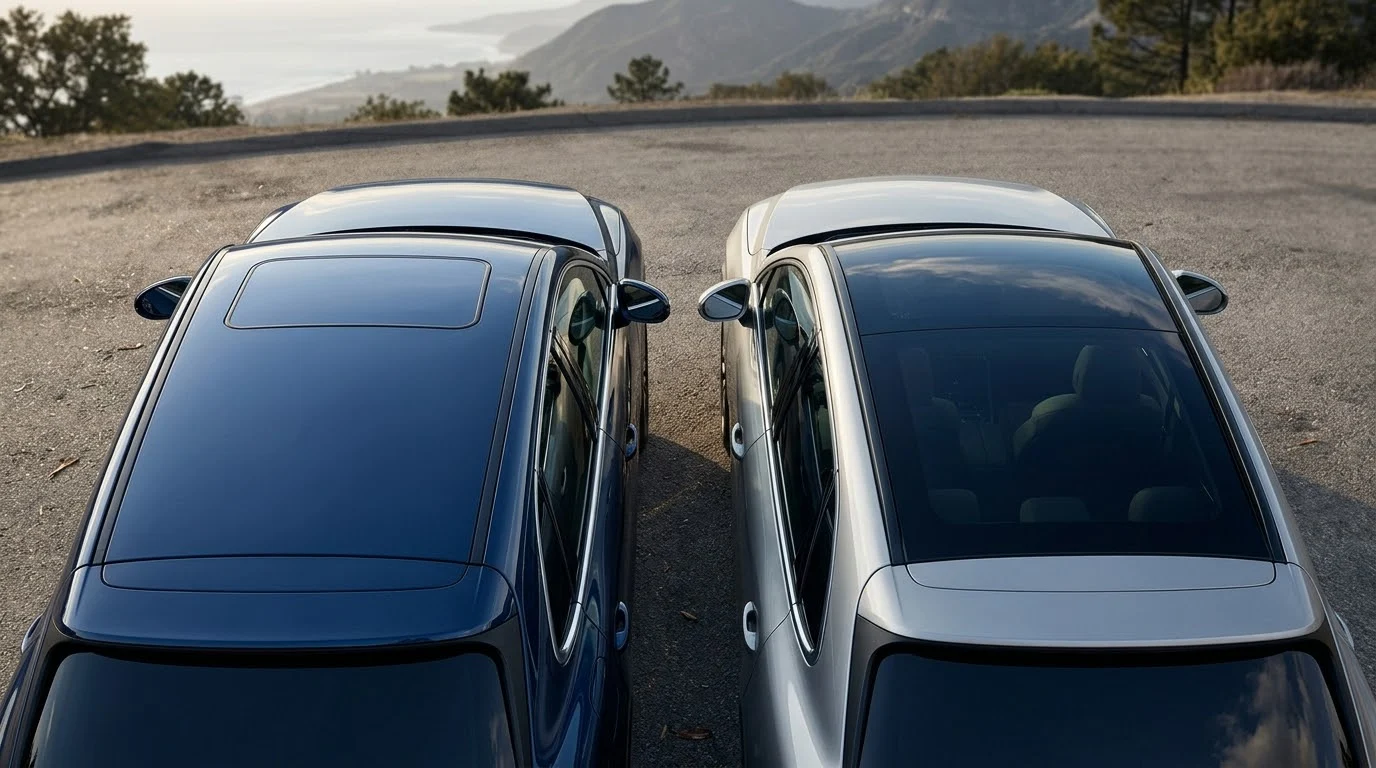
Quick Answer: The main difference between a sunroof and a moonroof is their design and operation. A traditional sunroof is usually an opaque panel that opens or comes off, while a moonroof typically features a tinted glass panel that lets natural light into the car. However, many modern vehicles use these terms interchangeably.
When shopping for a car, you may see the terms sunroof and moonroof used to describe a roof feature that brings more light and fresh air into the cabin. Although they sound similar, these terms originally referred to different designs.
A sunroof traditionally used a solid, body-colored panel that drivers could open or remove. In contrast, a moonroof typically used a glass panel that allowed sunlight into the vehicle, even when the panel remained closed. Today, however, the distinction is less clear because many manufacturers use glass panels for both features.
So, which option is better? The answer depends on your preferences, budget, climate, and the vehicle you choose. In this guide, you will learn how sunroofs and moonroofs differ, what benefits they offer, and what to consider before buying a car with either feature.
What Is a Sunroof?
A sunroof is a panel in a vehicle’s roof that opens or moves to let fresh air into the cabin. Traditional sunroofs often used metal panels that matched the car’s exterior.
Modern sunroofs may also feature glass panels. Depending on the design, the panel can tilt upward, slide backward, or detach completely.
Common sunroof types include:
- Pop-up sunroof: Tilts upward to provide ventilation.
- Sliding sunroof: Slides open to create a larger opening.
- Panoramic sunroof: Covers a large portion of the roof, sometimes extending over both front and rear seats.
- Removable sunroof: Allows the driver to remove the panel on certain vehicles.
For example, a car with a traditional metal sunroof can provide fresh air without requiring you to open a side window.
What Is a Moonroof?
A moonroof is generally a glass roof panel that lets natural light enter the cabin. Unlike a traditional opaque sunroof, a moonroof can brighten the interior even when it is closed.
Most modern moonroofs use tinted glass to reduce glare and limit some solar heat. Many also include an interior shade that blocks light when needed.
Common moonroof features include:
- Tinted glass for improved comfort.
- Tilt or slide functions for ventilation.
- Interior shades for privacy and light control.
- Panoramic glass designs for a more open cabin.
For instance, a moonroof lets passengers enjoy a brighter interior on a cloudy day without opening the roof.
Sunroof vs Moonroof: Key Differences
| Feature | Sunroof | Moonroof |
|---|---|---|
| Traditional material | Solid, opaque panel | Tinted glass panel |
| Light when closed | Usually blocks sunlight | Allows natural light inside |
| Ventilation | Depends on design | Depends on design |
| Opening mechanism | May tilt, slide, or detach | Commonly tilts or slides |
| Interior shade | Not always needed | Often included |
| Modern designs | May use glass | Usually uses glass |
| Main benefit | Ventilation and an open roof | Natural light and ventilation |
Important: These differences describe traditional designs. In modern cars, manufacturers often use the two terms interchangeably, so check the actual features rather than relying only on the name.
Benefits of a Sunroof
A sunroof can improve your driving experience in several ways.
1. Better ventilation: When the panel opens, fresh air can circulate through the cabin.
2. An open-air feeling: Drivers can enjoy more airflow without fully opening the side windows.
3. Flexible designs: Some sunroofs tilt for light ventilation, while others slide open for a larger opening.
However, an open roof can also introduce wind noise, dust, rain, and outside heat.
Benefits of a Moonroof
A moonroof offers many of the same advantages while adding more natural light.
1. Brighter interior: The glass panel makes the cabin feel more spacious and open.
2. Better views: Passengers can enjoy views of the sky during daytime drives.
3. Light control: Many models include a sliding shade to block sunlight when necessary.
4. Modern appearance: A glass roof can give a vehicle a premium look.
Nevertheless, glass roofs may increase cabin heat in sunny weather, especially when the shade remains open.
Which Is Better: Sunroof or Moonroof?
The better choice depends on how you plan to use your car.
Choose a sunroof if you mainly want ventilation and prefer a design that can open widely. A traditional opaque panel may also block light when closed.
Choose a moonroof if you want natural light, sky views, and a bright cabin. It is a popular choice for drivers who enjoy a more open interior without keeping the roof open.
For hot climates, such as Pakistan, heat management deserves extra attention. Therefore, look for effective sunshades, good glass insulation, and reliable air conditioning. A glass roof can make the cabin warmer if it lacks suitable heat protection.
Common Mistakes to Avoid
- Assuming they are always different: Modern manufacturers may use either term for similar glass roof systems.
- Ignoring heat protection: Tinted glass does not necessarily block all solar heat.
- Overlooking maintenance: Roof drains and seals need care to help prevent leaks.
- Choosing based on appearance alone: Check wind noise, headroom, operating controls, and repair costs before deciding.
Frequently Asked Questions
1. Is a moonroof the same as a sunroof?
Not exactly. Traditionally, a sunroof used an opaque panel, while a moonroof used glass. Today, the terms often describe similar features.
2. Does a moonroof open?
Yes, many moonroofs tilt or slide open. However, some glass roof panels remain fixed and provide only natural light.
3. Which is better for hot weather?
Neither is automatically better. A well-insulated roof with an effective shade can improve comfort, so compare the vehicle’s heat protection features.
4. Does a sunroof make a car hotter?
It can, depending on its material, insulation, and shade. Glass panels may allow more solar energy into the cabin when they lack adequate protection.
5. Can a moonroof leak?
Yes. Damaged seals, blocked drainage channels, or poor installation can cause leaks. Regular inspection helps prevent problems.
6. Does a sunroof reduce headroom?
It can. The roof mechanism may take up space above the headliner, although the amount varies by vehicle.
7. Is a panoramic roof a sunroof or moonroof?
A panoramic roof is a large roof system that usually includes glass panels. Depending on the design, some sections may open while others remain fixed.
8. Is a car with a moonroof worth buying?
It can be worth it if you value natural light, views, and a premium interior feel. However, consider the extra cost, maintenance, and heat protection before paying more for the feature.
Conclusion
The traditional difference between a sunroof and a moonroof comes down to the panel design. A sunroof originally used an opaque panel, while a moonroof used glass to bring natural light into the cabin. However, modern vehicles often blur this distinction.
Ultimately, compare the actual roof features, ventilation options, heat protection, and maintenance requirements before choosing a car. The best option is the one that fits your comfort needs and driving conditions.