
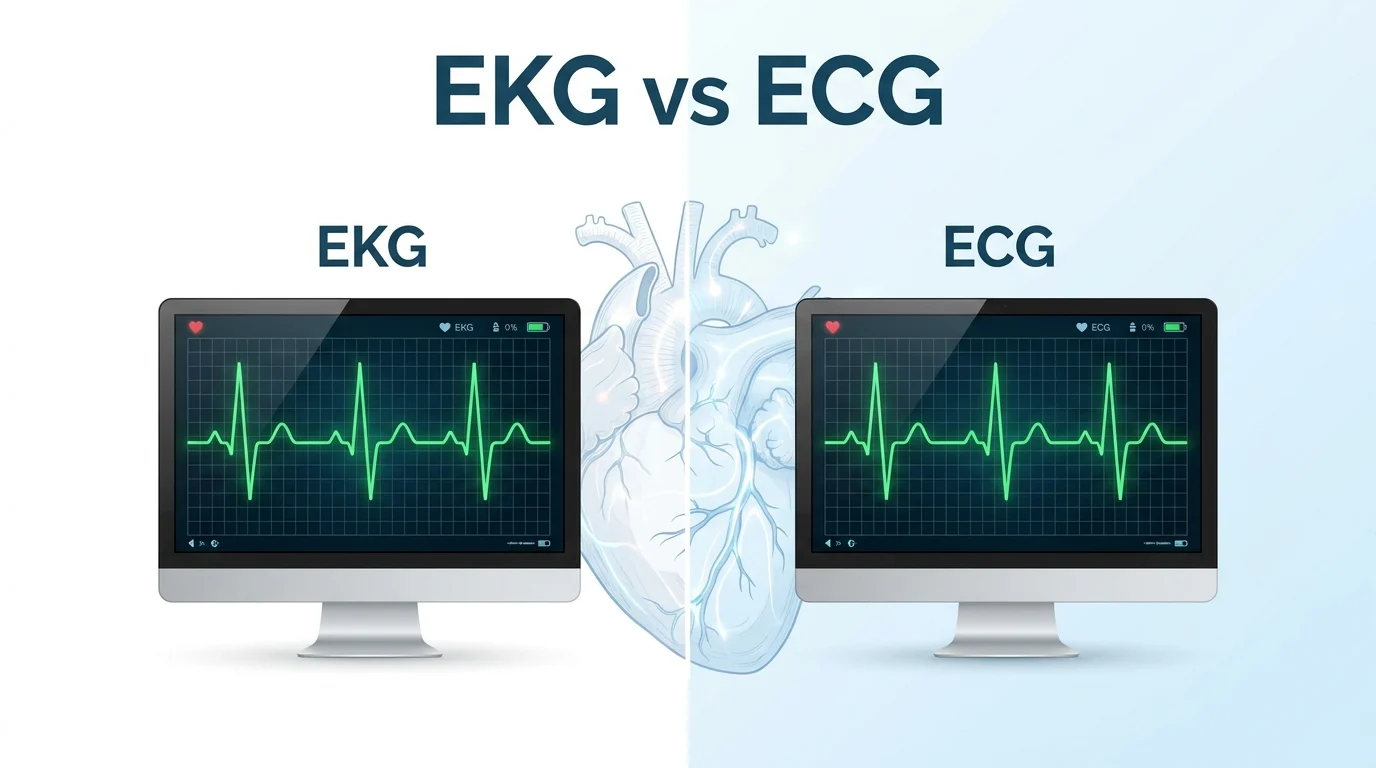
Quick Ans: EKG vs ECG refers to two abbreviations for the same medical test, an electrocardiogram. Both record the electrical activity of the heart and help doctors identify irregular heart rhythms and other possible heart problems. The main difference is the spelling of the abbreviation, not the test itself.
If you have ever visited a hospital or clinic for a heart checkup, you may have heard the terms EKG and ECG. At first, these abbreviations can seem confusing. You might wonder whether they describe different tests, use different machines, or provide different results.
The good news is that EKG and ECG refer to the same heart test. Doctors use it to record the electrical signals that control your heartbeat. The test is quick, painless, and commonly used during routine checkups, emergency evaluations, and investigations of possible heart conditions.
However, there is a reason medical professionals use two different abbreviations. The letters come from the same medical term, but the spelling reflects different language conventions. Understanding this distinction can help you read medical reports, follow your doctor’s explanations, and feel more confident during a heart examination.
In this guide, you will learn what EKG and ECG mean, how the test works, why doctors order it, and what the results can tell you.
What Is an ECG?
ECG stands for electrocardiogram. It is a medical test that records the electrical activity of your heart over a short period.
Your heart produces electrical signals that coordinate its contractions. An ECG detects these signals through small electrodes attached to your skin, usually on your chest, arms, and legs.
Doctors use ECG results to evaluate:
- Heart rate and rhythm
- Certain abnormalities in the heart’s electrical conduction
- Possible signs of reduced blood flow to the heart
- Patterns that may suggest a previous or current heart attack
- Some effects of medications or electrolyte imbalances
An ECG usually takes only a few minutes. It does not send electricity into your body, and the procedure does not involve needles.
What Is an EKG?
EKG also stands for electrocardiogram. It describes the same test and performs the same function as an ECG.
The abbreviation EKG comes from the German term Elektrokardiogramm. In German, the word for electricity begins with a K sound, which explains the K in EKG.
Although ECG follows the English spelling of electrocardiogram, many healthcare professionals continue to use EKG. The abbreviation is especially familiar in clinical settings where it helps distinguish the test from other medical abbreviations.
Therefore, if your doctor orders an EKG instead of an ECG, you should not assume that the doctor has selected a different procedure.
EKG vs ECG: Key Differences
| Feature | EKG | ECG |
|---|---|---|
| Full form | Electrocardiogram | Electrocardiogram |
| Medical purpose | Records heart electrical activity | Records heart electrical activity |
| Procedure | Uses skin electrodes | Uses skin electrodes |
| Duration | Usually a few minutes | Usually a few minutes |
| Results | Heart rhythm and electrical patterns | Heart rhythm and electrical patterns |
| Abbreviation origin | German spelling | English spelling |
| Accuracy | Same type of test | Same type of test |
The key takeaway: Neither abbreviation indicates a more advanced, accurate, or reliable test. The equipment, procedure, and clinical purpose can be identical.
How Does an EKG or ECG Work?
An EKG or ECG records the electrical signals produced as your heart beats. During a standard test, a healthcare professional follows these steps:
- Prepares your skin: The professional may clean small areas to help the electrodes stick properly.
- Attaches electrodes: Small adhesive sensors go on your chest and limbs.
- Records electrical signals: The machine detects your heart’s electrical activity and displays it as a tracing.
- Reviews the recording: A qualified healthcare professional interprets the tracing alongside your symptoms and medical history.
The test is generally painless. You may feel slight discomfort when the adhesive electrodes come off, but the recording itself should not hurt.
Why Do Doctors Order an EKG or ECG?
Doctors may request this test for several reasons. For example, they may want to investigate chest discomfort, a racing heartbeat, dizziness, fainting, or shortness of breath.
Additionally, an ECG can help monitor people with known heart conditions or assess certain changes after treatment. Emergency teams may also use it when they suspect a heart attack.
However, an ECG does not detect every heart problem. Some conditions require blood tests, imaging, a Holter monitor, or other investigations. A normal result also does not automatically rule out a serious condition.
Can an EKG or ECG Detect a Heart Attack?
An ECG can show electrical patterns that suggest a heart attack. In an emergency, clinicians often use it alongside symptoms, physical examination, and blood tests.
Nevertheless, a single ECG may not identify every heart attack. Some findings appear later, while other heart attacks produce subtle or initially normal recordings. Doctors may repeat the test and check cardiac troponin levels to make a more reliable assessment.
If you experience chest pain or pressure, severe shortness of breath, fainting, or other possible heart attack symptoms, seek emergency medical care rather than waiting for a routine appointment.
EKG vs ECG vs Echocardiogram
People sometimes confuse an ECG with an echocardiogram because both help doctors evaluate the heart. However, they examine different aspects of heart function.
| Test | What It Measures |
|---|---|
| EKG or ECG | Electrical activity and heart rhythm |
| Echocardiogram | Heart structure, movement, and blood flow using ultrasound |
In simple terms, an ECG examines the heart’s electrical signals, whereas an echocardiogram creates images of the heart. Depending on your symptoms, your doctor may recommend one or both tests.
Frequently Asked Questions
1. Is an EKG the same as an ECG?
Yes. Both abbreviations refer to an electrocardiogram, which records the heart’s electrical activity.
2. Which is better, EKG or ECG?
Neither is better. They describe the same test, so the abbreviation does not affect its accuracy or results.
3. Why do American doctors use EKG?
Many American healthcare professionals use EKG because it comes from the German spelling of electrocardiogram. Others use ECG, which follows the English spelling.
4. Does an EKG hurt?
No. The test is painless and noninvasive. You may experience mild discomfort when the adhesive electrodes are removed.
5. How long does an ECG take?
A standard ECG recording usually takes a few minutes. Preparation and electrode placement may add some extra time to the appointment.
6. Can an ECG detect an irregular heartbeat?
Yes. An ECG can identify many abnormal heart rhythms, although some intermittent problems may require longer monitoring.
7. Does a normal ECG mean my heart is healthy?
Not necessarily. A normal ECG is reassuring in some situations, but it cannot rule out every heart condition. Your doctor may recommend additional tests based on your symptoms.
8. Is an EKG the same as a stress test?
No. A resting EKG records heart activity while you are resting. A cardiac stress test evaluates how your heart responds to exercise or medication, often with ECG monitoring.
Conclusion
When comparing EKG vs ECG, the answer is simple: both terms describe the same medical test. The difference comes from the abbreviation’s language origin, not from the equipment, procedure, or accuracy.
Whether your medical report says EKG or ECG, the test records your heart’s electrical activity and helps healthcare professionals assess its rhythm and identify possible abnormalities. If you have symptoms or concerns about your results, discuss them with your healthcare professional.
1 thought on “EKG vs ECG: What’s the Difference? Meaning, Uses, and Results Explained”