
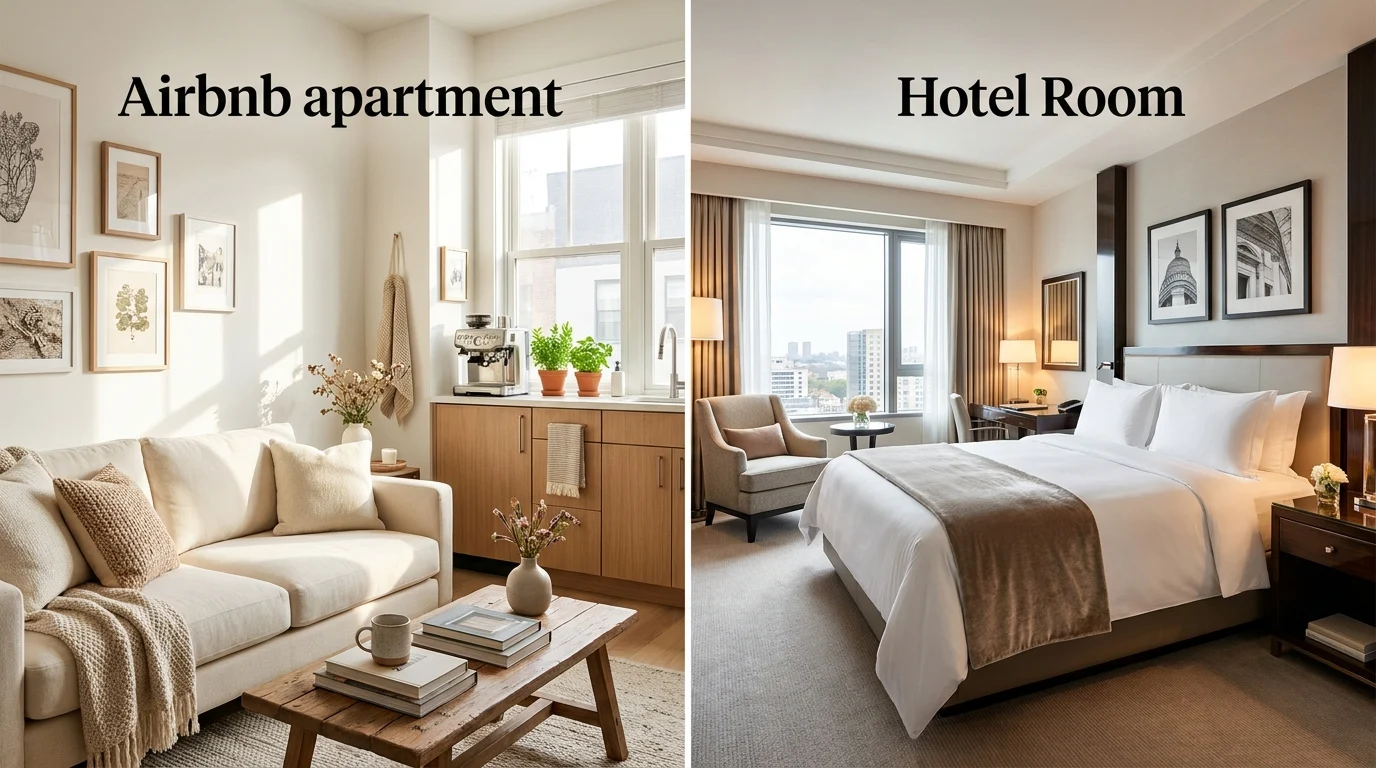
Quick Ans: Airbnb vs hotel comes down to your budget, travel style, and the amenities you need. Airbnb rentals often provide kitchens, extra space, and a home like experience, making them useful for families and longer stays. Hotels typically offer daily housekeeping, on site staff, and consistent services, making them convenient for shorter trips.
Choosing between an Airbnb and a hotel can make a big difference to your travel experience. Both options provide a place to stay, but they offer different levels of comfort, privacy, service, and flexibility. Therefore, understanding their differences can help you choose the right accommodation for your trip.
An Airbnb may feel more like a home, especially when you rent an entire apartment or house. You might get a kitchen, laundry facilities, a living room, and extra bedrooms. In contrast, hotels usually offer professional guest services, regular housekeeping, and amenities such as room service, a front desk, or a swimming pool.
However, the cheaper option is not always the best value. Airbnb cleaning fees, service charges, and local taxes can increase the final price. Similarly, hotel parking fees, resort fees, and extra guest charges can raise your total bill.
In this guide, we will compare Airbnb and hotels based on cost, amenities, privacy, safety, and convenience. By the end, you will know which option best fits your travel needs.
What Is Airbnb?
Airbnb is an accommodation platform where hosts offer places such as apartments, houses, private rooms, and vacation rentals.
Many listings provide home style amenities, including kitchens, washing machines, and separate living areas. As a result, Airbnb can suit travelers who want more space or plan to prepare their own meals.
Example: A family visiting another city for a week might rent a two bedroom apartment with a kitchen instead of booking multiple hotel rooms.
However, the experience depends on the specific listing, host, location, and house rules.
What Is a Hotel?
A hotel is a professionally operated accommodation business that offers rooms or suites for overnight stays. Many hotels also provide services such as housekeeping, reception, luggage storage, breakfast, and concierge assistance.
Moreover, hotels often follow established procedures for check in, guest support, and room maintenance.
Example: A business traveler staying for two nights may prefer a hotel near the airport because it offers a convenient check in process and access to staff.
Airbnb vs Hotel: Key Differences
| Feature | Airbnb | Hotel |
|---|---|---|
| Space | Often offers apartments or entire homes | Usually offers rooms or suites |
| Kitchen | Common in entire home rentals | Usually limited to select rooms or suites |
| Housekeeping | Varies by host and booking | Often available regularly |
| Staff support | Depends on host availability | Usually has a reception or support team |
| Privacy | Entire rentals can offer more private space | Guests usually share hotel facilities |
| Pricing | Fees can increase the booking total | Extra taxes and service fees may apply |
| Best for | Families, groups, and longer stays | Short trips, business travel, and convenience |
Keep in mind that these features vary by property. Some Airbnb listings offer professional management, while extended stay hotels may provide kitchens and laundry facilities.
Airbnb vs Hotel: Which Is Cheaper?
Neither option is always cheaper. The final cost depends on the destination, travel dates, number of guests, length of stay, and additional fees.
Airbnb may offer better value for groups because everyone can share one property. In addition, having a kitchen can help reduce restaurant expenses.
On the other hand, hotels may offer competitive nightly rates, complimentary breakfast, loyalty rewards, and discounts for longer bookings.
Before deciding, compare the total price for your entire stay, not just the advertised nightly rate.
For example, a rental with a low nightly price may become expensive after cleaning and service fees. Meanwhile, a hotel with a slightly higher rate might include breakfast and daily housekeeping.
Pros and Cons of Airbnb
Advantages of Airbnb
- More living space: Entire homes can provide separate bedrooms and living areas.
- Kitchen access: Guests can prepare meals and store groceries.
- Home like atmosphere: Some rentals offer a more residential experience.
- Group accommodation: One property may accommodate several travelers.
- Laundry facilities: Many longer stay rentals include a washing machine.
Disadvantages of Airbnb
- Variable quality: Property standards and amenities differ between listings.
- Host communication: Guests may need to coordinate check in with the host.
- Extra fees: Cleaning and service charges can increase the total cost.
- House rules: Some properties restrict noise, visitors, or certain activities.
- Less consistent service: Daily housekeeping and immediate assistance may not be available.
Pros and Cons of Hotels
Advantages of Hotels
- Professional support: Staff can often help with questions and problems.
- Regular housekeeping: Many hotels clean rooms according to their service policies.
- Convenient amenities: Some offer restaurants, gyms, pools, and room service.
- Predictable procedures: Check in and guest services often follow established standards.
- Useful locations: Hotels frequently operate near airports, business districts, and tourist attractions.
Disadvantages of Hotels
- Limited space: Standard rooms may feel small for families or groups.
- Less cooking flexibility: Full kitchens are not standard in most rooms.
- Additional charges: Parking, breakfast, and resort fees may cost extra.
- Less residential privacy: Guests share common areas with other visitors.
- Higher group costs: Families may need to reserve multiple rooms.
Which Is Better for Different Types of Travelers?
Choose Airbnb if:
- You are traveling with family or a group.
- You need a kitchen or laundry facilities.
- You plan to stay for several days or weeks.
- You want an entire home or apartment.
Choose a hotel if:
- You are taking a short trip.
- You want access to staff and guest services.
- You prefer regular housekeeping.
- You need convenient facilities for business travel.
However, compare individual properties before booking. A well managed Airbnb may provide excellent service, while a hotel may offer more space and flexibility than expected.
Is Airbnb Safer Than a Hotel?
Neither option is automatically safer. Safety depends on the property, its location, security arrangements, and management.
Before booking an Airbnb, read recent reviews, check the listing details, confirm the entrance and lock arrangements, and review the host’s cancellation policy. Also, use the platform’s official messaging and payment system.
For hotels, check recent guest feedback, access control, reception availability, and the property’s location. Regardless of your choice, confirm emergency exits and keep your valuables secure.
Frequently Asked Questions
1. Is Airbnb cheaper than a hotel?
Sometimes. Airbnb may offer better value for groups or longer stays, but cleaning fees and service charges can make some rentals more expensive than hotels.
2. Is Airbnb better for families?
It can be, especially when a property offers multiple bedrooms, a kitchen, and laundry facilities. However, families should check child safety features and house rules before booking.
3. Are hotels better for short stays?
Often, yes. Hotels can provide convenient check in, housekeeping, and staff support without requiring guests to manage a rental property.
4. Do Airbnb properties have cleaning fees?
Some do. Always review the full booking breakdown because cleaning fees and other charges vary by listing.
5. Do hotels offer kitchens?
Some hotels offer kitchenettes or full kitchens, particularly in extended stay properties. However, standard hotel rooms usually do not include a full kitchen.
6. Is Airbnb better for long stays?
Airbnb can be a good choice for longer stays because many rentals offer kitchens, laundry facilities, and extra living space. Compare weekly or monthly discounts and the total cost before booking.
7. Which is better for business travel?
Hotels often suit business travelers who value reliable service, convenient locations, and work friendly amenities. Nevertheless, an Airbnb may work well for longer business assignments.
8. Can Airbnb cost more than a hotel?
Yes. Cleaning fees, service charges, taxes, and other costs can raise the total. Compare the complete booking price for both options before making a decision.
Conclusion
When comparing Airbnb vs hotel, the best choice depends on your priorities. Airbnb often suits families, groups, and travelers who want extra space or home style amenities. Hotels usually work well for short stays, business trips, and people who value convenient services.
Ultimately, compare the total price, location, amenities, reviews, and cancellation rules before booking. Rather than choosing based on the nightly rate alone, select the accommodation that offers the best overall value for your trip.
1 thought on “Airbnb vs Hotel: Which Is Better for Your Trip? Costs, Comfort & Key Differences”