
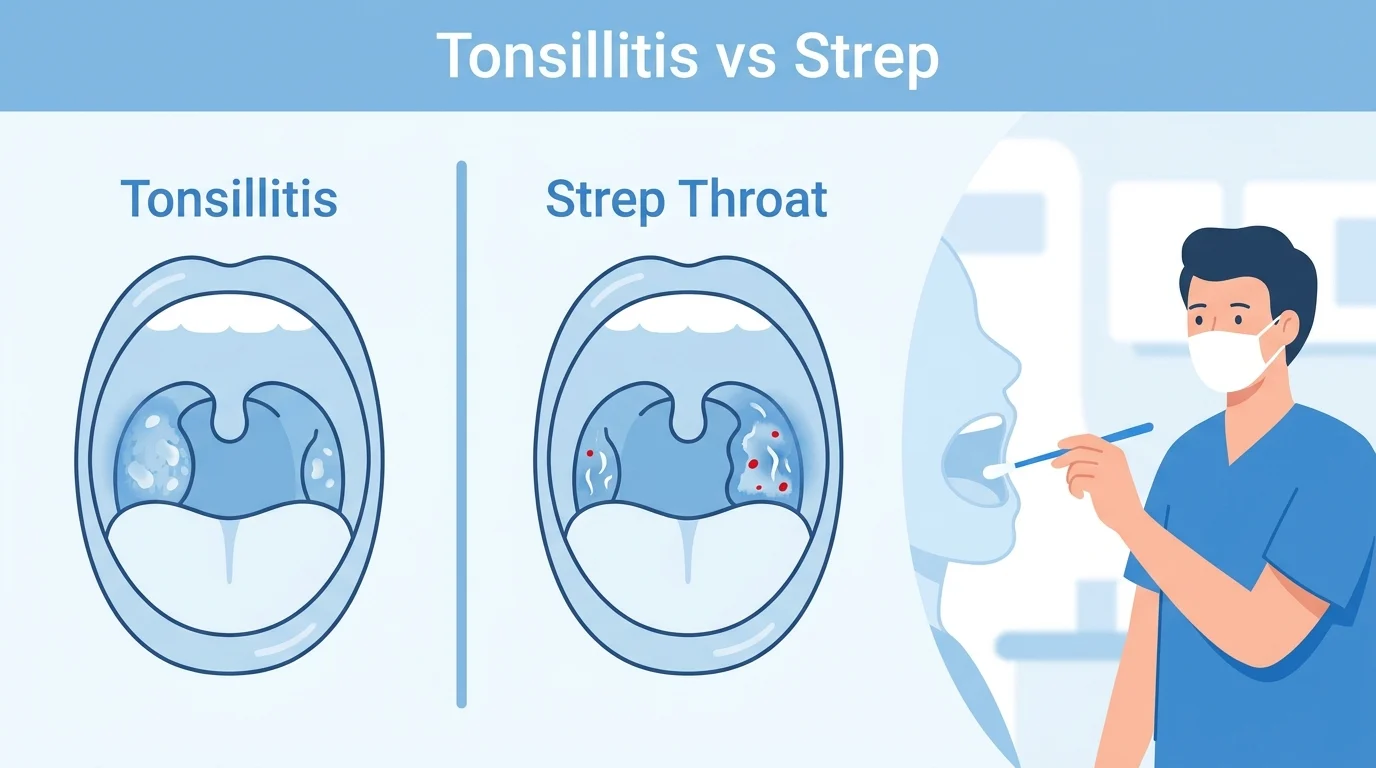
Quick Ans: Tonsillitis is inflammation of the tonsils caused by viruses or bacteria, while strep throat is a bacterial infection caused by group A Streptococcus. Both conditions can cause a sore throat, fever, swollen tonsils, and painful swallowing. However, a rapid strep test or throat culture can help confirm strep and determine whether antibiotics are needed.
A painful throat, swollen tonsils, and difficulty swallowing can make it hard to tell whether you have tonsillitis or strep throat. Although these conditions share several symptoms, they are not exactly the same. Understanding the difference can help you recognize possible warning signs and seek the right care.
Tonsillitis occurs when the tonsils become inflamed. Viruses cause many cases, although bacteria can also trigger the condition. In contrast, strep throat is a bacterial infection caused by group A Streptococcus. This infection can affect the throat and tonsils, so a person may experience both conditions at the same time.
Moreover, the symptoms can overlap so much that looking at your throat alone may not provide a definite answer. Therefore, knowing the causes, common symptoms, testing methods, and treatments is important. This guide explains how tonsillitis and strep throat differ and when you should contact a healthcare professional.
What Is the Difference Between Tonsillitis and Strep?
What Is Tonsillitis?
Tonsillitis means inflammation of the tonsils, which are two small areas of tissue at the back of your throat. These tissues help your immune system respond to germs entering through your mouth and nose.
Viruses commonly cause tonsillitis. However, bacterial infections, including group A Streptococcus, can also inflame the tonsils.
Common symptoms include:
- Red, swollen tonsils
- Sore throat and painful swallowing
- Fever
- White or yellow patches on the tonsils
- Swollen glands in the neck
- Bad breath
- Headache or tiredness
Because different germs can cause tonsillitis, treatment depends on the underlying cause.
What Is Strep Throat?
Strep throat is a bacterial infection caused by group A Streptococcus. It often causes a sudden sore throat and can make swallowing uncomfortable.
Common symptoms include:
- Sudden throat pain
- Fever
- Red, swollen tonsils, sometimes with white patches
- Tender lymph nodes at the front of the neck
- Tiny red spots on the roof of the mouth
- Headache or stomach pain, especially in children
Unlike viral throat infections, confirmed strep throat usually requires antibiotics prescribed by a healthcare professional.
Tonsillitis vs Strep: Key Differences
| Feature | Tonsillitis | Strep Throat |
|---|---|---|
| Meaning | Inflamed tonsils | Bacterial throat infection |
| Main causes | Viruses or bacteria | Group A Streptococcus |
| Sore throat | Common | Common, often sudden |
| Swollen tonsils | Common | May occur |
| White patches | Possible | Possible |
| Cough or runny nose | Possible, especially with viruses | Less typical |
| Diagnosis | Examination and sometimes testing | Rapid strep test or throat culture |
| Treatment | Depends on the cause | Antibiotics for confirmed infection |
Importantly, white patches and fever do not automatically mean you have strep. Both conditions can produce these symptoms, so testing may be necessary.
How Can You Tell Which Condition You Have?
Certain symptoms may provide clues, but they cannot always confirm the diagnosis.
Symptoms that may suggest a viral infection include:
- Cough
- Runny nose
- Hoarse voice
- Pink eye
Symptoms that may suggest strep throat include:
- A sore throat that begins suddenly
- Fever
- Painful swallowing
- Tender neck glands
- No cough
Nevertheless, symptoms alone cannot reliably distinguish strep from every other throat infection. If a healthcare professional suspects strep, they may recommend a rapid antigen test or throat culture using a throat swab.
Treatment: Tonsillitis vs Strep
How Is Tonsillitis Treated?
Treatment depends on whether a virus or bacteria caused the inflammation. Viral tonsillitis usually improves with rest and supportive care. You can drink plenty of fluids, eat soft foods, and gargle with warm salt water if you can do so safely.
A suitable over-the-counter pain reliever may also help. Ask a healthcare professional or pharmacist which option is appropriate for your age and circumstances.
If bacteria cause tonsillitis, a clinician may prescribe antibiotics when indicated. However, antibiotics do not treat viral infections.
How Is Strep Throat Treated?
Healthcare professionals usually treat confirmed strep throat with antibiotics. These medicines help shorten symptoms, reduce transmission, and lower the risk of certain complications.
Take antibiotics exactly as prescribed and complete the recommended course. Do not use leftover antibiotics or take them without medical advice.
In addition, rest, fluids, and appropriate pain relief can help you feel more comfortable while recovering.
When Should You See a Doctor?
Contact a healthcare professional if you or your child has a persistent sore throat, fever, painful swallowing, swollen neck glands, or symptoms that suggest strep throat.
Seek urgent medical care if you experience:
- Difficulty breathing
- Inability to swallow liquids or saliva
- Unusual drooling
- Severe or rapidly worsening throat pain
- Significant swelling in the mouth or throat
- Difficulty opening your mouth
These symptoms may indicate a serious problem that needs prompt assessment.
Frequently Asked Questions
1. Is tonsillitis worse than strep throat?
Neither condition is always worse. Severity depends on the cause, symptoms, and whether complications develop. Both can cause significant throat pain.
2. Can you have tonsillitis and strep at the same time?
Yes. Group A Streptococcus can cause tonsillitis, so a person may have inflamed tonsils due to a strep infection.
3. Does tonsillitis always require antibiotics?
No. Most viral cases do not need antibiotics. A healthcare professional may prescribe them when a bacterial infection requires treatment.
4. Can you have strep without white spots?
Yes. Strep throat does not always cause white patches on the tonsils. A throat test can help confirm the infection.
5. Is strep throat contagious?
Yes. Group A Streptococcus can spread through respiratory droplets and direct contact. Appropriate treatment and good hygiene help reduce transmission.
6. How long does tonsillitis last?
Many cases improve within about a week, although recovery varies with the cause and severity. Persistent or worsening symptoms deserve medical assessment.
7. Can a rapid strep test be wrong?
Yes. Rapid tests can miss some infections. Depending on the patient’s age and clinical situation, a healthcare professional may recommend a throat culture after a negative result.
8. Can you treat strep throat at home?
Home care can relieve discomfort, but it cannot replace prescribed antibiotics for confirmed strep throat. Seek medical advice if you suspect an infection.
Conclusion
The main difference in tonsillitis vs strep is that tonsillitis describes inflamed tonsils, while strep throat refers to an infection caused by specific bacteria. Strep can also cause tonsillitis, which explains why their symptoms often overlap.
Ultimately, symptoms can offer clues, but testing may be needed to confirm strep throat. Seek medical advice when symptoms are concerning, and use antibiotics only when a healthcare professional recommends them.