
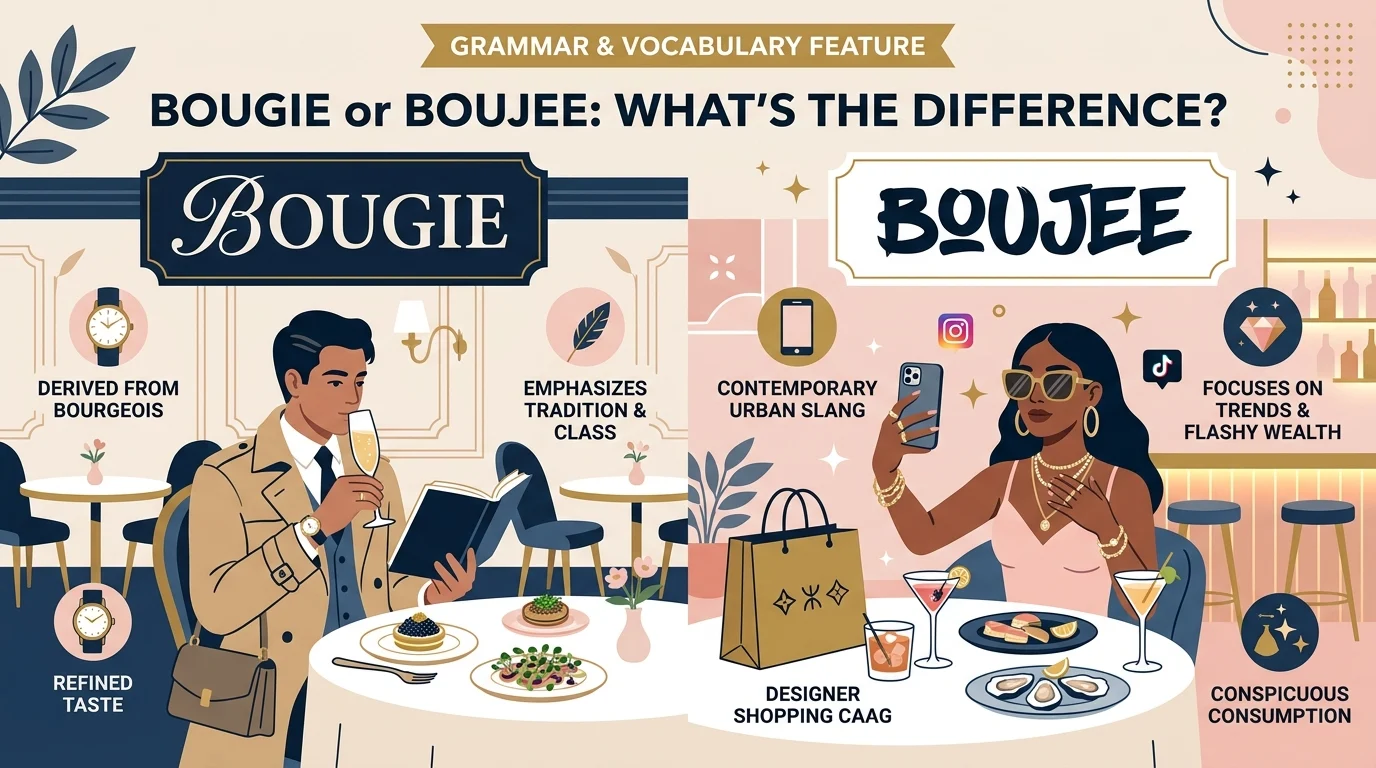
Quick Ans: Bougie and boujee are informal words used to describe someone or something that seems fancy, luxurious, expensive, or overly concerned with wealth and status. Bougie is the more established spelling, while boujee is a popular playful variant. Both can describe people, lifestyles, restaurants, fashion, or habits.
“Bougie or boujee” is a common spelling question because both forms appear frequently online, in social media posts, and in casual conversations. Although the two spellings look different, they usually carry the same basic meaning.
The word describes something associated with luxury, sophistication, expensive tastes, or an interest in appearing wealthy. Depending on the context, it can sound positive, humorous, teasing, or mildly critical.
The spelling bougie is generally considered the more established form. Boujee is a popular informal variation that became especially common in internet culture and social media.
Understanding the difference helps you choose the right spelling for your audience and context. If you’re writing a formal piece, you should usually avoid both words unless you’re discussing the term itself. In casual writing, however, either spelling may work.
Let’s look at the meaning, usage, examples, and common mistakes behind bougie or boujee.
Quick Answer and Key Takeaway
Bougie is the more established spelling, while boujee is a popular informal variant. Both usually mean fancy, luxurious, expensive, or focused on an upscale lifestyle.
Use bougie when you want the more standard spelling. Use boujee when matching casual internet, social media, or playful language.
Definition and Explanation
What Does Bougie Mean?
Bougie is an informal adjective used to describe someone or something that appears luxurious, sophisticated, expensive, or concerned with status.
For example:
She loves staying at expensive hotels. She’s so bougie.
It can also describe things:
This restaurant is a little too bougie for me.
The word often carries a humorous or teasing tone rather than being completely negative.
What Does Boujee Mean?
Boujee generally has the same meaning as bougie. It is a playful spelling that became popular through contemporary slang and online culture.
For example:
We had a boujee dinner downtown.
The spelling boujee often feels more deliberately slangy or informal.
Is This a Grammar, Usage, or Vocabulary Issue?
The difference between bougie and boujee is mainly a spelling and usage issue.
Neither word is usually appropriate for formal academic writing. Both belong to informal vocabulary and are especially common in casual speech, texting, social media, and popular culture.
The choice depends more on tone than grammar.
| Word | Typical Use | Tone |
|---|---|---|
| Bougie | Casual conversation and writing | Informal |
| Boujee | Slang, social media, playful writing | Very informal |
Real World Usage Examples
Workplace
Our new office looks pretty bougie after the renovation.
This works in casual workplace conversation but may sound too informal for a professional report.
Recap: Use these terms carefully in professional communication.
Academic
The article examines how the term “bougie” is used in modern popular culture.
Here, the word is appropriate because the writer is discussing the vocabulary itself.
Recap: Academic writing can use the term when it is the subject of analysis.
Everyday Conversation
I bought some fancy candles because I wanted my apartment to feel bougie.
That coffee shop is so boujee.
Recap: Casual conversations are where both spellings are most natural.
Regional or Global Usage Differences
The meaning of bougie and boujee is broadly similar in contemporary English, especially in online communication. The exact spelling you encounter may depend on the community, platform, or personal preference.
Bougie is generally the more established spelling. Boujee has a stronger association with modern slang and playful internet language.
Because slang changes quickly, the popularity of either spelling can vary across different online communities.
When NOT to Use It
Avoid bougie or boujee when:
- You are writing a formal academic essay.
- You are preparing a legal document.
- You are writing a formal business report.
- Your audience may not understand current slang.
- You need precise, neutral vocabulary.
- You are describing wealth without wanting a judgmental tone.
- The context requires professional language.
Instead, consider words such as luxurious, upscale, expensive, affluent, or sophisticated, depending on your meaning.
Common Mistakes and Corrections
| Correct Sentence | Incorrect Sentence | Why |
|---|---|---|
| Her apartment looks bougie. | Her apartment looks boujee in a formal report. | The slang is too informal for the context. |
| He loves boujee restaurants. | He loves bougie restaurants, therefore the spelling is wrong. | Both spellings can be used informally. |
| This hotel feels very bougie. | This hotel is boujee, so it must be expensive. | The word suggests an upscale image but doesn’t always mean something is objectively expensive. |
| I want a more luxurious hotel. | I want a more bougie hotel for my business proposal. | Luxurious is more suitable for formal writing. |
Simple Decision Rule
Remember this:
Bougie = established informal spelling.
Boujee = playful slang variant.
If you’re unsure, choose bougie for the safer informal spelling.
Exercises With Answers
Choose bougie, boujee, or a more formal alternative.
- That restaurant looks really ______.
- She loves her ______ weekend getaways.
- Use a formal word instead of ______ in an academic essay.
- Both ______ and ______ can appear in casual online writing.
- What is the more established spelling?
Answers
- Bougie or boujee
- Bougie or boujee
- Luxurious or upscale
- Bougie and boujee
- Bougie
Related Concepts and Comparisons
Bougie vs Luxurious
Luxurious is neutral and formal enough for many types of writing. Bougie is informal and can suggest that someone is showing off or trying to appear sophisticated.
Bougie vs Fancy
Fancy is much broader and can simply mean attractive or elaborate. Bougie specifically suggests an upscale or status conscious quality.
Bougie vs Boujee
These spellings usually have the same meaning. The main difference is style: bougie is more established, while boujee is more playful and slang oriented.
FAQs
Is bougie or boujee the correct spelling?
Bougie is the more established spelling. Boujee is a popular informal variant and is widely used in casual online language.
Does bougie mean fancy?
Yes. Bougie can describe something fancy, luxurious, expensive, or associated with an upscale lifestyle. It can also carry a teasing or critical meaning.
Is boujee a real word?
Boujee is a widely used informal slang spelling. It appears frequently in casual communication and popular culture, although it is less established than bougie.
Is bougie positive or negative?
It can be either. Someone might use it positively to describe an enjoyable luxury, or humorously to suggest that someone is overly concerned with expensive tastes.
Can I use bougie in formal writing?
Usually, no. Choose a more precise word such as luxurious, upscale, or sophisticated when writing formally.
Why do people spell bougie as boujee?
Boujee is a playful spelling that became popular in contemporary slang and internet culture. It gives the word a more casual and expressive appearance.
Does bougie mean rich?
Not exactly. Bougie can describe behavior, tastes, or appearances associated with wealth, but someone does not necessarily have to be rich to be called bougie.
What is the difference between bougie and fancy?
Fancy is a general word for something elaborate or attractive. Bougie specifically suggests an upscale, luxurious, or status conscious quality.
Conclusion
The choice between bougie or boujee is mostly about spelling, tone, and context. Bougie is the more established spelling and is generally the better choice when you want a recognizable informal term. Boujee carries essentially the same meaning but often feels more playful, slangy, and connected to online culture.
Both words can describe people, places, lifestyles, clothing, food, or experiences that seem luxurious or concerned with status. However, neither is usually the best choice for formal writing.
For academic, professional, or highly formal content, choose a clearer alternative such as luxurious, upscale, expensive, or sophisticated.
The easiest rule is simple: use bougie as your default informal spelling, and use boujee when you intentionally want a playful slang style. When in doubt, think about your audience first and choose the word that matches the tone of your writing.