
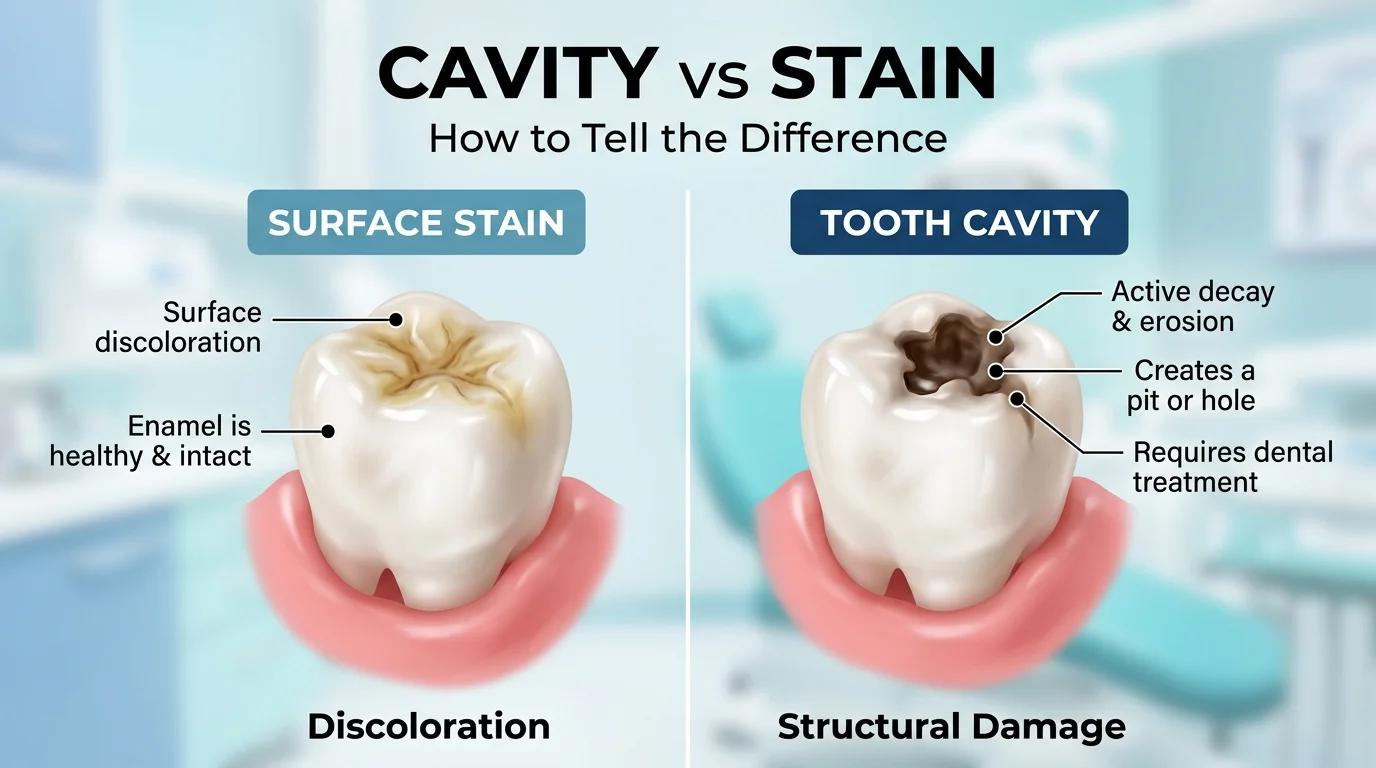
Quick Answer: A cavity is a damaged area of a tooth caused by decay, while a tooth stain is a discoloration that affects the tooth’s appearance. Stains may result from coffee, tea, tobacco, or natural changes in tooth color. Cavities can cause sensitivity, pain, or visible holes, but early decay may have no symptoms. A dentist can confirm the difference.
Have you noticed a dark spot on your tooth and wondered whether it is a cavity or simply a stain? These two dental concerns can look similar, especially when a small brown or black mark appears on the surface of a tooth. However, they have different causes and require different approaches.
A tooth stain usually affects the color of the enamel or the underlying tooth structure. A cavity develops when tooth decay damages the hard tissues of the tooth. While a stain may be mainly cosmetic, a cavity can gradually become deeper and lead to pain, infection, or tooth loss if left untreated.
Understanding cavity vs stain can help you recognize possible warning signs and decide when to visit a dentist. However, color alone cannot tell you whether a tooth is healthy. Some cavities look dark, while others appear white or blend into the surrounding enamel.
In this guide, you will learn the main differences, common symptoms, causes, treatment options, and ways to protect your teeth.
Cavity vs Stain: Quick Answer
A cavity is a damaged area caused by tooth decay, while a stain is a change in tooth color.
- Cavity: May cause a hole, rough surface, sensitivity, or pain, although early cavities may have no symptoms.
- Stain: Usually appears as a brown, yellow, gray, or black mark without damaging the tooth structure.
- Main difference: A cavity involves tooth damage, while a stain primarily affects appearance.
- Best way to confirm: A dental professional can examine the tooth and determine whether decay is present.
Not every dark spot is a cavity, and not every cavity looks dark.
What Is a Cavity?
A cavity is a hole or damaged area in a tooth caused by tooth decay. Decay develops when bacteria in dental plaque produce acids that gradually weaken the tooth’s hard outer layer, called enamel.
Frequent exposure to sugary foods and drinks, inadequate oral hygiene, and other risk factors can increase the chance of developing cavities.
Common signs of a cavity
- A visible hole or pit in the tooth
- White, brown, or black areas
- Sensitivity to hot, cold, or sweet foods
- Pain when biting or chewing
- Toothache that develops or worsens over time
- Food frequently getting trapped in one area
Early cavities may not cause pain or create an obvious hole. If decay progresses, a dentist may need to remove the damaged tissue and restore the tooth with a filling or another treatment.
What Is a Tooth Stain?
A tooth stain is a discoloration that changes the appearance of a tooth. Stains can develop on the surface or originate within the tooth structure.
Unlike a cavity, a stain does not necessarily mean the tooth is damaged. However, some stains can resemble decay, so a dental examination may be needed to distinguish between them.
Common causes of tooth stains
- Coffee and tea
- Red wine and strongly colored foods
- Tobacco use
- Plaque buildup
- Certain medications
- Natural aging and changes in enamel
- Previous dental trauma or changes inside the tooth
Surface stains may respond to professional cleaning or appropriate whitening treatments. Discoloration within the tooth may require a different approach, depending on its cause.
Cavity vs Stain: Key Differences
| Feature | Cavity | Tooth Stain |
|---|---|---|
| Main cause | Tooth decay | Pigments or changes in tooth structure |
| Tooth damage | Yes | Not necessarily |
| Appearance | White, brown, black, or a visible hole | Yellow, brown, gray, or black discoloration |
| Sensitivity | May occur | Usually absent unless another issue exists |
| Pain | Possible, especially with advanced decay | Usually painless |
| Surface texture | May become rough or develop a hole | Often remains smooth |
| Treatment | May require decay treatment or a filling | May need cleaning or whitening |
These are general clues, not definitive tests. Both conditions can appear differently from one person to another.
How to Tell If a Black Spot Is a Cavity or Stain
A black or brown spot can be caused by staining, tooth decay, or another dental condition. Consider the following clues, but do not rely on them alone.
1. Notice the texture. A visible pit or damaged area may suggest a cavity. However, you should not poke the spot with a sharp object to test it.
2. Pay attention to sensitivity. Pain or sensitivity to temperature and sweet foods can occur with decay. Still, many cavities cause no symptoms, especially early on.
3. Consider the location. Stains often appear where colored foods, drinks, or plaque accumulate. Cavities can develop in grooves, between teeth, or near the gumline.
4. Watch for changes. A spot that grows, develops a hole, or becomes painful should be checked by a dentist.
5. Arrange a dental examination. A dentist may use visual inspection, dental instruments, and X-rays when appropriate to determine whether decay is present.
Do not assume that a painless spot is harmless. Early treatment can help prevent a small area of decay from progressing.
Can a Cavity Look Like a Stain?
Yes. Cavities can appear as brown or black spots, making them difficult to distinguish from ordinary discoloration. Early decay may also appear as a chalky white patch rather than a dark mark.
Likewise, some harmless stains can look quite dark. The appearance of a tooth alone cannot reliably confirm whether decay exists.
If you notice a new or changing spot, schedule a dental checkup rather than trying to scrape it away or whiten it at home.
Treatment: Cavity vs Stain
Treatment depends on what is causing the discoloration.
How dentists treat cavities
A dentist may recommend fluoride treatment for certain early lesions that have not formed a hole. Once a cavity has developed, a filling is commonly needed. More advanced decay may require a crown, root canal treatment, or extraction, depending on the damage.
How dentists treat stains
A dentist may remove surface stains through professional cleaning. Whitening treatments may help with suitable discoloration, but they do not repair cavities. Intrinsic stains may need different cosmetic options.
Avoid applying household chemicals or abrasive substances to your teeth. These can damage enamel and irritate your gums.
Frequently Asked Questions
Can a cavity be black?
Yes. A cavity may appear brown or black, but dark color alone does not prove that decay is present.
Can a tooth stain turn into a cavity?
A stain itself does not automatically become a cavity. However, plaque and the conditions that cause discoloration may coexist with tooth decay.
Do cavities always hurt?
No. Early cavities often cause no pain. Regular dental examinations can identify problems before symptoms develop.
Can brushing remove a cavity?
No. Brushing cannot repair a formed hole in a tooth. Good oral hygiene may help prevent decay, and some early enamel damage can be managed with professional fluoride treatment.
Can whitening remove a cavity?
No. Whitening may lighten certain stains, but it cannot treat tooth decay. A dentist should check suspicious spots before cosmetic treatment.
Should I see a dentist for a small dark spot?
Yes, especially if the spot is new, changing, rough, or associated with sensitivity. A dental professional can determine the cause.
Conclusion
Understanding cavity vs stain starts with recognizing that tooth discoloration and tooth decay are not the same thing. A stain generally changes the color of a tooth, while a cavity involves damage caused by decay. Although stains are often harmless, cavities can worsen without appropriate care.
Brown or black spots, sensitivity, and visible pits can provide useful clues, but none can confirm a diagnosis on its own. Early cavities may look white and cause no pain, while some stains can appear very dark.
If you notice an unusual mark on your tooth, arrange a dental examination instead of attempting to scrape or whiten it away. A dentist can identify the cause and recommend suitable treatment. Regular brushing with fluoride toothpaste, cleaning between teeth, limiting frequent sugary snacks, and attending dental checkups can help protect your teeth and maintain a healthy smile.