
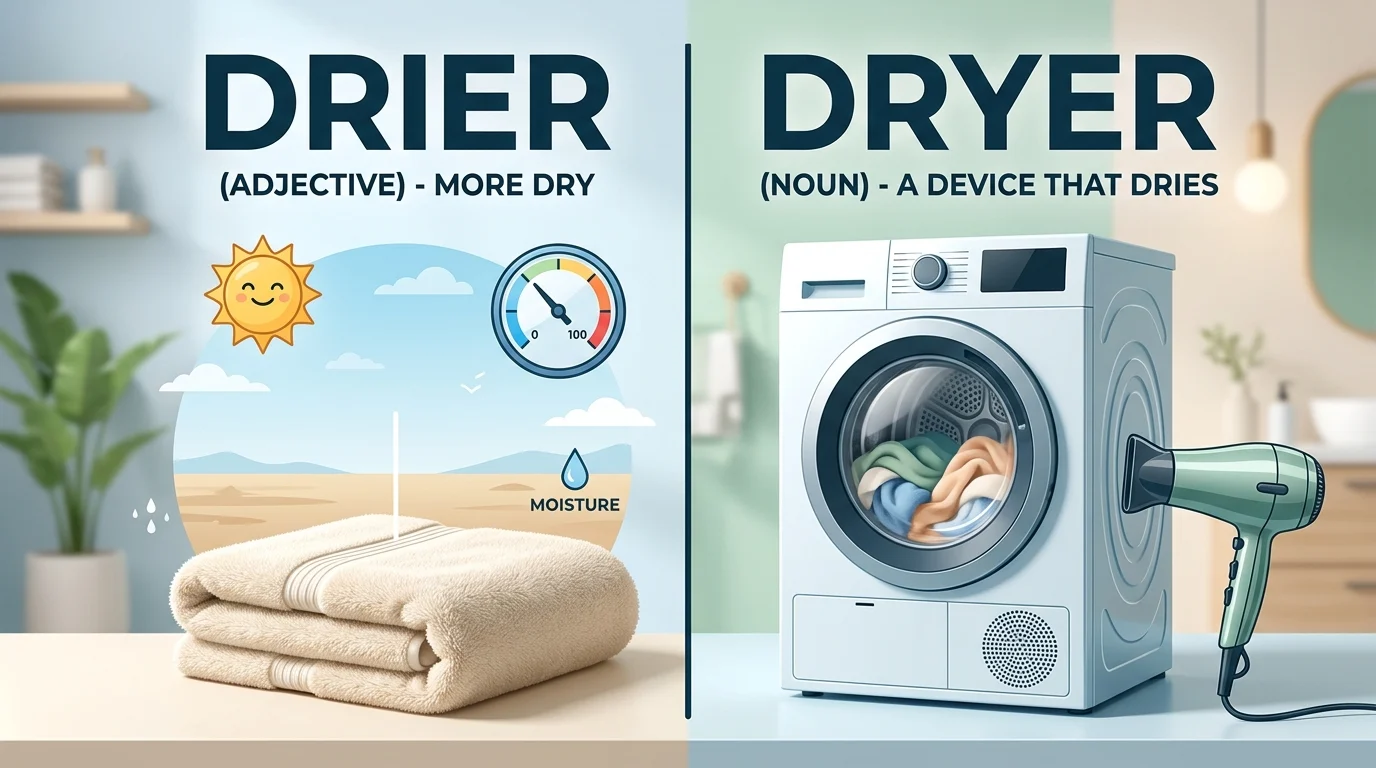
Quick Ans: Drier or dryer have different meanings. Drier is the comparative form of “dry,” meaning less wet or less humid. Dryer is usually a noun for a machine that removes moisture, such as a clothes dryer or hair dryer. The correct choice depends on whether you are comparing dryness or naming an appliance.
Drier or dryer can be confusing because the two words look almost identical and are closely related to the word “dry.” However, they don’t have the same meaning or grammatical function.
The key difference is simple. Drier describes something that has less moisture than something else. For example, “This towel is drier than that one.” Dryer, on the other hand, usually refers to a machine or device used to remove moisture. You might say, “Put the clothes in the dryer.”
Knowing the difference helps you avoid spelling and vocabulary mistakes in everyday writing. These words often appear in conversations about weather, laundry, hair care, cooking, and household appliances.
Let’s look at the meanings, rules, examples, common mistakes, and an easy way to remember when to use drier or dryer.
Quick Answer and Key Takeaway
| Word | Meaning | Example |
|---|---|---|
| Drier | Less wet or less humid | The air is drier today. |
| Dryer | A machine or device that removes moisture | The clothes are in the dryer. |
Easy rule: If you mean less wet or less humid, use drier. If you mean a machine that dries something, use dryer.
Definition and Explanation
What Does Drier Mean?
Drier is the comparative form of the adjective dry. It means something contains less moisture than another thing.
Examples:
- This towel is drier than the other one.
- The weather feels drier today.
- My skin becomes drier during winter.
- This soil is drier than yesterday.
The word can also describe air, climate, food, skin, surfaces, and other things.
What Does Dryer Mean?
Dryer is usually a noun. It refers to a machine or device designed to remove moisture.
Examples:
- The clothes are in the dryer.
- I need to buy a new hair dryer.
- The clothes dryer stopped working.
- She used a hand dryer after washing her hands.
In some contexts, dryer can also be an adjective meaning something that dries. However, the noun use is much more common in everyday English.
Is This a Grammar, Usage, or Vocabulary Issue?
The difference between drier and dryer is mainly a vocabulary and spelling issue, although grammar also plays a role.
Drier is a comparative adjective.
Dryer is generally a noun referring to a drying machine or device.
Compare these sentences:
- The climate is drier this year.
- The clothes are in the dryer.
The first sentence compares levels of moisture. The second names an appliance.
Real World Usage Examples
Workplace
“Please put the wet uniforms in the dryer.”
Here, dryer refers to the machine.
Recap: Use dryer when naming a drying appliance.
Academic
“The region has a drier climate than the coastal area.”
Here, drier compares two climates.
Recap: Use drier when comparing dryness.
Everyday
“My hair feels drier after swimming, so I used a hair dryer.”
Both words can correctly appear in the same sentence because they have different meanings.
Recap: Drier describes dryness, while dryer names a device.
Regional or Global Usage Differences
The meanings of drier and dryer are generally consistent across major varieties of English.
You may see spelling variations in other words related to drying, but the distinction between these two words remains clear:
- Drier means less wet or less humid.
- Dryer usually means a machine that removes moisture.
A clothes dryer is also commonly called a tumble dryer in British English, while clothes dryer is common in American usage. This regional difference doesn’t change the meaning of drier.
When NOT to Use It
Avoid drier when you are talking about a machine.
Incorrect: “The clothes are in the drier.”
Correct: “The clothes are in the dryer.”
Also avoid dryer when you mean something has become less wet.
Incorrect: “The desert air is dryer than before.”
Correct: “The desert air is drier than before.”
Remember these situations:
- Comparing moisture levels → drier
- Describing less humidity → drier
- Talking about a clothes machine → dryer
- Talking about a hair appliance → dryer
- Referring to a hand drying machine → dryer
Common Mistakes and Corrections
| Correct Sentence | Incorrect Sentence | Why |
|---|---|---|
| This towel is drier now. | This towel is dryer now. | You are comparing dryness. |
| Put the clothes in the dryer. | Put the clothes in the drier. | The word refers to a machine. |
| The air is drier today. | The air is dryer today. | “Drier” is the comparative adjective. |
| I bought a new hair dryer. | I bought a new hair drier. | The appliance is a dryer. |
| Winter makes my skin drier. | Winter makes my skin dryer. | The sentence describes reduced moisture. |
Plain Language Decision Rule
Ask yourself: Am I describing something with less moisture, or am I naming a machine?
If it means less wet, choose drier.
If it means a machine that dries, choose dryer.
Exercises With Answers
Choose drier or dryer.
- My clothes are still in the ______.
- The weather is much ______ this week.
- She bought a new hair ______.
- This towel feels ______ than that one.
- The indoor air becomes ______ during winter.
- Please put the wet sheets in the ______.
Answer Key
- dryer
- drier
- dryer
- drier
- drier
- dryer
Related Concepts and Comparisons
The same basic pattern appears in other words.
Dry → drier: comparative adjective showing less moisture.
Dry → dryer: noun referring to something that dries, especially an appliance.
You can remember the difference by focusing on the extra e in dryer. Think of the e as belonging to the equipment that dries your clothes or hair.
FAQs
Is it drier or dryer?
Both are correct words, but they have different meanings. Drier means less wet or less humid, while dryer usually means a machine that removes moisture.
Is drier the comparative form of dry?
Yes. Drier is the standard comparative form of “dry.” For example, “Today is drier than yesterday.”
Is a clothes drier or dryer?
The usual spelling is clothes dryer. It refers to the appliance used to dry clothes.
Is hair drier or hair dryer?
The standard term is hair dryer. It refers to an electrical device used to dry hair.
Does drier mean less wet?
Yes. Drier means having less moisture than something else.
Why is a dryer spelled with an e?
Dryer is formed from “dry” plus “er” and is commonly used as a noun for a device that dries something. The spelling distinguishes it from drier, the comparative adjective.
Can drier and dryer be used in the same sentence?
Yes. For example, “The air is drier, so I used the hair dryer.” Each word has a different function.
Is drier or dryer used for weather?
Use drier when comparing weather conditions. For example, “The climate is drier this year.”
What is the easiest way to remember drier vs dryer?
Think drier = less wet and dryer = device. If you can replace the word with “less wet,” choose drier.
Conclusion
Understanding drier or dryer is easy once you separate the two meanings. Drier is the comparative form of “dry” and describes something that has less moisture or humidity. Dryer usually refers to a machine or device that removes moisture, such as a clothes dryer or hair dryer.
The most useful rule is simple: drier describes dryness, while dryer names a drying device. If you are comparing two things, such as towels, climates, skin, or air, drier is usually the correct choice. If you’re talking about an appliance, choose dryer.
When you’re unsure, replace the word mentally. If “less wet” makes sense, use drier. If you’re talking about equipment, use dryer. This quick test will help you choose the correct spelling confidently in everyday writing.
2 thoughts on “Drier or Dryer: What’s the Difference? Easy Rules, Examples & Tips”