
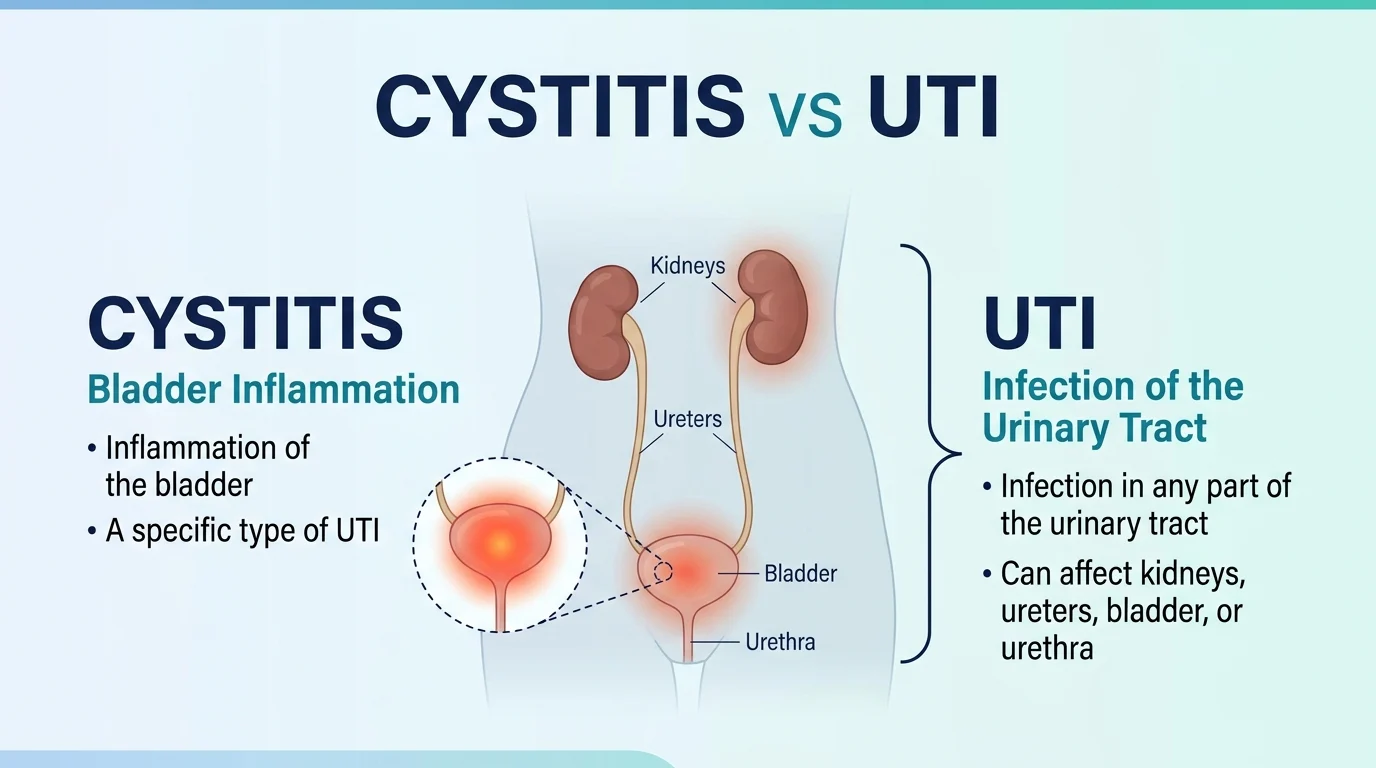
Quick Answer: Cystitis vs UTI: Cystitis is inflammation of the bladder, often caused by a bacterial infection, while a urinary tract infection (UTI) is a broader term for an infection anywhere in the urinary system. Cystitis is one of the most common types of UTI. Both can cause burning during urination, frequent urges to pee, and lower abdominal discomfort.
If you have searched for cystitis vs UTI, you may be wondering whether these terms describe two different conditions. The confusion is understandable because people often use them interchangeably when discussing urinary symptoms.
However, there is an important distinction. Cystitis refers to inflammation of the bladder, which is often caused by bacteria. A urinary tract infection, or UTI, is a broader term that includes infections affecting the bladder, urethra, or kidneys.
Both conditions can cause uncomfortable symptoms, such as burning when urinating, frequent trips to the bathroom, and pain in the lower abdomen. However, the location of the infection can affect its severity and treatment.
Understanding the difference can help you recognize possible warning signs and know when to seek medical care. This guide explains the symptoms, causes, diagnosis, and treatment of cystitis and UTIs in simple terms.
Cystitis vs UTI: Quick Answer
Cystitis is a condition affecting the bladder, while UTI describes an infection somewhere in the urinary tract.
- Cystitis: Inflammation of the bladder, commonly caused by a bacterial infection.
- UTI: An infection affecting the bladder, urethra, or kidneys.
- Main difference: Cystitis describes a specific condition involving the bladder, whereas UTI is the broader category.
A bladder infection is both cystitis and a type of UTI. However, a kidney infection is also a UTI, but it is not cystitis.
What Is Cystitis?
Cystitis is inflammation of the bladder. It often develops when bacteria enter the urinary tract through the urethra and multiply in the bladder.
Although bacterial infection is a common cause, cystitis can also occur for other reasons, including irritation from certain products, medical treatments, or other bladder conditions.
Common symptoms include:
- Burning or pain during urination
- Needing to urinate more frequently
- A sudden or urgent need to pee
- Pressure or discomfort in the lower abdomen
- Cloudy or bloody urine
- Urinating small amounts frequently
Cystitis can affect anyone, although it is more common in women. If a bacterial bladder infection is left untreated, it can sometimes spread to the kidneys and become more serious.
What Is a UTI?
A urinary tract infection occurs when harmful microorganisms, usually bacteria, enter and multiply in the urinary system. The urinary tract includes the kidneys, ureters, bladder, and urethra.
UTIs are commonly grouped according to the part of the urinary tract affected.
Common types of UTIs include:
- Cystitis: Inflammation or infection involving the bladder.
- Urethritis: Inflammation of the urethra, which may result from infection or other causes.
- Kidney infection: An infection affecting one or both kidneys, also called pyelonephritis.
A lower urinary tract infection usually affects the bladder or urethra. A kidney infection is more serious because it can cause illness throughout the body and may require urgent treatment.
Cystitis vs UTI: Key Differences
| Feature | Cystitis | UTI |
|---|---|---|
| Meaning | Inflammation of the bladder | Infection anywhere in the urinary tract |
| Location | Bladder | Bladder, urethra, or kidneys |
| Common cause | Often a bacterial infection | Usually bacteria entering the urinary tract |
| Symptoms | Burning, urgency, frequent urination, lower abdominal discomfort | Symptoms depend on the location of infection |
| Severity | Often limited to the bladder | Ranges from a bladder infection to a serious kidney infection |
| Treatment | Depends on the cause | Depends on the infection’s location and severity |
The terms overlap because bacterial cystitis is a type of UTI. The most important consideration is identifying the actual cause and location of the problem.
What Causes Cystitis and UTIs?
Most bacterial UTIs occur when bacteria from the skin or bowel area enter the urethra and travel into the urinary tract.
Several factors can increase the risk, including:
- Having a shorter urethra
- Sexual activity
- Pregnancy
- Menopause
- Kidney stones or other urinary blockages
- Difficulty emptying the bladder
- Using a urinary catheter
- Having diabetes or a weakened immune system
Cystitis may also develop without a bacterial infection. For example, certain chemicals, treatments, or bladder conditions can cause inflammation. Therefore, not every case of cystitis requires antibiotics.
How Are Cystitis and UTIs Diagnosed?
A healthcare professional may ask about your symptoms, medical history, and how long the symptoms have lasted. They may also recommend a urine test to look for signs of infection.
A urine culture can help identify the bacteria responsible and guide antibiotic selection when needed. This test may be particularly useful for recurring infections, unusual symptoms, or suspected treatment failure.
If a kidney infection or another complication is suspected, additional tests may be necessary.
Symptoms alone cannot always establish the cause. Other conditions, including sexually transmitted infections and vaginal irritation, can produce similar symptoms.
Treatment: Are They Treated the Same Way?
Treatment depends on the underlying cause and the severity of the condition.
For bacterial cystitis: A healthcare professional may prescribe antibiotics. The appropriate medication depends on individual circumstances, including allergies, pregnancy status, and local antibiotic resistance.
For other UTIs: Treatment depends on the location and severity. Kidney infections may require more intensive treatment than uncomplicated bladder infections.
For noninfectious cystitis: Treatment focuses on identifying and addressing the cause of inflammation.
Drinking enough water and resting may help with comfort, but these steps do not replace necessary medical treatment. Do not use leftover antibiotics or stop a prescribed course without medical advice.
When Should You Seek Medical Help?
Seek medical advice if you experience burning during urination, frequent urges to pee, or other symptoms that suggest a urinary infection.
Get prompt medical attention if you have a fever, chills, pain in your back or side below the ribs, nausea, or vomiting. These symptoms may indicate a kidney infection.
Pregnant people, children, men, older adults, and people with diabetes, weakened immunity, or urinary catheters should seek medical guidance promptly when a UTI is suspected.
If symptoms worsen quickly, do not improve after starting treatment, or repeatedly return, contact a healthcare professional.
Frequently Asked Questions
Is cystitis the same as a UTI?
Not exactly. Cystitis affects the bladder, while a UTI can affect any part of the urinary tract. Bacterial cystitis is one type of UTI.
Which is more serious, cystitis or a UTI?
Cystitis limited to the bladder is often less serious than a kidney infection. However, severity depends on the cause, the person’s health, and whether complications develop.
Can cystitis go away on its own?
Some mild cases may improve, but bacterial infections can persist or spread. Seek medical advice rather than assuming symptoms will disappear without treatment.
Can you have cystitis without a UTI?
Yes. Cystitis can result from noninfectious inflammation or irritation, so not every case involves a bacterial infection.
Do cystitis and UTIs have the same symptoms?
They often share symptoms, including burning during urination, urgency, and frequent urination. Kidney infections may also cause fever, chills, back or side pain, and nausea.
How can you help prevent UTIs?
Drinking enough water, avoiding unnecessary delays in urination, and wiping from front to back may help reduce risk. However, these steps cannot prevent every infection.
Do you always need antibiotics for cystitis?
No. Antibiotics treat bacterial infections, but cystitis can have noninfectious causes. A healthcare professional can help determine the appropriate treatment.
Conclusion
The key difference in cystitis vs UTI is that cystitis refers to inflammation of the bladder, while UTI is a broader term for an infection affecting the urinary tract. Because bacterial cystitis is a common type of UTI, the terms are often used interchangeably.
Both conditions may cause burning during urination, frequent urges to pee, and lower abdominal discomfort. However, symptoms such as fever, chills, back or side pain, and vomiting may indicate a more serious infection involving the kidneys.
The right treatment depends on the cause and location of the problem. If you notice possible UTI symptoms, seek appropriate medical advice, especially if you are pregnant, have other health conditions, or experience worsening symptoms. Recognizing warning signs early can help you receive the right care and reduce the risk of complications.
This article is for educational purposes and does not replace professional medical advice.