
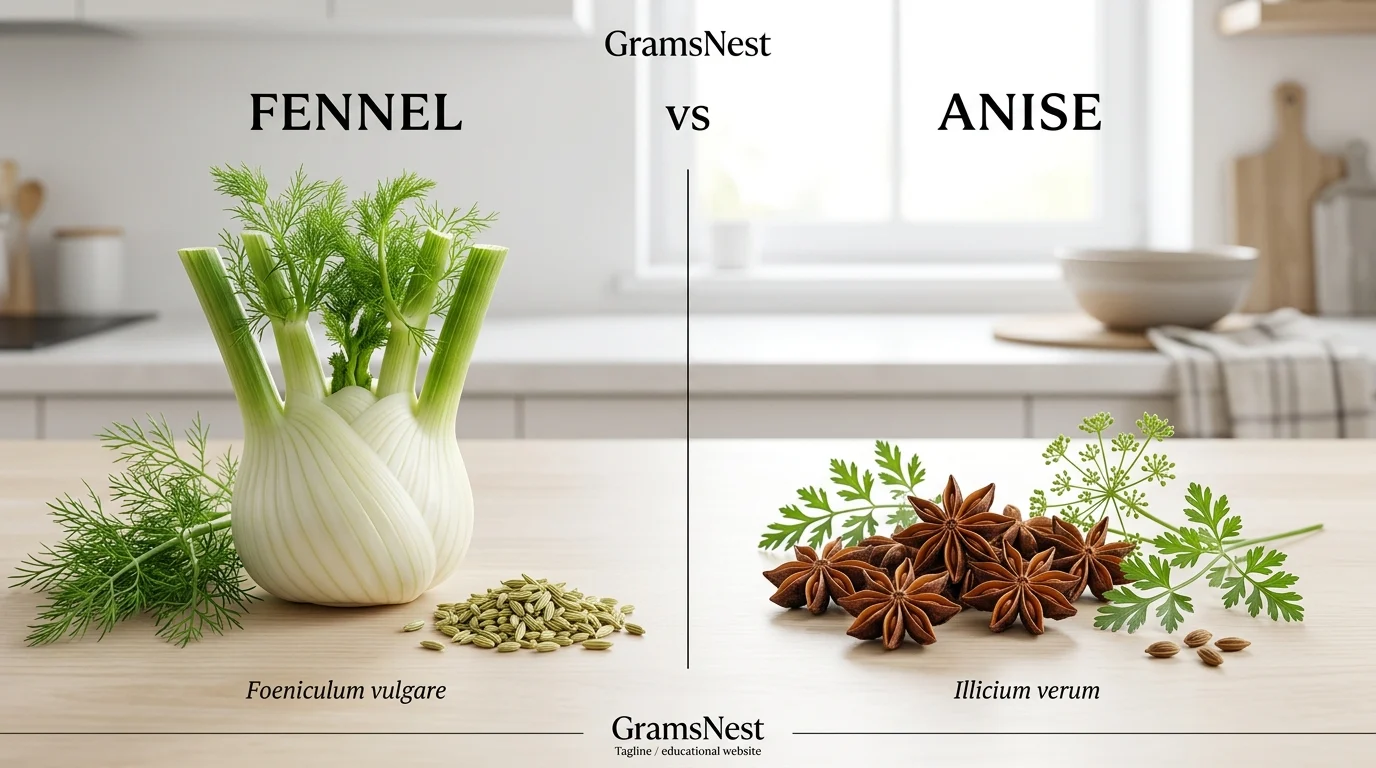
Quick Ans: Fennel and anise are different plants, but both have a sweet, licorice like flavor. Fennel comes from the fennel plant and has edible seeds, leaves, and a bulb. Anise comes from the anise plant and is mainly used for its small seeds. Both are common in cooking, baking, teas, and flavoring.
Fennel vs anise can be confusing because these two ingredients have a remarkably similar flavor. Both are known for their sweet, aromatic, licorice like taste and are used in everything from herbal teas to baked goods.
Despite their similarities, fennel and anise are not the same plant. They belong to the same plant family, Apiaceae, but they come from different species.
The two ingredients also differ in appearance, intensity, and culinary uses.Anise seeds are especially common in sweets, cookies, cakes, and liqueurs.
Understanding the difference between fennel and anise makes it easier to choose the right ingredient for a recipe and understand why their flavors can sometimes seem almost identical.
Quick Answer and Key Takeaway
The main difference between fennel and anise is that they come from different plants. Fennel produces edible bulbs, leaves, and seeds, while anise is mainly grown for its aromatic seeds.
Both have a sweet licorice like flavor, but fennel often has a slightly fresher and milder taste, while anise can provide a stronger, more concentrated sweetness.
Fennel vs Anise: Definition and Explanation
What Is Fennel?
Fennel is a flowering plant known scientifically as Foeniculum vulgare. It belongs to the carrot family and is cultivated for several edible parts.
The fennel bulb can be eaten as a vegetable, while the leaves can be used as an herb. Fennel seeds are commonly used as a spice.
Fennel is popular in Mediterranean cooking and can appear in salads, soups, meat dishes, breads, and spice mixtures.
What Is Anise?
Anise, also called aniseed, comes from Pimpinella anisum. Like fennel, it belongs to the Apiaceae family.
The two plants are related, but they are not interchangeable in every recipe.
Is This a Grammar, Usage, or Vocabulary Issue?
Fennel vs anise is a vocabulary and food comparison, not a grammar issue.
The confusion usually comes from their similar taste and appearance as dried seeds. However, the words refer to different plants and ingredients.
When a recipe specifically calls for fennel seeds, replacing them with anise may change the flavor because anise tends to have a more concentrated licorice taste.
Fennel vs Anise: Key Differences
| Feature | Fennel | Anise |
|---|---|---|
| Plant | Foeniculum vulgare | Pimpinella anisum |
| Family | Apiaceae | Apiaceae |
| Main edible parts | Bulb, leaves, seeds | Mainly seeds |
| Flavor | Sweet, aromatic, licorice like | Sweet, strong, licorice like |
| Common uses | Savory dishes, sausages, salads, tea | Baking, candy, tea, beverages |
| Seeds | Larger and often greenish or brown | Smaller and usually grayish brown |
| Culinary role | Herb, vegetable, and spice | Mainly spice and flavoring |
Real World Usage Examples
Tea and Drinks
Both fennel and anise can be used to prepare aromatic herbal teas. Their naturally sweet, licorice like flavor makes them popular ingredients in after meal beverages.
Recap: Both can be used in drinks, but their flavor intensity can differ.
Baking
Anise is particularly common in traditional cookies, cakes, and sweet breads. Fennel seeds can also appear in breads and baked goods, especially in savory or Mediterranean recipes.
Recap: Anise is more strongly associated with sweet baking.
Names and culinary traditions can vary by region, so checking the botanical name can help avoid confusion when buying spices.
When NOT to Use Them Interchangeably
Avoid automatically substituting fennel for anise when:
- The recipe depends on a strong licorice flavor.
- You are using fresh fennel bulb.
- The recipe specifically requires fennel seeds for a savory dish.
- You need the visual texture of a particular seed.
- The recipe uses anise extract rather than whole seeds.
- You want the exact traditional flavor of a regional dish.
A substitution may work in some recipes, but it can noticeably change the final flavor.
Common Mistakes and Corrections
| Correct Understanding | Incorrect Assumption | Why |
|---|---|---|
| Fennel and anise are different plants | They are the same plant | They belong to different species |
| Fennel has an edible bulb | Anise has the same bulb | Anise is mainly cultivated for its seeds |
| Both have licorice like flavors | They taste completely unrelated | Their flavors are similar |
| Anise is common in sweets | Anise is mainly a vegetable | Anise is primarily used as a spice |
| Fennel seeds can be used in savory dishes | Fennel is only used for tea | Fennel has many culinary applications |
Easy Decision Rule
Remember this:
Fennel = bulb, leaves, and seeds
Anise = mainly seeds
If you’re looking for a strongly sweet licorice like spice for baking or flavoring, anise is usually the ingredient you need.
Exercises With Answers
Choose fennel or anise.
- Which ingredient has an edible bulb?
- Which ingredient is especially common in sweet cookies?
- Which plant provides seeds commonly used in savory dishes?
- Are fennel and anise the same plant?
Answers
- Fennel
- Anise
- Fennel
- Anise
- No
Related Concepts and Comparisons
Fennel vs Star Anise
Fennel and star anise are completely different plants. Star anise is a star shaped fruit from an evergreen tree and is commonly used in Asian cooking.
Anise vs Star Anise
Anise produces small seeds, while star anise produces a distinctive star shaped fruit.
FAQs
Is fennel the same as anise?
No. Fennel and anise are different plants, although they belong to the same botanical family and have similar licorice like flavors.
Can you substitute fennel for anise?
Sometimes. Fennel seeds can replace anise seeds in certain recipes, but the flavor may be slightly different.
Does fennel have a licorice taste?
Yes. Fennel has a naturally sweet, aromatic flavor that is often compared with licorice, particularly in its seeds.
Is anise the same as star anise?
No. Anise and star anise come from different plants. They share a similar flavor but have different shapes and botanical origins.
Can you use fennel seeds instead of anise seeds?
Yes, fennel seeds can work as a substitute in some recipes. However, they may produce a slightly different flavor and intensity.
Which is better for cooking, fennel or anise?
Neither is universally better. Fennel is versatile in savory dishes, while anise is especially useful when a sweet licorice like flavor is desired.
Conclusion
Fennel vs anise is easier to understand when you remember that similar flavor does not mean the same ingredient. Both plants belong to the Apiaceae family and have a sweet, licorice like taste, but they are different species.
Fennel is especially versatile because its bulb, leaves, and seeds can all be used in cooking. Its seeds commonly appear in savory dishes, breads, sausages, and spice blends. Their flavor strength, appearance, and culinary roles can differ.
For an easy rule, remember fennel has a bulb and seeds, while anise is mainly used for its seeds. When shopping or following a recipe, check the ingredient name carefully so you choose the flavor and form you actually need.
3 thoughts on “Fennel vs Anise: What’s the Difference? Taste, Uses & Benefits”