
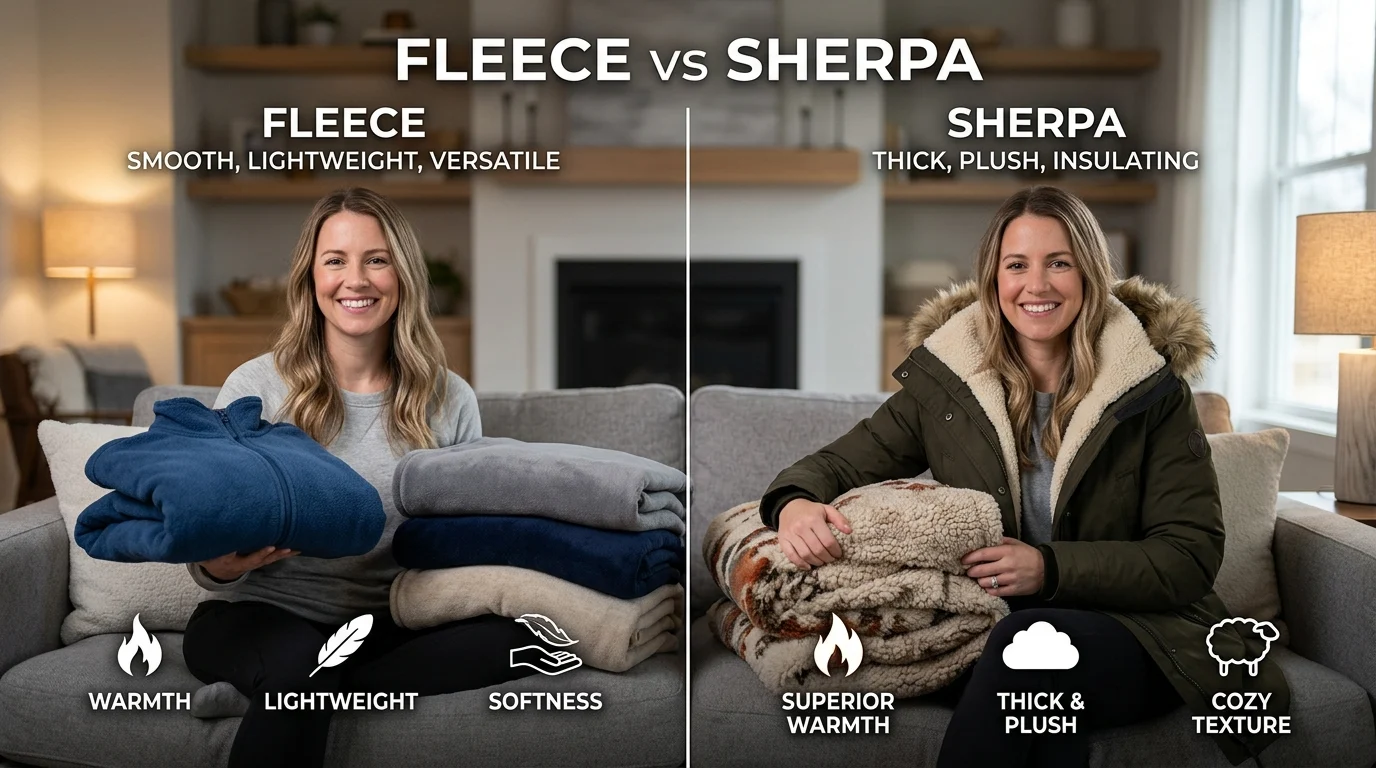
Quick Ans: Fleece and sherpa are both soft synthetic fabrics commonly used for warm clothing, blankets, jackets, and bedding. It has a smooth, lightweight surface, while sherpa has a thick, fluffy texture designed to resemble sheepskin. Fleece is often lighter and easier to layer, while sherpa usually feels thicker and warmer.
Fleece vs sherpa is a common comparison when shopping for blankets, jackets, sweatshirts, robes, and other cold weather products. Both materials are soft and warm, but they have noticeably different textures and uses.
Fleece is a lightweight fabric with a smooth or slightly brushed surface. It is usually made from polyester and is popular because it provides warmth without adding much weight.
Sherpa has a much fluffier and thicker appearance. Its texture is designed to resemble the soft woolly look of sheepskin. You will often find sherpa used as a lining in jackets, blankets, slippers, and winter accessories.
The two fabrics can look similar in some products, which makes the difference confusing. However, their texture, weight, warmth, breathability, and appearance can help you tell them apart.
Quick Answer and Key Takeaway
The main difference between fleece and sherpa is texture and construction. Fleece is generally smooth, lightweight, and soft, while sherpa has a thick, fluffy, wool like texture.
Fleece = smooth, lightweight, and versatile
Sherpa = fluffy, thick, and cozy
Both can provide excellent warmth, but sherpa usually feels bulkier and more plush.
Fleece vs Sherpa: Definition and Explanation
What Is Fleece?
Fleece is a soft synthetic fabric, most commonly made from polyester. It has a brushed surface that creates a soft texture and helps trap warm air.
Fleece is commonly used for:
- Jackets
- Sweatshirts
- Blankets
- Hats
- Gloves
- Outdoor clothing
Its relatively light weight makes fleece useful for layering during cold weather.
What Is Sherpa?
Sherpa is a thick, fluffy fabric that resembles the texture of sheepskin. Despite its appearance, modern sherpa fabric is generally synthetic and is commonly made from polyester.
Sherpa is often used for:
- Blanket linings
- Jacket linings
- Robes
- Slippers
- Hoodies
- Cold weather bedding
Its thick pile gives it a particularly plush and cozy feel.
Is This a Grammar, Usage, or Vocabulary Issue?
Fleece vs sherpa is primarily a vocabulary and product comparison.
Both terms describe types of fabric, but they don’t mean exactly the same thing. Fleece generally refers to a smooth, brushed fabric, while sherpa describes a fluffy, high pile fabric with a wool like appearance.
The terms can also appear together. For example, a jacket may have a fleece outer layer and a sherpa lining.
Real World Usage Examples
Clothing
Fleece:
I bought a lightweight fleece jacket for hiking.
Sherpa:
She wore a sherpa lined jacket on the coldest days.
Recap: Fleece is often chosen for lightweight warmth, while sherpa provides a thicker and fluffier feel.
Blankets and Bedding
Fleece:
This fleece blanket is soft and easy to carry.
Sherpa:
The sherpa blanket feels thick and luxurious.
Recap: Both work well for blankets, but sherpa usually offers a more plush texture.
Everyday Winter Use
Fleece:
He wore a fleece sweatshirt under his coat.
Sherpa:
Her sherpa slippers kept her feet warm indoors.
Recap: Fleece works well for layering, while sherpa is popular when softness and coziness are priorities.
Fleece vs Sherpa: Key Differences
| Feature | Fleece | Sherpa |
|---|---|---|
| Texture | Smooth and soft | Thick and fluffy |
| Weight | Usually lightweight | Usually heavier |
| Appearance | Brushed fabric | Wool like pile |
| Warmth | Warm | Very warm and cozy |
| Breathability | Generally more breathable | Can feel warmer and less breathable |
| Layering | Excellent | Less convenient |
| Common uses | Jackets, blankets, activewear | Linings, blankets, robes, winter items |
| Feel | Soft and flexible | Plush and fluffy |
Regional or Global Usage Differences
The words fleece and sherpa are widely understood in English speaking markets. However, product descriptions can vary between brands.
For example, manufacturers may use terms such as sherpa fleece, fleece lined, or sherpa lined to describe products containing more than one fabric or texture.
Therefore, don’t rely only on the product name. Check the material description, fabric weight, and construction before buying.
When NOT to Use Fleece or Sherpa
Neither fabric is automatically the best choice for every situation.
Avoid choosing fleece when:
- You want a very thick, fluffy texture.
- You prefer the appearance of natural wool.
- You need a fabric specifically designed for maximum plushness.
Avoid choosing sherpa when:
- You need a very lightweight layer.
- You want a smooth fabric for easy layering.
- You prefer a less bulky material.
Also remember that fabric quality varies. A high quality fleece can feel very different from a low quality fleece, and the same applies to sherpa.
Common Mistakes and Corrections
| Correct Understanding | Incorrect Assumption | Why |
|---|---|---|
| Fleece is usually smooth and brushed | Fleece always has a fluffy pile | Fleece can have different finishes |
| Sherpa has a fluffy texture | Sherpa is always real sheep wool | Modern sherpa is commonly synthetic |
| Both can provide warmth | They feel exactly the same | Their textures and construction differ |
| A product can contain both | Fleece and sherpa cannot be combined | One can be used as the outer fabric and the other as lining |
Easy Decision Rule
Choose fleece when you want something lightweight, flexible, and easy to layer.
Choose sherpa when you want a thicker, fluffier, and especially cozy texture.
Exercises With Answers
Choose fleece or sherpa.
- I need a lightweight fabric for layering.
- She wanted a fluffy blanket with a plush texture.
- He bought a soft fleece jacket for hiking.
- The jacket has a thick sherpa lining.
- I prefer a smooth fabric rather than a fluffy one.
Answers
- fleece
- sherpa
- fleece
- sherpa
- fleece
Related Concepts and Comparisons
Fleece vs Wool
Fleece is usually synthetic, while wool comes from animals such as sheep. They can both provide warmth, but they have different textures, properties, and care requirements.
Sherpa vs Wool
Sherpa is commonly made from synthetic fibers and is designed to imitate the fluffy appearance of sheepskin. Wool is a natural animal fiber.
Sherpa vs Fleece Blanket
A fleece blanket usually has a smooth, soft surface and is relatively lightweight. A sherpa blanket typically has a fluffy pile and feels thicker and more plush.
FAQs
Is sherpa warmer than fleece?
Sherpa often feels warmer because its thick, fluffy pile can provide substantial insulation. However, actual warmth depends on the fabric weight, construction, and product design.
What is the difference between fleece and sherpa?
Fleece is generally smooth and lightweight, while sherpa has a thick, fluffy texture. Both are commonly used for warm clothing and blankets.
Is sherpa real wool?
Not usually. Modern sherpa fabric is commonly made from synthetic fibers such as polyester, even though its appearance resembles sheepskin.
Is fleece good for winter?
Yes. Fleece is widely used for winter clothing because it provides warmth while remaining relatively lightweight and flexible.
Is sherpa good for blankets?
Yes. Sherpa is popular for blankets because its thick, fluffy texture creates a soft and cozy feel.
Which is softer, fleece or sherpa?
Both can be very soft, but sherpa generally feels fluffier and more plush. Fleece usually has a smoother and more uniform surface.
Can fleece and sherpa be used together?
Yes. A product can use fleece on one side and sherpa on the other. Jackets may also combine a fleece exterior with a sherpa lining.
Does sherpa shed more than fleece?
Sherpa can shed more noticeably depending on its quality and construction. Proper washing and care can help reduce excessive shedding.
Conclusion
Fleece vs sherpa is easier to understand when you focus on texture, weight, and intended use. Fleece is generally smooth, soft, lightweight, and flexible. Sherpa is thicker, fluffier, and designed to provide a plush, cozy feel.
Fleece is often a practical choice for jackets, sweatshirts, outdoor clothing, and lightweight blankets. Its lower bulk makes it particularly useful for layering. Sherpa, meanwhile, is popular for blankets, jacket linings, robes, slippers, and other products where warmth and softness are important.
Neither fabric is automatically better for every purpose. Your choice should depend on how much warmth you need, how bulky you want the material to feel, and whether you prefer a smooth or fluffy texture.
A simple rule can help: choose fleece for lightweight versatility and sherpa for plush comfort. When shopping, always check the fabric composition and care instructions because quality and construction can vary between products.