
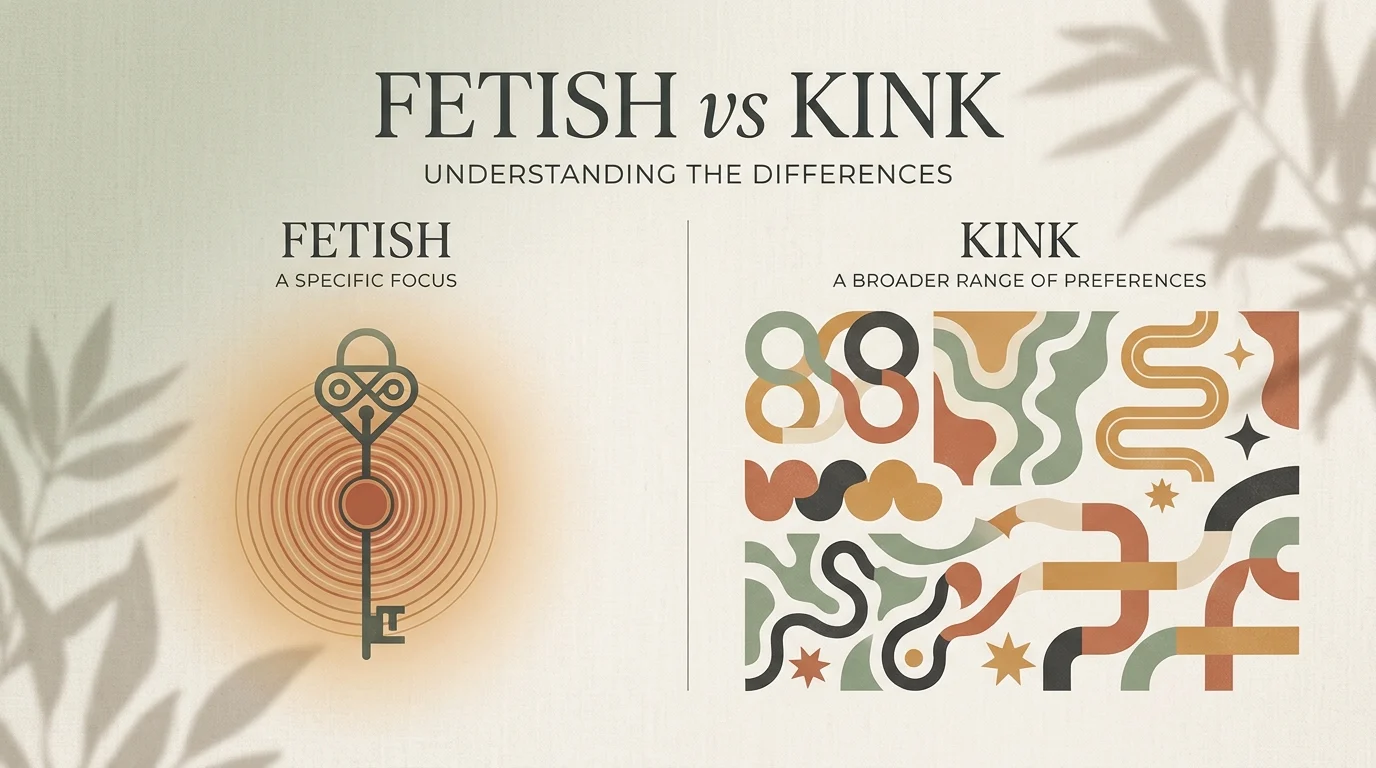
Quick Answer: A fetish is a specific object, body part, material, or situation that plays a significant role in someone’s sexual interest or arousal. A kink is a broader term for a sexual interest or preference outside conventional sexual practices. Fetishes can be considered a type of kink, but not every kink is a fetish. Both terms describe consensual interests and are not automatically signs of a problem.
The terms fetish and kink often appear in conversations about sexuality, relationships, and personal preferences. Although people sometimes use them interchangeably, they do not mean exactly the same thing. Understanding the difference can help you discuss sexual interests more accurately and avoid common misunderstandings.
A fetish generally involves a particular object, body part, material, or situation that has a special role in someone’s sexual interest. A kink is a broader category that includes a wide range of sexual preferences or activities that fall outside conventional expectations. For example, someone might have a particular interest in leather, while another person might enjoy roleplay or consensual power dynamics.
Neither term automatically indicates that something is unhealthy. The context matters, including consent, personal boundaries, emotional well being, and whether an interest causes distress or harm.
In this guide, you’ll learn what fetish and kink mean, how they differ, how they overlap, and how to discuss these interests respectfully in relationships.
Fetish vs Kink: Quick Answer
The main difference between a fetish and a kink is the type and scope of the interest.
- Fetish: A specific object, body part, material, or situation that plays a significant role in sexual interest or arousal.
- Kink: A broad term for sexual interests or preferences outside conventional sexual practices.
A fetish can fall under the broader category of kink. However, some kinks do not involve a specific object or focus and therefore may not be described as fetishes.
The terms are used somewhat differently by different people, so their meanings can overlap in everyday conversation.
What Is a Fetish?
A fetish is a sexual interest in a particular object, body part, material, or situation. For some people, this interest plays a central role in arousal. For others, it is one preference among several.
Examples may include an interest in particular fabrics, footwear, or specific body parts. These interests vary widely from person to person.
A fetish does not necessarily mean that someone cannot experience attraction or intimacy in other ways. People differ in how important a particular interest is to their sexual experiences.
It is also important to distinguish everyday use of the word from clinical terminology. In mental health settings, a fetishistic interest is not automatically considered a disorder. Clinical concern depends on factors such as significant distress, impairment, or involvement of nonconsenting individuals.
What Is a Kink?
A kink is a broad term for a sexual interest, preference, or activity that differs from conventional sexual expectations. People may use the word to describe particular fantasies, roleplay, sensory preferences, or consensual power dynamics.
Examples can include:
- Consensual roleplay between adults
- Interest in particular sensations or sensory experiences
- Consensual dominance and submission
- Specific fantasies or relationship dynamics
- Preferences involving particular clothing or settings
Not everyone who has a kink considers it an important part of their identity. Some people explore a preference occasionally, while others incorporate it more regularly into their relationships.
The term is flexible and does not have one universally agreed upon definition. What one person calls a kink, another might describe as a preference or simply a personal interest.
Fetish vs Kink: Key Differences
| Feature | Fetish | Kink |
|---|---|---|
| Meaning | A specific focus of sexual interest | A broad category of nonconventional sexual interests |
| Scope | Usually more specific | Can include many different interests |
| Examples | Interest in a particular material or body part | Roleplay, sensory preferences, or power dynamics |
| Relationship between terms | May be considered a type of kink | May include fetishes |
| Importance | Can be central or occasional | Can be central or occasional |
| Is it automatically unhealthy? | No | No |
The key distinction is that fetish usually refers to a particular focus, whereas kink covers a wider range of interests.
Can a Fetish Also Be a Kink?
Yes. Fetishes and kinks overlap, and a fetish can be described as a type of kink in everyday conversation.
For example, a person with a strong interest in a particular material may describe that interest as a fetish. They may also use the word kink as a broader label for their preferences.
However, not every kink is a fetish. Someone who enjoys consensual roleplay, for instance, may have a kink without having a particular object or body part that is central to their arousal.
The terminology depends partly on personal preference and context. There is no need to force a label on an interest if the person involved prefers a different description.
Are Fetishes and Kinks Normal?
Sexual interests vary widely among adults. Having a fetish or kink does not automatically mean that someone has a mental health condition or an unhealthy relationship with sexuality.
A more useful way to evaluate an interest is to consider whether it involves informed consent, respect for boundaries, and the well being of everyone involved.
An interest may warrant professional support if it causes substantial distress, interferes with daily life, feels uncontrollable in a harmful way, or involves pressure or harm to another person.
Consent is essential. Every participant should be able to communicate boundaries freely and withdraw consent at any time. An interest should never be used to justify coercion, exploitation, or nonconsensual behavior.
How to Talk About Fetishes and Kinks in a Relationship
Open and respectful communication can help partners understand each other’s preferences without judgment.
Consider these practical guidelines:
- Choose a comfortable time. Discuss personal interests when both partners feel relaxed and have privacy.
- Ask rather than assume. Let each person explain what a term means to them.
- Respect boundaries. Nobody should feel obligated to participate in an activity.
- Discuss consent clearly. Agree on limits and communicate openly about comfort levels.
- Accept differences. Partners can have different interests without either person being wrong.
Healthy communication is more important than finding the perfect label. A respectful conversation should allow both people to express their preferences and concerns honestly.
Frequently Asked Questions
Is a fetish the same as a kink?
No. A fetish usually focuses on a specific object, body part, material, or situation. A kink is a broader term for a range of sexual interests or preferences.
Is a fetish a type of kink?
Yes. In common usage, a fetish can be considered a type of kink, although people may use the terms differently.
Can someone have a kink without a fetish?
Yes. Someone may enjoy a particular fantasy, roleplay, or consensual relationship dynamic without having a specific fetish.
Are fetishes unhealthy?
Not automatically. An interest is not inherently unhealthy simply because it is uncommon. Consent, distress, harm, and effects on daily life are more relevant considerations.
Are kinks common?
People have a wide range of sexual preferences, and experiences vary. Not everyone uses the term kink or chooses to share their private interests.
Can a person have more than one fetish or kink?
Yes. A person may have several interests, and their preferences can change over time.
Should you tell your partner about a fetish?
Sharing personal interests can support intimacy, but it is a personal choice. Conversations should happen without pressure, judgment, or an expectation that a partner must participate.
When should someone seek professional help?
Consider speaking with a qualified mental health professional if an interest causes significant distress, interferes with daily functioning, or creates concerns about consent or safety.
Conclusion
The difference between fetish vs kink comes down to how broadly the terms are used. A fetish generally describes a specific focus of sexual interest, such as an object, material, or body part. A kink is a broader term that can include fantasies, roleplay, sensory preferences, and consensual power dynamics.
Although the terms overlap, they are not identical. A fetish may be described as a kink, but a kink does not necessarily involve a fetish. Both terms can describe consensual interests that are not automatically unhealthy or problematic.
Ultimately, the most important considerations are mutual consent, respect, communication, and personal well being. Understanding these concepts without judgment can help people discuss sexuality more accurately and build healthier relationships.