
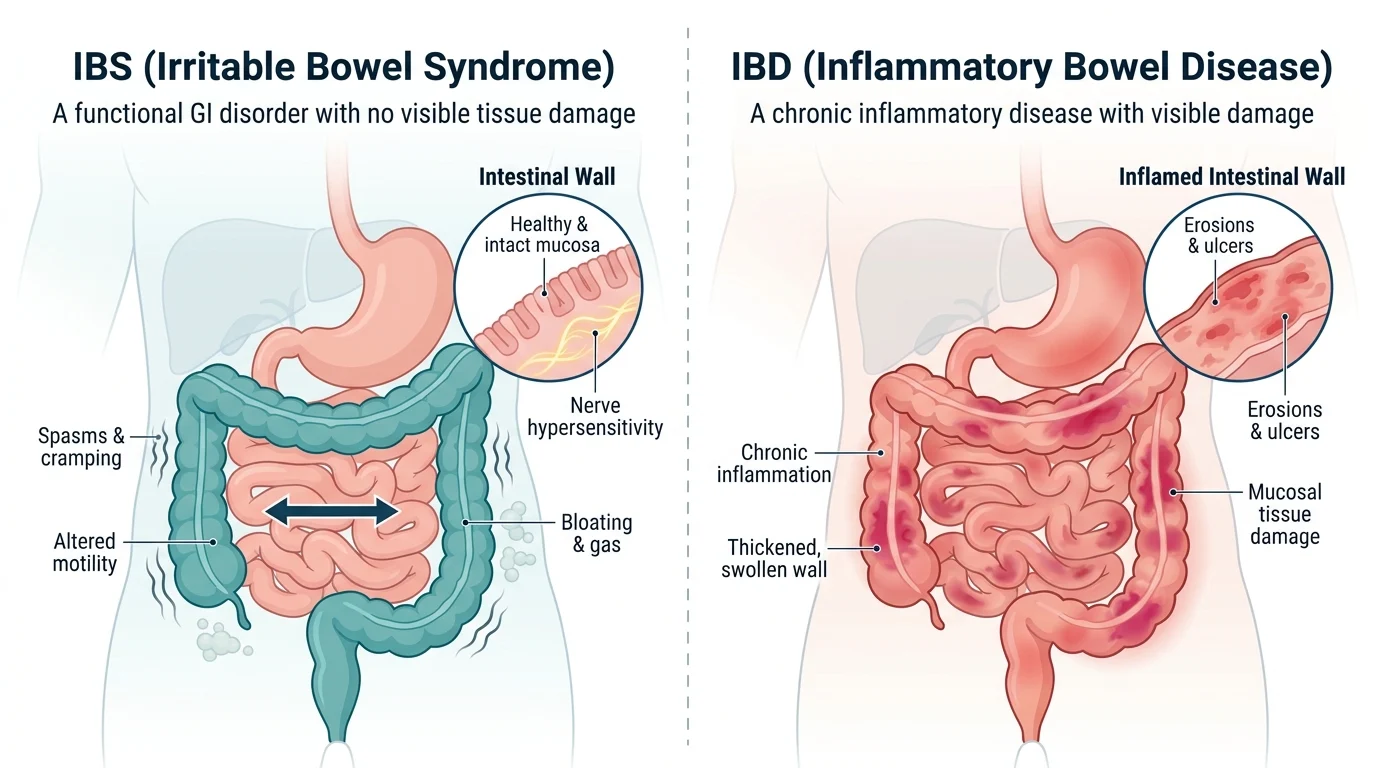
Quick Answer: IBS vs IBD refers to two different digestive conditions. Irritable bowel syndrome (IBS) affects how the digestive system functions, while inflammatory bowel disease (IBD) causes inflammation and damage in the digestive tract. Both can cause abdominal pain, diarrhea, and changes in bowel habits, but their diagnosis, treatment, and potential complications differ.
Digestive problems can make everyday life uncomfortable. If you experience stomach cramps, bloating, diarrhea, or constipation, you may wonder whether you have irritable bowel syndrome or inflammatory bowel disease. Although these conditions share several symptoms, they are not the same.
IBS is a long-term condition that affects how the gut works. In contrast, IBD involves ongoing inflammation in the digestive tract and includes conditions such as Crohn’s disease and ulcerative colitis.
Understanding these differences matters because each condition requires a different approach to diagnosis and treatment. For example, dietary changes may help control IBS symptoms, while IBD often requires medication to reduce inflammation and prevent complications.
So, how can you tell them apart? Let’s compare their symptoms, causes, diagnosis, and treatment options.
What Is IBS?
IBS stands for irritable bowel syndrome. It is a chronic digestive condition that affects bowel function without causing the intestinal damage associated with IBD.
Common IBS symptoms include:
- Abdominal pain or cramping
- Bloating and excess gas
- Diarrhea, constipation, or both
- Changes in stool appearance
- A feeling that you have not completely emptied your bowels
Symptoms may improve or worsen over time. Certain foods, stress, and changes in gut function can trigger symptoms in some people.
IBS has several types, including IBS with constipation (IBS-C), IBS with diarrhea (IBS-D), and IBS with mixed bowel habits (IBS-M).
What Is IBD?
IBD stands for inflammatory bowel disease. It describes conditions that cause chronic inflammation in the digestive tract. Unlike IBS, IBD can damage intestinal tissue and lead to serious complications if left untreated.
The two main types are:
- Crohn’s disease: Can affect any part of the digestive tract, from the mouth to the anus.
- Ulcerative colitis: Causes inflammation and ulcers in the colon and rectum.
Common IBD symptoms include:
- Persistent diarrhea
- Abdominal pain and cramping
- Blood in the stool
- Unexplained weight loss
- Fatigue and reduced appetite
- Fever during some flare-ups
Symptoms can become more severe during flare-ups and improve during periods of remission.
IBS vs IBD: Main Differences
| Feature | IBS | IBD |
|---|---|---|
| Full name | Irritable bowel syndrome | Inflammatory bowel disease |
| Main problem | Changes in gut function | Inflammation of the digestive tract |
| Intestinal damage | Does not cause typical inflammatory tissue damage | Can damage intestinal tissue |
| Common symptoms | Bloating, cramps, diarrhea, constipation | Diarrhea, cramps, bleeding, fatigue |
| Blood in stool | Not a typical IBS symptom | Can occur, especially with ulcerative colitis |
| Weight loss | Not typical without another cause | Can occur |
| Diagnosis | Symptoms and assessment; tests may rule out other conditions | Blood and stool tests, endoscopy, and sometimes imaging |
| Treatment | Diet, lifestyle changes, and symptom-relieving medicines | Anti-inflammatory or immune-targeting medicines and sometimes surgery |
| Long-term risks | Symptoms may affect quality of life | May cause complications, depending on the type and severity |
IBS vs IBD Symptoms: How Can You Tell?
Although symptoms overlap, certain patterns may provide clues.
IBS often causes:
- Bloating and gas
- Pain related to bowel movements
- Constipation, diarrhea, or alternating between both
- Symptoms that come and go
IBD may cause:
- Persistent diarrhea
- Blood in the stool
- Unexplained weight loss
- Ongoing fatigue or signs of anemia
- Symptoms that disrupt daily activities
However, symptoms alone cannot confirm either condition. Some people with IBD experience symptoms that resemble IBS, and not everyone with IBD has bloody diarrhea.
How Are IBS and IBD Diagnosed?
Doctors evaluate your symptoms, medical history, and physical examination before deciding which tests you need.
For IBS, doctors usually look for a characteristic pattern of abdominal pain and changes in bowel habits. They may order blood or stool tests to rule out other conditions.
For IBD, doctors may use blood tests to check for anemia or inflammation, stool tests to look for infection or intestinal inflammation, and a colonoscopy with biopsies. Imaging tests may also help identify affected areas.
Therefore, a medical evaluation is important when symptoms persist or change unexpectedly.
IBS vs IBD Treatment
IBS Treatment
Depending on your needs, a healthcare professional may recommend:
- Adjusting fiber intake
- Identifying food triggers
- Trying a low-FODMAP diet with professional guidance
- Managing stress and improving sleep
- Using medicines for constipation, diarrhea, or abdominal pain
IBD Treatment
IBD treatment aims to reduce inflammation, control flare-ups, and prevent complications. Options may include anti-inflammatory medicines, corticosteroids for selected situations, immune-modifying medicines, and biologic therapies. Some people need surgery.
Unlike IBS, IBD often requires ongoing medical monitoring. Treatment depends on the type of IBD, its location, and disease severity.
When Should You See a Doctor?
Seek medical advice if you have persistent digestive symptoms, especially if you notice blood in your stool, unexplained weight loss, ongoing diarrhea, fever, or unusual fatigue.
Severe abdominal pain, heavy rectal bleeding, or signs of significant dehydration require urgent medical attention.
Important: Do not assume that blood in your stool or unexplained weight loss is caused by IBS. These symptoms need medical evaluation.
Frequently Asked Questions
1. Is IBS the same as IBD?
No. IBS affects gut function, while IBD causes inflammation and can damage the digestive tract.
2. Which is more serious, IBS or IBD?
IBD generally carries a greater risk of physical complications because it causes intestinal inflammation. However, IBS can also significantly affect quality of life.
3. Can IBS turn into IBD?
No evidence shows that IBS itself develops into IBD. However, a person with IBS can develop IBD independently, so new or changing symptoms deserve evaluation.
4. Can IBS or IBD cause diarrhea?
Yes. Both conditions can cause diarrhea. However, bloody diarrhea, persistent symptoms, or unexplained weight loss may suggest IBD or another condition.
5. Can you have IBS and IBD at the same time?
Yes. Some people with IBD also experience IBS-like symptoms, even when inflammation is controlled.
6. Is there a test for IBS?
There is no single test that confirms every case of IBS. Doctors assess symptoms and may order tests to exclude other conditions.
7. Can IBS or IBD be cured?
IBS is usually managed over the long term. IBD also requires long-term management, although treatment can help many people achieve remission. Surgery can cure ulcerative colitis in certain circumstances, but it does not cure Crohn’s disease.
8. Does stress cause IBS or IBD?
Stress can worsen IBS symptoms and may contribute to symptom flare-ups in some people with IBD. However, stress alone does not explain the causes of either condition.
Conclusion
The main difference in IBS vs IBD is that IBS affects digestive function, while IBD causes inflammation and may damage the intestines. Both conditions can cause abdominal pain and changes in bowel habits, but blood in the stool, unexplained weight loss, and persistent diarrhea need careful evaluation.
With an accurate diagnosis and the right treatment plan, people with either condition can better manage their symptoms and protect their health.