
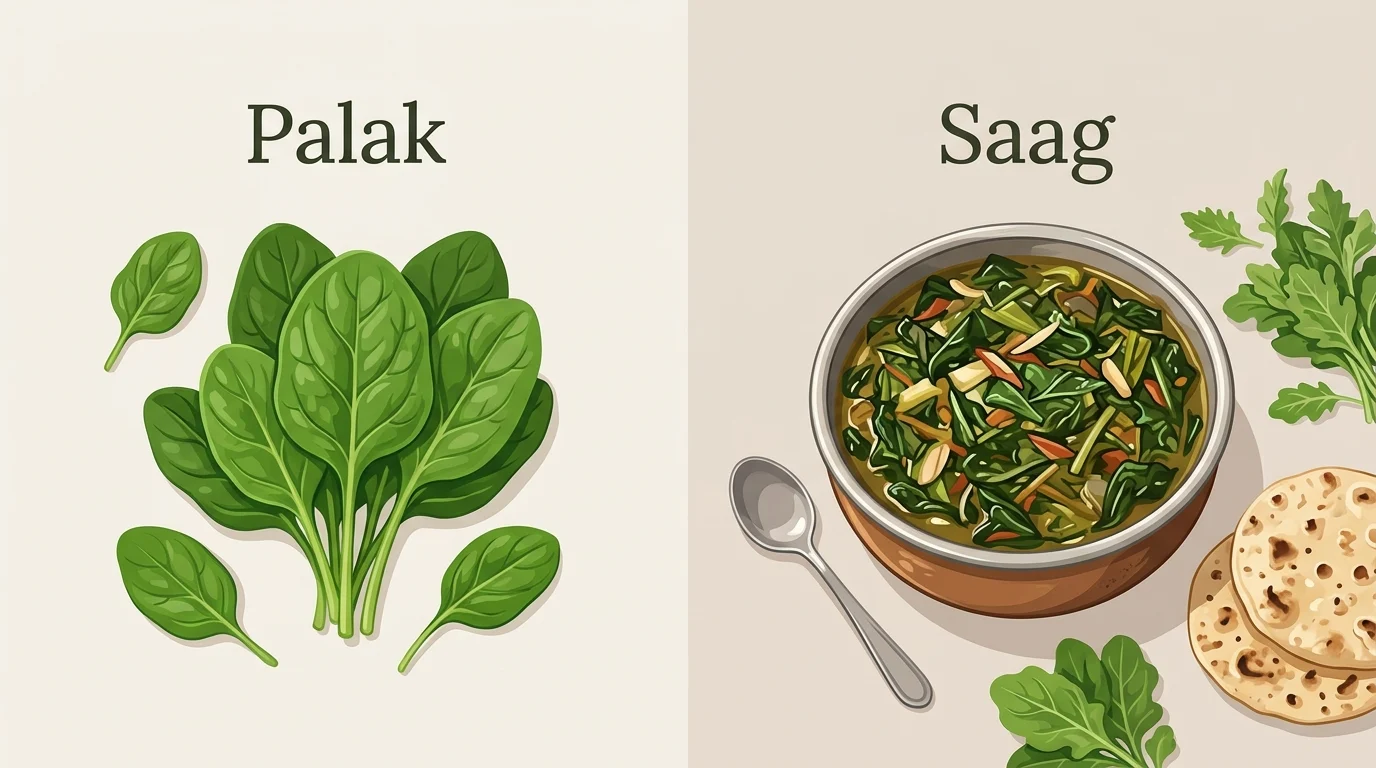
Quick Ans: Palak vs saag refers to two popular leafy green foods, but they are not exactly the same. Palak means spinach, while saag is a broader term for cooked leafy greens. Saag can include mustard greens, spinach, turnip greens, or a mixture of greens, depending on the recipe and region.
Palak vs saag is a common food comparison, especially when choosing leafy green dishes in South Asian cuisine. The two terms often appear together on restaurant menus, in recipes, and in everyday conversations. However, palak and saag do not have exactly the same meaning.
Palak specifically refers to spinach. It can be cooked as a simple vegetable dish, added to curries, blended into sauces, or used in dishes such as palak paneer. Saag, on the other hand, is a general term for cooked leafy greens. Traditional saag may contain mustard greens, spinach, turnip greens, or other edible leaves.
The difference becomes easier once you understand that palak identifies a particular leafy green, while saag describes a category of leafy green dishes. This guide explains the difference between palak and saag, their common uses, nutritional qualities, and how to choose between them.
Quick Answer and Key Takeaway
What is palak?
Palak is the Hindi, Urdu, and Punjabi word commonly used for spinach. It refers specifically to the spinach plant and its edible leaves.
Palak has a relatively mild flavor and soft texture when cooked. It is commonly used in curries, soups, vegetable dishes, and blended sauces.
What is saag?
Saag is a broader term for leafy green vegetables, especially when they are cooked as a dish. Depending on the region and recipe, saag may contain mustard greens, spinach, bathua, turnip greens, or several greens together.
Key takeaway: All palak can be used as a type of saag, but saag does not necessarily mean palak.
Definition and Explanation
The simplest way to understand palak vs saag is to look at their meanings.
| Term | Meaning | Common Examples |
|---|---|---|
| Palak | Spinach | Palak curry, palak paneer |
| Saag | Cooked leafy greens or a leafy green dish | Sarson saag, mixed saag |
| Sarson | Mustard greens | Sarson ka saag |
| Bathua | A leafy green plant | Bathua saag |
Palak is therefore a specific ingredient. Saag is a broader culinary category.
For example, palak paneer is a spinach based dish. Sarson ka saag traditionally uses mustard greens. Both are leafy green dishes, but they use different primary greens.
Is This a Grammar, Usage, or Vocabulary Issue?
Palak vs saag is primarily a vocabulary and food terminology question rather than a grammar issue.
The confusion often comes from regional language use. In some contexts, people may casually call a spinach dish saag because spinach is one of the greens used to make saag.
The exact meaning can also depend on the recipe. When a menu says “saag,” it may refer to a particular traditional preparation rather than one specific vegetable.
Real World Usage Examples
Everyday Usage
Palak: “I bought fresh palak to make palak paneer.”
Saag: “We are having saag with roti for dinner.”
Recap: Palak identifies spinach, while saag can refer to a wider range of leafy greens.
Restaurant Usage
A restaurant may list palak paneer as a spinach based curry. It may also offer sarson ka saag, which traditionally uses mustard greens.
Recap: Menu names can tell you which leafy green is the main ingredient.
Cooking Usage
A cook might prepare saag using mustard greens, spinach, and other leafy vegetables together.
Recap: Saag can contain palak, but it can also contain other greens.
Regional or Global Usage Differences
The word palak is widely used in South Asian languages and cuisine to mean spinach. You will commonly see it in Indian, Pakistani, Bangladeshi, and Nepalese food contexts.
The word saag is also widely used across South Asia, but its exact culinary meaning can vary. In Punjabi cuisine, saag is strongly associated with cooked leafy greens, especially mustard greens in the famous dish sarson ka saag.
In English, spinach is the usual word for palak. Saag is often kept as a borrowed culinary term because there isn’t always one English word that captures the traditional dish and its preparation.
When NOT to Use It
Avoid treating palak and saag as exact synonyms in every situation.
- Do not call every saag dish palak if spinach isn’t included.
- Do not assume saag always means mustard greens.
- Do not use palak when you specifically mean mustard greens.
- Do not assume restaurant saag contains only one type of green.
- Do not confuse sarson with palak because both are leafy vegetables.
- Do not translate every use of saag simply as spinach.
The recipe or context usually tells you which greens are involved.
Common Mistakes and Corrections
| Correct Sentence | Incorrect Sentence | Why |
|---|---|---|
| Palak means spinach. | Palak means all leafy greens. | Palak specifically refers to spinach. |
| Saag can contain mustard greens. | Saag always means spinach. | Saag is a broader term. |
| Sarson ka saag uses mustard greens. | Sarson ka saag is spinach curry. | Sarson means mustard. |
| Palak paneer uses spinach. | Palak paneer must contain mustard greens. | Palak refers to spinach. |
Easy Decision Rule
Think “specific” for palak and “general” for saag.
If you mean spinach, use palak. If you mean a cooked leafy green dish or a mixture of leafy greens, saag may be the more suitable term.
Exercises With Answers
Choose the correct term.
- I bought fresh ___ to make spinach curry.
- Sarson ka ___ is traditionally made with mustard greens.
- ___ paneer is made with spinach.
- Saag can contain several types of leafy ___.
- Palak specifically refers to ___.
Answers
- Palak
- Saag
- Palak
- Greens
- Spinach
Related Concepts and Comparisons
Palak vs Sarson
Palak means spinach, while sarson means mustard greens. Sarson is commonly associated with sarson ka saag.
Palak vs Bathua
Palak is spinach. Bathua is a different leafy green that can also be cooked as saag.
Saag vs Spinach
Saag is a broader culinary term, while spinach refers to one specific leafy green. Spinach can be used to prepare a saag dish.
FAQs
Is palak and saag the same thing?
No, they are not exactly the same. Palak specifically means spinach, while saag is a broader term for leafy greens or dishes made from them.
Is palak a type of saag?
Yes, palak can be used as a type of saag. However, saag can also be made from mustard greens, bathua, turnip greens, or mixtures of greens.
Is saag spinach or mustard greens?
Saag can refer to either, depending on the dish. Traditional sarson ka saag is made primarily with mustard greens, while some saag recipes use spinach or several leafy greens.
What is palak called in English?
Palak is called spinach in English. The term refers specifically to the edible leaves of the spinach plant.
What does saag mean in English?
Saag generally refers to leafy greens or a dish prepared from cooked leafy greens. The exact ingredients depend on the region and recipe.
Is palak healthier than saag?
Neither term automatically describes one healthier food. Their nutritional value depends on which greens are used and how the dish is prepared.
What is the difference between palak paneer and saag paneer?
Palak paneer is specifically made with spinach. Saag paneer can use a wider combination of leafy greens, depending on the recipe.
What is sarson ka saag?
Sarson ka saag is a traditional South Asian leafy green dish made primarily with mustard greens. Other greens may also be added in some recipes.
Conclusion
Understanding palak vs saag becomes simple when you separate the specific ingredient from the broader category. Palak means spinach, so it identifies one particular leafy green. Saag is a broader culinary term that can describe cooked leafy greens, including mustard greens, spinach, bathua, turnip greens, or a combination of them.
This distinction also explains why dishes such as palak paneer and sarson ka saag have different names. Palak paneer uses spinach as its main green, while sarson ka saag traditionally centers on mustard greens.
The easiest rule to remember is this: palak is specific, while saag is general. If you’re shopping for spinach, ask for palak. If you’re talking about a traditional cooked leafy green dish, saag may be the more appropriate term. When ordering food, check the dish name or ingredients because the meaning of saag can vary by recipe and region.
1 thought on “Palak vs Saag: What’s the Difference? Easy Guide, Uses & Tips”