
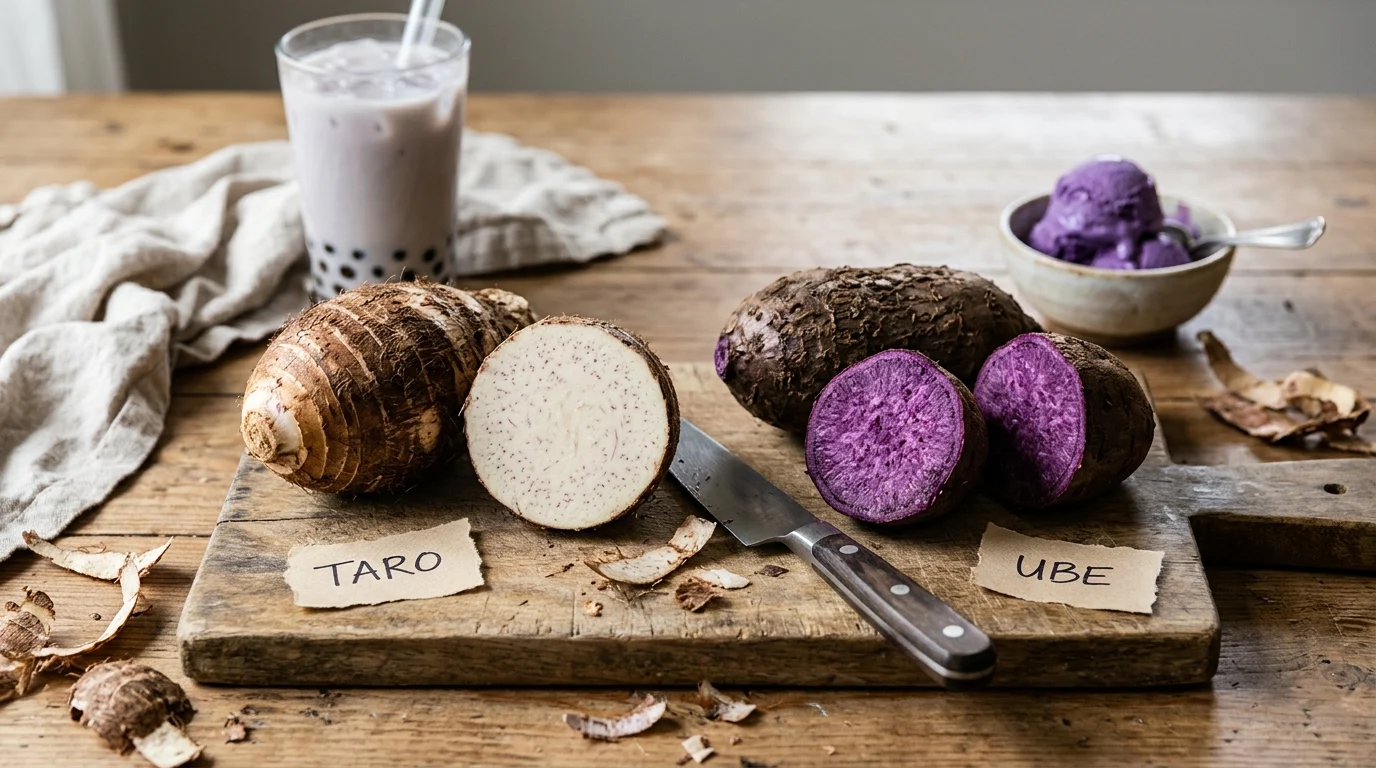
Quick Answer: Taro vs ube comes down to their plant type, color, flavor, and culinary uses. Ube is a purple yam with a naturally colorful flesh and a sweet, nutty flavor often compared to vanilla. Taro is a starchy corm with a milder, earthier taste and usually pale flesh. Both appear in desserts and drinks, but they are different ingredients.
If you have ever ordered a purple latte, bubble tea, or scoop of ice cream, you may have wondered whether taro and ube are the same thing. Both ingredients are popular in Asian cuisine, and their colorful desserts often look remarkably similar. However, their similarities can be misleading.
The main difference between taro vs ube is that they come from different plants and have distinct flavors. Ube is a purple yam commonly associated with Filipino desserts, while taro is a starchy root vegetable used in both sweet and savory dishes. Their colors, textures, and cooking applications also differ.
Understanding these differences can help you choose the right ingredient for your favorite recipes. Whether you are making bubble tea, baking a cake, preparing a traditional dessert, or exploring new flavors, knowing what separates taro from ube makes the decision easier.
What Is Taro?
Taro is a tropical plant grown for its edible, starchy corm. Its scientific name is Colocasia esculenta, and it is widely used in cuisines across Asia, Africa, and the Pacific.
Taro typically has brown skin and pale flesh that may be white, cream, or lightly speckled with purple. Its flavor is mild, earthy, and slightly nutty. When cooked, taro develops a soft, starchy texture that works well in many recipes.
Common uses for taro include:
- Taro bubble tea and milk tea
- Soups and stews
- Steamed or boiled taro
- Taro cakes and pastries
- Chips and other snacks
- Mashed taro and traditional savory dishes
One important point is that taro must be properly cooked before eating. Raw taro contains irritating calcium oxalate crystals, so do not eat it raw.
What Is Ube?
Ube is a purple yam known scientifically as Dioscorea alata. It is especially popular in Filipino cuisine, where cooks use it to prepare colorful desserts and sweet treats.
Unlike taro, ube often has naturally purple flesh, although the exact shade varies by variety. Its flavor is mildly sweet, nutty, and earthy, with vanilla like notes often noticeable in desserts.
Popular ube dishes include:
- Ube halaya, a traditional Filipino purple yam jam
- Ube ice cream
- Ube cakes and cupcakes
- Ube cookies and pastries
- Ube lattes and sweet drinks
- Halo halo, a Filipino shaved ice dessert that may include ube
Ube is especially valued for its color and distinctive dessert flavor. Its natural purple appearance makes it a popular ingredient in visually striking foods.
Taro vs Ube: Key Differences
| Feature | Taro | Ube |
|---|---|---|
| Plant type | Starchy corm | Purple yam |
| Scientific name | Colocasia esculenta | Dioscorea alata |
| Natural flesh color | Usually white or cream | Often lavender to deep purple |
| Flavor | Mild, earthy, and nutty | Sweet, nutty, and sometimes vanilla like |
| Texture | Starchy and dense | Soft and creamy when cooked |
| Common uses | Sweet and savory dishes | Mainly desserts and sweet treats |
| Popular association | Bubble tea and Asian cooking | Filipino desserts |
Although both ingredients contain starch, they are not interchangeable in every recipe. Their natural sweetness, color, and texture can produce noticeably different results.
What Does Taro Taste Like Compared With Ube?
Taro has a mild, earthy flavor with a subtle nuttiness. Its natural taste is relatively neutral, which makes it suitable for savory dishes as well as sweet recipes. In bubble tea, added sugar, milk, and flavorings often create the sweet taste people associate with taro.
Ube generally has a sweeter, more dessert like flavor. People often describe it as nutty, creamy, and reminiscent of vanilla. However, the final flavor depends on how the ingredient is prepared and which additional ingredients are used.
Choose taro if you prefer a mild flavor that works in both sweet and savory dishes.
Choose ube if you want a naturally colorful ingredient with a sweet, nutty character for desserts.
Why Are Taro and Ube Both Purple?
Ube naturally develops purple flesh because it contains pigments called anthocyanins. The intensity varies depending on the variety and preparation method.
Taro, on the other hand, usually has pale flesh, although certain varieties may contain purple or pink flecks. The bright lavender color found in many commercial taro drinks may come from added coloring, flavoring, or a prepared powder mixture.
Therefore, you should not identify an ingredient by color alone. If you want genuine ube or taro, check the product label and ingredient list.
Is Taro Healthier Than Ube?
Neither ingredient is automatically healthier in every situation. Both provide carbohydrates and can contribute energy to your diet. Their nutritional content varies according to the variety, serving size, and cooking method.
Plain cooked taro can provide fiber and several essential nutrients. Ube also supplies carbohydrates and contains naturally occurring plant pigments.
However, the nutritional value of a finished dessert can change considerably when manufacturers add sugar, condensed milk, cream, or syrups.
For a more balanced choice, consider the entire recipe rather than judging the food by its color or name. Plain cooked ingredients generally offer a different nutritional profile from heavily sweetened drinks and desserts.
Can You Substitute Taro for Ube?
You can sometimes substitute one for the other, but the result will not be identical.
For example, taro may provide starch and body in a dessert, but it will not necessarily deliver ube’s characteristic purple color or flavor. Similarly, using ube instead of taro can make a dish sweeter and more colorful than intended.
If your recipe depends on ube’s distinctive flavor, use genuine ube whenever possible. If you are preparing a savory dish that calls for taro, replacing it with ube may significantly change the taste.
Commercial powders also vary in sweetness, starch content, and added ingredients. Check their labels before using them as substitutes.
Frequently Asked Questions
Is taro the same as ube?
No. Taro is a starchy corm, while ube is a purple yam. They come from different plants and have different flavors and culinary uses.
Which is sweeter, taro or ube?
Ube generally has a sweeter, more dessert like flavor. Taro is milder and starchier, although prepared taro drinks may contain plenty of added sugar.
Is taro naturally purple?
Taro flesh is usually white or cream, sometimes with purple flecks. Bright purple taro products may contain added coloring or other ingredients.
Does ube taste like vanilla?
Ube has a mild, sweet, nutty flavor that is often described as vanilla like. Its exact taste depends on the variety and preparation.
Which is better for bubble tea?
Both work well. Taro is popular in milk tea, while ube is often chosen for its distinctive color and sweet flavor. Your preference depends on the taste you want.
Can I use taro instead of ube in a cake?
You can experiment with the substitution, but the cake may have a different color, sweetness, and flavor. Use ube when its distinctive characteristics are important to the recipe.
Are taro and ube vegetables?
Both are edible underground plant foods. Taro is a corm, while ube is a yam, so they are botanically different despite their similar culinary uses.
Conclusion
The difference between taro vs ube is more than their appearance. Taro is a starchy corm with a mild, earthy flavor, while ube is a purple yam with a naturally colorful flesh and a sweet, nutty taste. Both ingredients are popular in desserts and drinks, but they also serve different purposes in cooking.
Choose taro when you want a versatile ingredient for sweet and savory dishes. Pick ube when you want a distinctive purple color and a flavor that works especially well in cakes, ice cream, and Filipino desserts.
Remember that the purple color of a finished drink does not always reveal which ingredient it contains. Checking the product label is the best way to identify genuine taro or ube. Once you understand their differences, you can choose the right ingredient for your next recipe with confidence.