
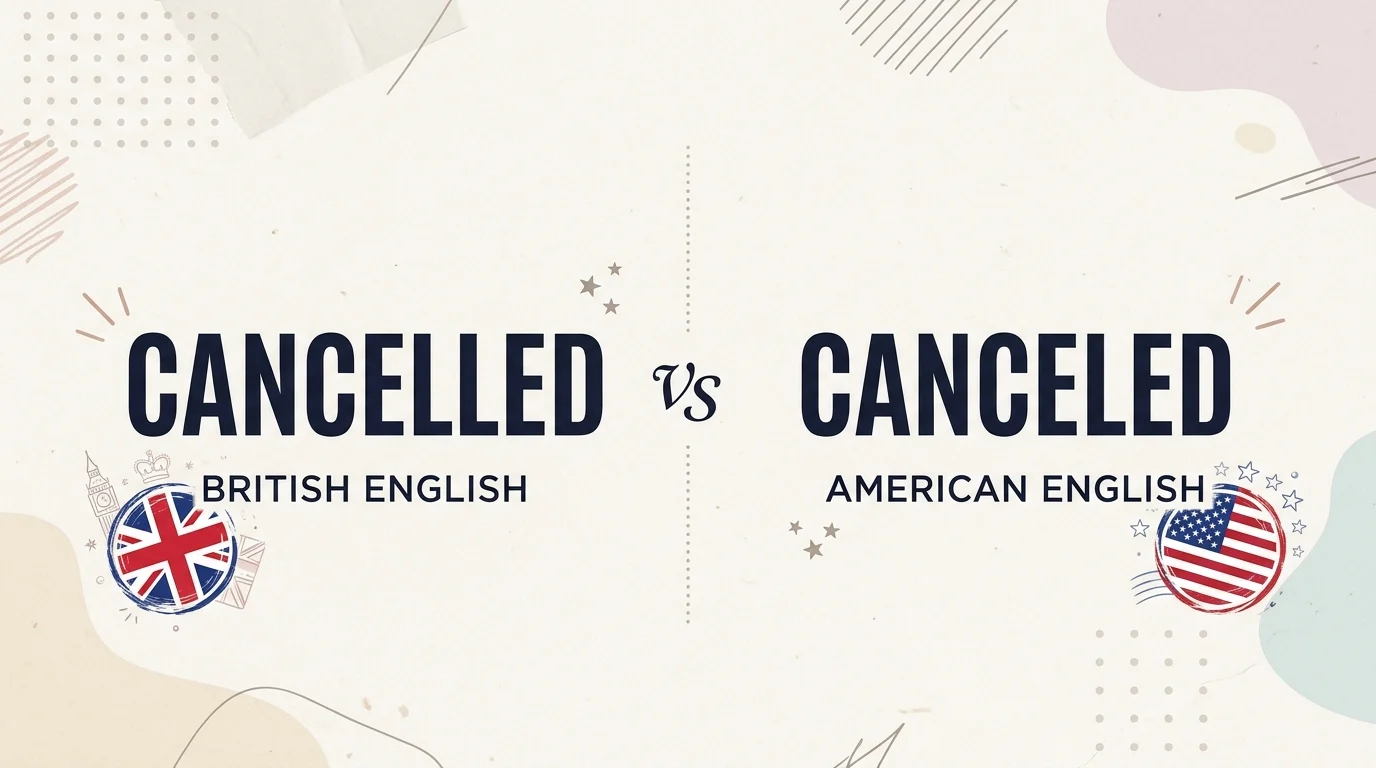
Quick Answer: Cancelled vs canceled: Both spellings are correct, but they are used in different varieties of English. Cancelled is the standard spelling in British English, while canceled is the preferred spelling in American English. Both words mean that something planned, scheduled, or arranged will no longer happen. The correct choice depends on your audience and the English spelling style you follow.
Have you ever wondered whether to write cancelled or canceled? You might see both spellings in emails, news articles, travel updates, and everyday conversations. Although they look slightly different, neither spelling is inherently wrong.
The difference comes from regional spelling conventions. British English generally uses cancelled, with two Ls, while American English usually uses canceled, with one L. Both forms have the same meaning, pronunciation, and grammatical function.
This spelling difference also appears in related words, such as cancelling and canceling. Knowing which form to use can help you write more consistently, especially when preparing professional emails, academic assignments, website content, or business documents.
In this guide, you will learn the difference between cancelled vs canceled, discover when each spelling is appropriate, and explore common examples that make the rule easy to remember.
Cancelled vs Canceled: Quick Answer
Both cancelled and canceled are correct past tense and past participle forms of the verb cancel.
- Cancelled: Preferred in British English, British-style publications, and many other varieties that follow British spelling conventions.
- Canceled: Preferred in American English and commonly used in US publications.
For example:
- British English: The concert was cancelled because of heavy rain.
- American English: The concert was canceled because of heavy rain.
Both sentences are grammatically correct and communicate exactly the same message.
What Does Cancelled Mean?
Cancelled is the past tense and past participle of cancel, written with two Ls. It is the usual spelling in British English.
The verb cancel means to stop something that was planned, arranged, or scheduled. It can refer to events, appointments, subscriptions, orders, reservations, and other commitments.
Examples:
- The airline cancelled our flight.
- She cancelled her doctor’s appointment.
- The company cancelled the meeting at the last minute.
- We cancelled our hotel reservation because our plans changed.
- The school cancelled classes due to severe weather.
In each example, something that was previously planned will no longer take place.
What Does Canceled Mean?
Canceled is the same past tense and past participle form of cancel, but it uses one L. It is the preferred spelling in American English.
The meaning does not change when the spelling changes. American writers use canceled in everyday communication, formal writing, business documents, and published content.
Examples:
- The game was canceled because of the storm.
- I canceled my subscription yesterday.
- The manager canceled the meeting.
- They canceled their travel plans.
- The customer canceled the order before shipment.
These sentences have the same meanings as their British English equivalents. The only difference is the regional spelling convention.
Cancelled vs Canceled: Key Differences
| Feature | Cancelled | Canceled |
|---|---|---|
| Spelling | Two Ls | One L |
| Preferred variety | British English | American English |
| Meaning | To stop a planned event or arrangement | To stop a planned event or arrangement |
| Pronunciation | Same | Same |
| Grammar | Past tense and past participle | Past tense and past participle |
| Example | The match was cancelled. | The match was canceled. |
The choice is primarily about spelling style, not grammar or meaning.
Why Are There Two Spellings?
The difference reflects a broader pattern in English spelling. British English often retains a doubled L when adding certain endings to words such as cancel. American English commonly simplifies the spelling in the past tense and past participle.
This pattern is also visible in words such as travelled and traveled. However, spelling rules can vary between words, so it is best to learn common forms individually rather than assume every verb follows exactly the same pattern.
Neither spelling is a mistake when used according to the appropriate regional convention.
Cancelled vs Canceled: What About Cancelling and Canceling?
The same regional difference appears in the present participle and gerund forms.
| British English | American English |
|---|---|
| Cancelled | Canceled |
| Cancelling | Canceling |
| Cancellation | Cancellation |
Notice that cancellation is normally spelled with two Ls in both British and American English.
Examples:
- British English: The organizer is cancelling the event.
- American English: The organizer is canceling the event.
- Both: The cancellation surprised everyone.
This is an important detail because not every related word follows the same spelling pattern.
Common Mistakes to Avoid
1. Assuming one spelling is always wrong
Both forms are accepted. The important thing is to choose the spelling that suits your audience.
2. Mixing spelling styles
Using cancelled in one paragraph and canceled in the next can make an article look inconsistent. Choose a style and apply it throughout your writing.
3. Changing the spelling of every related word
Remember that cancellation normally has two Ls in both varieties of English, even though canceled has one L in American English.
4. Confusing spelling with pronunciation
The two forms are pronounced the same way. The extra L affects the written form, not the usual pronunciation.
Which Spelling Should You Use?
Use cancelled if you are writing for a British English audience or following a British-style editorial guide. Choose canceled if your readers are primarily in the United States or your publication follows American English conventions.
For website owners and content writers, consistency matters. If your website targets US readers, canceled is generally the better choice. If it targets UK readers, cancelled is usually more appropriate.
When writing for an international audience, either form can work. However, select one spelling style and use it consistently across your articles, headings, examples, and other website content.
Frequently Asked Questions
Is cancelled or canceled correct?
Both are correct. Cancelled is the preferred British English spelling, while canceled is the preferred American English spelling.
Does cancelled have two Ls?
Yes. The British English spelling is cancelled, with two Ls.
Why do Americans spell canceled with one L?
American English commonly simplifies the spelling by using one L in the past tense and past participle of cancel.
Is cancelling or canceling correct?
Both are correct. Cancelling is preferred in British English, while canceling is preferred in American English.
Is cancellation spelled with one L or two?
Cancellation is normally spelled with two Ls in both American and British English.
Which spelling should I use in an American blog?
Use canceled if your blog follows American English conventions. Keep related spelling choices consistent throughout the article.
Conclusion
The difference between cancelled vs canceled is simple once you understand regional spelling conventions. Both words have the same meaning and pronunciation, but cancelled is preferred in British English, while canceled is preferred in American English.
Neither spelling is universally wrong. The best option depends on your intended readers and the spelling style you follow. For example, a US-based website will generally use canceled, whereas a British publication will normally use cancelled.
Remember that the same pattern applies to cancelling and canceling, but cancellation is generally spelled with two Ls in both varieties. By choosing one spelling style and applying it consistently, you can make your writing clearer and more professional.
Whether you write that a flight was cancelled or canceled, your message remains the same. Just make sure your spelling matches your audience.