
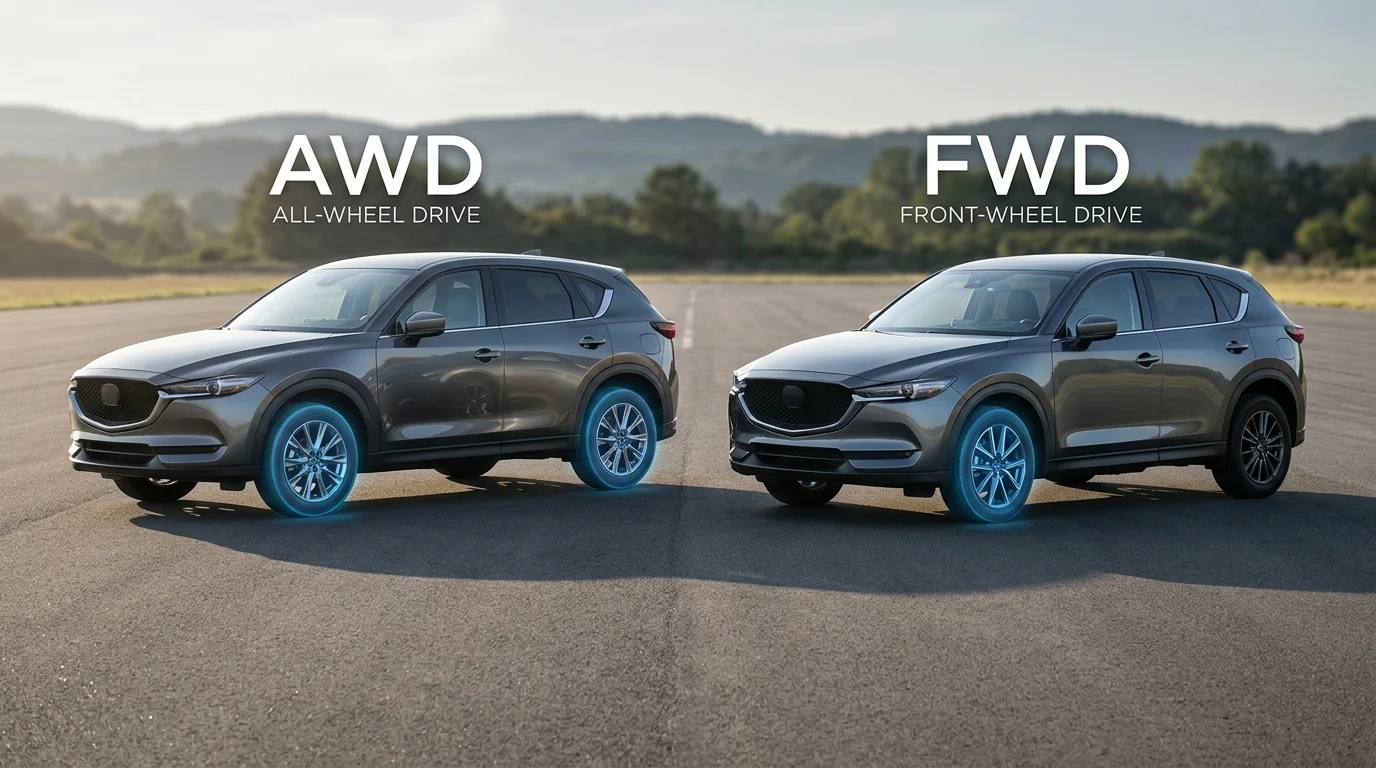
Quick Answer: AWD vs FWD comes down to traction, cost, and driving conditions. All wheel drive (AWD) can send power to all four wheels for better acceleration on slippery roads. Front wheel drive (FWD) sends power to the front wheels and usually costs less while offering better fuel economy. The best option depends on your climate, budget, and daily driving needs.
When shopping for a car or SUV, you may need to choose between AWD and FWD. Both systems are common, but they work differently and offer distinct advantages. Your choice can affect traction, fuel economy, purchase price, and overall driving experience.
All wheel drive is popular among drivers who regularly encounter snow, ice, muddy roads, or other slippery conditions. In contrast, front wheel drive is a practical choice for everyday commuting, city driving, and highway travel. It is often more affordable and efficient.
However, AWD is not automatically the better option for everyone. Your location, driving habits, road conditions, and budget all matter. Furthermore, good tires and safe driving habits remain essential, regardless of the drivetrain.
This guide explains AWD vs FWD in simple terms, compares their main features, and helps you decide which system best fits your needs.
What Does AWD Mean?
AWD stands for all wheel drive. This drivetrain can send engine power to all four wheels, either continuously or automatically when additional traction is needed. The exact operation depends on the vehicle and its AWD system.
AWD helps a vehicle maintain forward traction when the road surface becomes slippery. For example, if you drive on a wet road or a snowy hill, an AWD system may distribute power to wheels with better grip.
Main benefits of AWD:
- Better acceleration traction on slippery surfaces.
- Greater confidence on roads with changing conditions.
- Useful performance on light dirt roads and moderate snow.
- Convenient operation in most modern systems.
However, AWD systems add mechanical complexity and often increase the vehicle’s purchase price. They may also reduce fuel economy compared with a similar FWD model. <Cite refs={[“turn818142search0″,”turn818142search10”]}/>
What Does FWD Mean?
FWD stands for front wheel drive. In this system, the engine sends power to the front wheels, which also handle steering in most conventional cars.
FWD is common in sedans, hatchbacks, compact SUVs, and many family vehicles. Its design is generally lighter and less complex than AWD, making it an affordable option for everyday transportation.
Main benefits of FWD:
- Usually better fuel economy than comparable AWD models.
- Lower purchase cost in many vehicle lineups.
- Less mechanical complexity.
- Good performance for everyday commuting.
- Useful traction on many wet roads and mild winter conditions.
Because the engine’s weight often sits above the front wheels, FWD vehicles can provide useful traction on slippery roads. Nevertheless, severe snow and ice can challenge any drivetrain. <Cite refs={[“turn818142search5″,”turn818142search6”]}/>
AWD vs FWD: Key Differences
| Feature | AWD | FWD |
|---|---|---|
| Full form | All wheel drive | Front wheel drive |
| Powered wheels | All four wheels can receive power | Front wheels |
| Slippery road traction | Generally better during acceleration | Good in many everyday conditions |
| Fuel economy | Often lower | Often higher |
| Purchase price | Often higher | Often lower |
| Mechanical complexity | Generally greater | Generally lower |
| Best suited for | Frequent slippery conditions | Daily commuting and mild weather |
These are general comparisons. Actual performance varies by vehicle design, tires, engine, and driving conditions.
AWD vs FWD in Snow and Rain
AWD can be helpful when driving on snow covered roads, icy inclines, or muddy surfaces. By distributing power to all four wheels, it can help a vehicle accelerate without losing as much traction.
FWD can also handle ordinary rain and some winter conditions, particularly when equipped with suitable tires. However, deep snow or steep, slippery hills may create more challenges.
One important point is that AWD does not automatically make a car safer in every situation. It mainly helps with acceleration traction. It does not automatically improve braking or cornering on slippery roads.
Winter tires can make a major difference in snow and ice because they help with grip, steering, and stopping. Therefore, consider tire quality alongside drivetrain type. <Cite refs={[“turn818142search4″,”turn818142search0”]}/>
Which Is Better for Fuel Economy?
FWD generally wins when fuel economy is a priority. These vehicles usually have fewer drivetrain components and less weight, which can help reduce fuel consumption.
AWD systems add components and weight, although the effect varies by model. Some modern AWD vehicles can send most power to one axle during ordinary driving and engage the other axle when needed.
If you commute long distances, drive mainly on paved roads, or want to reduce fuel costs, FWD may be the more practical choice. Still, compare the official fuel economy ratings of the specific vehicles you are considering rather than relying only on drivetrain labels.
Which Should You Choose?
Choose AWD if you regularly drive on snowy roads, encounter frequent slippery conditions, or travel on light dirt roads where additional traction is useful. It may also be worth considering if you live in a mountainous region.
Choose FWD if you mostly drive in cities, commute on highways, live in a mild climate, or want a vehicle with a lower purchase price and potentially better fuel economy.
For many drivers, FWD provides everything needed for routine travel. On the other hand, AWD may justify its extra cost when road conditions regularly demand more traction.
Remember that AWD is different from four wheel drive (4WD). Many AWD systems are designed for everyday road use, while certain 4WD systems offer additional equipment for demanding off road conditions.
Frequently Asked Questions
Is AWD better than FWD?
AWD is generally better for acceleration traction on slippery surfaces. FWD is often better for affordability and fuel economy. The right choice depends on your driving conditions.
Is FWD good in snow?
Yes, FWD can perform well in light snow with suitable tires and careful driving. Deep snow, steep hills, and icy conditions can be more challenging.
Does AWD use more gas than FWD?
Usually, yes. Comparable AWD vehicles often consume more fuel because of added weight and drivetrain complexity. However, exact fuel economy depends on the vehicle.
Is AWD worth the extra cost?
AWD may be worth the extra cost if you regularly drive in snow, on slippery roads, or in areas with changing road conditions. Otherwise, FWD may be sufficient.
Does AWD help a car stop faster?
No, AWD does not automatically shorten stopping distances. Tires, road conditions, braking systems, and driving speed play important roles.
Which is better for daily driving?
FWD is a strong choice for routine commuting and highway travel. AWD is useful when daily routes regularly include slippery roads or challenging conditions.
Conclusion
The AWD vs FWD comparison is ultimately about choosing the right drivetrain for your lifestyle. AWD can provide additional traction during acceleration on slippery roads, making it useful for drivers who regularly face snow, ice, or muddy surfaces.
FWD, however, offers a practical combination of affordability, fuel economy, and everyday performance. For drivers who mainly travel on paved roads in mild weather, it is often the sensible choice.
Before purchasing a vehicle, compare its price, fuel economy, tire options, and performance in the conditions you encounter most often. Do not assume that AWD guarantees safety or that FWD cannot handle bad weather. With appropriate tires and careful driving, either system can serve you well.
2 thoughts on “AWD vs FWD: Which Is Better for Your Driving Needs?”