
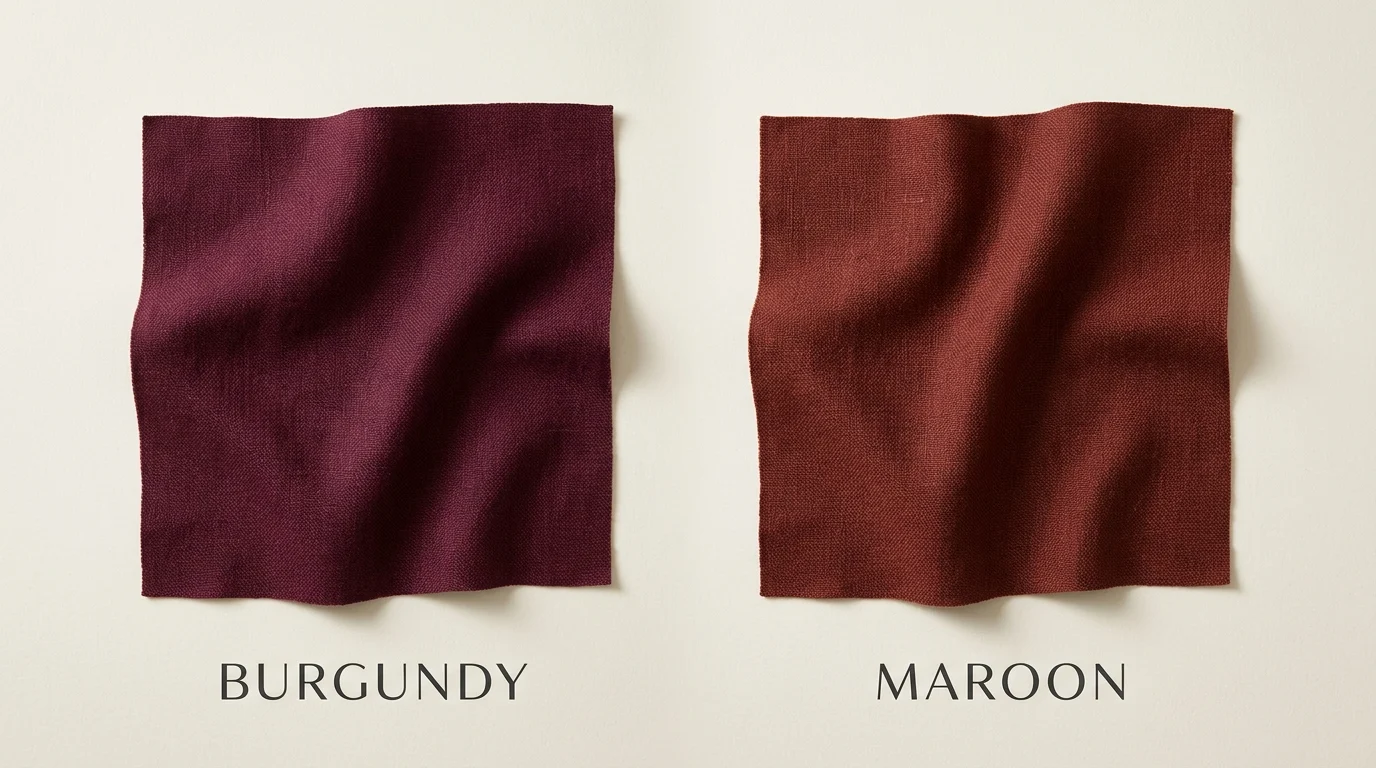
Quick Answer: Burgundy and maroon are both dark red colors, but they have different undertones. Burgundy usually has purple or wine colored undertones, giving it a rich, sophisticated appearance. Maroon typically has brown or warm red undertones, making it look deeper and earthier. Both shades are popular in fashion, interior design, and branding.
Choosing between burgundy and maroon can be confusing because both colors look like dark shades of red. They often appear similar in clothing, accessories, home decor, and sports uniforms. However, the two colors have subtle differences that can change the overall look of an outfit or design.
Burgundy is commonly associated with red wine. It usually has a purple or violet undertone that gives it a rich and elegant appearance. Maroon, on the other hand, tends to have warmer brown or reddish undertones. As a result, it often looks earthy, bold, and traditional.
Although people sometimes use these color names interchangeably, they are not always identical. Their appearance can also change depending on lighting, fabric, screen settings, and the specific shade being used.
In this guide, you will learn the difference between burgundy and maroon, how to identify each shade, and how to choose the right color for clothing, weddings, home decor, and other projects.
Burgundy vs Maroon: Quick Answer
Burgundy is generally a dark red with purple or wine colored undertones, while maroon is usually a dark red with brown or warm red undertones.
Choose burgundy when you want a rich, elegant, wine inspired look. Choose maroon when you prefer a warmer, earthier shade of red. However, exact shades vary, so comparing the actual colors is more reliable than relying on their names alone.
What Is Burgundy?
Burgundy is a deep red color named after the Burgundy wine region of France. Its appearance often resembles red wine, with subtle purple or violet undertones.
This combination gives burgundy a luxurious and refined look. It is frequently used in formal clothing, lipstick, nail polish, wedding decorations, and interior design.
For example, a burgundy evening dress may look rich and elegant without appearing as bright as a traditional red dress. Burgundy sofas, curtains, and accessories can also add warmth and depth to a room.
Common characteristics of burgundy include:
- Deep red color with purple undertones
- Wine inspired appearance
- Elegant and sophisticated style
- Popular use in formal fashion and seasonal decor
What Is Maroon?
Maroon is a dark red color that commonly features brown or warm red undertones. Its name is associated with the French word for chestnut, which reflects its earthy appearance.
Compared with burgundy, maroon often looks warmer and less purple. However, some maroon shades can appear very dark or almost brown, depending on their composition.
Maroon is frequently used in school colors, sports uniforms, jackets, traditional clothing, and home decor. It can create a bold and classic appearance without the brightness of standard red.
Common characteristics of maroon include:
- Dark red color with warm or brown undertones
- Earthy and traditional appearance
- Common use in uniforms and team colors
- Versatile style for clothing and interiors
Burgundy vs Maroon: Key Differences
| Feature | Burgundy | Maroon |
|---|---|---|
| Main color | Dark red | Dark red |
| Common undertone | Purple or violet | Brown or warm red |
| Overall appearance | Wine like and refined | Earthy and bold |
| Common associations | Luxury and elegance | Tradition and strength |
| Fashion uses | Evening dresses and accessories | Jackets, uniforms, and casual wear |
| Home decor | Elegant accent color | Warm and classic accent color |
These descriptions are general guidelines rather than strict rules. Different manufacturers may label similar shades differently.
Which Color Is Darker?
Neither burgundy nor maroon is always darker. The answer depends on the exact shade.
A deep maroon may look almost brown, while a dark burgundy may appear nearly purple. Lighter versions of either color can also look brighter than expected.
If you are choosing paint, fabric, or makeup, compare physical samples under the lighting where you plan to use them. This is especially helpful when coordinating several items for a wedding or interior design project.
Burgundy vs Maroon in Fashion
Both colors work well in clothing, but they create slightly different effects.
Burgundy is a popular choice for evening dresses, formal suits, handbags, and winter accessories. Its wine inspired undertones can make an outfit look polished and sophisticated.
Maroon works well for sweaters, jackets, uniforms, trousers, and traditional outfits. Its warmer appearance makes it a practical option for both casual and formal styles.
Both shades pair well with neutral colors such as black, white, cream, gray, and beige. Burgundy can also complement blush pink and navy, while maroon often looks attractive with camel, gold, and warm brown.
The best choice depends on your personal style and the other colors in your outfit.
Burgundy vs Maroon in Home Decor
In home decor, burgundy can create a dramatic and elegant atmosphere. It works well in accent chairs, cushions, curtains, and decorative details. Pairing it with cream, gold, or soft gray can balance its richness.
Maroon can make a space feel warm and grounded. It works well in traditional interiors, wooden furniture settings, and rooms with beige or brown accents.
However, both colors can feel overwhelming when used across large surfaces in a small or poorly lit room. Consider using them as accent colors first, then adjust the amount according to the room’s lighting and overall design.
Common Mistakes to Avoid
- Assuming the colors are identical: They often look similar, but their undertones can differ.
- Choosing by name alone: Color labels are not completely consistent across brands.
- Ignoring lighting: Natural and artificial light can change how a shade appears.
- Expecting every screen to show the same color: Display settings can affect color accuracy.
- Assuming maroon is always darker: The exact shade determines its depth.
Frequently Asked Questions
Is burgundy the same as maroon?
No. Both are dark red colors, but burgundy usually has purple undertones, while maroon tends to have warmer brown or red undertones.
Is burgundy more purple than maroon?
Generally, yes. Burgundy often has a noticeable purple or wine colored undertone, whereas maroon usually looks warmer and earthier.
Is maroon more brown than burgundy?
Maroon often has stronger brown undertones. However, the amount of brown varies between shades.
Which color looks more elegant, burgundy or maroon?
Burgundy is often associated with elegance because of its wine inspired appearance. Maroon can also look sophisticated, especially in formal clothing and traditional interiors.
Do burgundy and maroon go with black?
Yes. Both colors pair well with black. Burgundy and black can create a dramatic combination, while maroon and black often produce a bold, classic look.
Which color is better for a wedding?
Both are suitable. Burgundy is popular for romantic and elegant wedding themes, while maroon works well for traditional and richly colored celebrations.
Can burgundy and maroon be used together?
Yes. Combining them can create depth in an outfit or room. Choose shades with enough contrast so the two colors do not look accidentally mismatched.
Conclusion
Burgundy and maroon are closely related dark red colors, but their undertones give them different appearances. Burgundy usually leans toward purple or wine, creating a rich and elegant look. Maroon generally has warmer brown or red undertones, making it appear earthy and traditional.
For formal outfits, accessories, and refined interiors, burgundy may be the better fit. For uniforms, classic clothing, and warm decor, maroon can be an excellent choice. Still, neither color is automatically better or darker than the other.
When choosing between them, look at the actual shade rather than relying only on the color name. Compare samples under suitable lighting and consider the colors around them. This simple step will help you select the shade that best matches your style or design goals.