
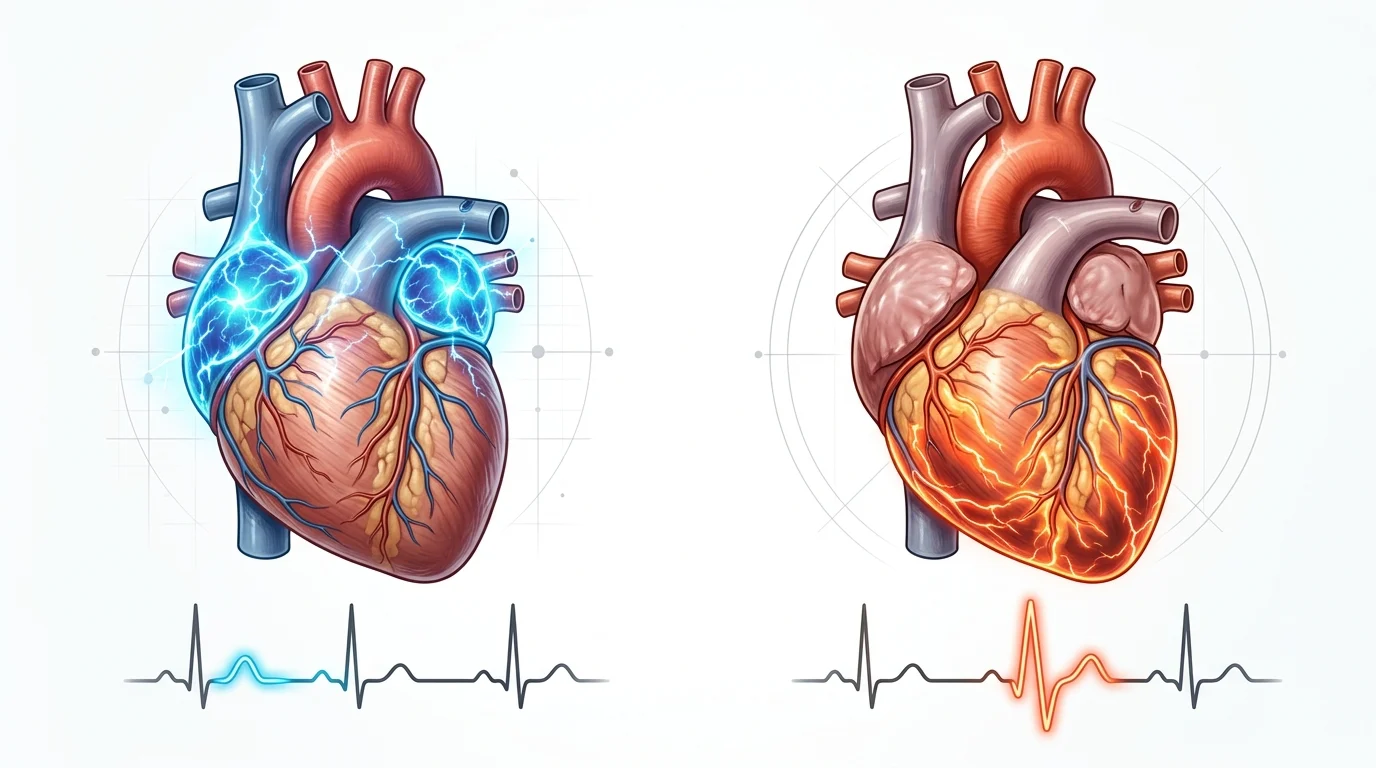
Quick Answer: PAC vs PVC refers to two types of extra heartbeats. Premature atrial contractions (PACs) start in the heart’s upper chambers, while premature ventricular contractions (PVCs) start in its lower chambers. Both can cause fluttering or skipped-beat sensations. Occasional extra beats are often harmless, but frequent symptoms or existing heart disease may require medical evaluation.
Have you ever felt your heart skip a beat, flutter, or suddenly pound in your chest? These sensations can occur because of premature heartbeats, which happen earlier than expected in the normal heart rhythm.
Two common types are premature atrial contractions (PACs) and premature ventricular contractions (PVCs). Although they may feel similar, they begin in different parts of the heart. Understanding this difference can help you recognize what these terms mean on an ECG report or during a conversation with your healthcare provider.
In many cases, occasional PACs and PVCs do not indicate a serious problem. However, frequent extra beats can sometimes signal an underlying heart condition. Therefore, it is important to understand their symptoms, causes, diagnosis, and treatment options.
What Is a PAC?
A premature atrial contraction (PAC) is an extra heartbeat that starts in one of the heart’s two upper chambers, called the atria.
Normally, the heart’s natural pacemaker controls the timing of each heartbeat. However, a PAC occurs when another area in the atria sends an electrical signal too early.
Common PAC symptoms include:
- A fluttering sensation in the chest
- A feeling that the heart skipped a beat
- Occasional pounding or extra beats
- No noticeable symptoms at all
PACs can occur because of stress, poor sleep, caffeine, alcohol, dehydration, or certain medications. They are often harmless, although frequent PACs may be associated with a higher risk of atrial fibrillation.
What Is a PVC?
A premature ventricular contraction (PVC) is an extra heartbeat that begins in one of the heart’s two lower chambers, called the ventricles.
Unlike a normal heartbeat, a PVC starts from an electrical signal in the ventricles rather than following the usual pathway. Consequently, it can briefly change the heart’s rhythm.
Common PVC symptoms include:
- A skipped or missed-beat sensation
- A strong thump in the chest
- Heart fluttering or pounding
- Dizziness or lightheadedness in some cases
PVCs may occur because of stress, stimulants, poor sleep, or certain electrolyte imbalances. They can also occur with underlying heart disease. Frequent PVCs sometimes weaken the heart muscle over time, so a healthcare professional may recommend further testing.
PAC vs PVC: Key Differences
| Feature | PAC | PVC |
|---|---|---|
| Full form | Premature atrial contraction | Premature ventricular contraction |
| Origin | Upper heart chambers | Lower heart chambers |
| Electrical signal | Starts early in the atria | Starts early in the ventricles |
| Common sensation | Flutter or skipped beat | Skipped beat or strong thump |
| Common triggers | Stress, caffeine, poor sleep | Stress, caffeine, poor sleep |
| Potential concern | Frequent PACs may be linked to atrial fibrillation | Frequent PVCs may weaken the heart muscle |
| Treatment | Often unnecessary | Often unnecessary when occasional and low risk |
The main difference is where each extra heartbeat begins. However, symptoms alone cannot reliably tell you whether you have PACs or PVCs.
What Causes PACs and PVCs?
Both types can occur in people with otherwise healthy hearts. Several factors may trigger them, including:
- Stress and anxiety: These can increase adrenaline and affect heart rhythm.
- Caffeine and alcohol: Excessive intake may trigger extra beats in some people.
- Poor sleep: Inadequate rest can make palpitations more noticeable.
- Tobacco and stimulants: These substances can affect the heart’s electrical activity.
- Electrolyte imbalances: Abnormal potassium or magnesium levels may contribute.
- Heart conditions: Structural heart problems or previous heart damage can increase the risk.
Because triggers vary from person to person, keeping a symptom diary may help you identify patterns.
How Are PACs and PVCs Diagnosed?
A healthcare professional may recommend one or more tests to identify the extra beats and check for underlying problems.
Electrocardiogram (ECG or EKG): This test records the heart’s electrical activity and may identify PACs or PVCs.
Holter or event monitor: These portable devices record heart rhythms over a longer period, making it easier to detect occasional episodes.
Echocardiogram: This ultrasound test checks the heart’s structure and pumping function.
Blood tests: These may identify electrolyte imbalances or thyroid problems that contribute to palpitations.
Do PACs and PVCs Need Treatment?
Treatment depends on how often the extra beats occur, how much they bother you, and whether you have an underlying heart condition.
Occasional PACs and PVCs often need no specific treatment. Instead, a healthcare professional may suggest improving sleep, managing stress, staying hydrated, and reducing caffeine or alcohol if these trigger symptoms.
If extra beats occur frequently, your provider may recommend medication or, in selected cases, a procedure called catheter ablation. Frequent PVCs deserve particular attention because they can sometimes affect heart function.
Seek emergency medical care if palpitations occur with chest pain, severe shortness of breath, fainting, or severe dizziness. If symptoms are new, persistent, or becoming more frequent, arrange a medical assessment.
Frequently Asked Questions
1. Which is more serious, PAC or PVC?
Neither is automatically more serious. Occasional episodes of both types are often harmless. However, frequent PVCs can weaken the heart muscle, while frequent PACs may be associated with atrial fibrillation. Your overall heart health matters.
2. Can you feel the difference between PACs and PVCs?
Not reliably. Both can cause fluttering, skipped beats, or pounding sensations. An ECG or heart monitor can help identify which type is occurring.
3. Can PACs and PVCs go away on their own?
Yes. Occasional extra beats may decrease when triggers such as stress, caffeine, or poor sleep improve. However, persistent symptoms deserve medical evaluation.
4. Can anxiety cause PACs or PVCs?
Yes. Anxiety and stress can trigger extra heartbeats in some people. Nevertheless, you should not assume anxiety is the cause without considering other possible explanations.
5. Are PACs and PVCs dangerous during exercise?
Not always. However, extra beats that appear during exercise, worsen with activity, or occur alongside dizziness or chest discomfort require medical assessment. Ask your healthcare professional what activity level is safe for you.
6. Can PACs turn into PVCs?
PACs do not simply turn into PVCs. They originate in different heart chambers. However, one person can experience both types of extra beats.
7. Do PACs and PVCs show up on an ECG?
Yes. An ECG can identify them when they occur during the recording. A longer heart monitor may help when episodes happen only occasionally.
8. When should I see a doctor about extra heartbeats?
Arrange an appointment if palpitations are new, persistent, frequent, or worsening. Seek emergency care if they occur with chest pain, fainting, or severe breathing difficulty.
Conclusion
PACs and PVCs are both premature heartbeats, but they start in different parts of the heart. PACs originate in the upper chambers, while PVCs originate in the lower chambers. Although occasional episodes are often harmless, frequent extra beats may require evaluation. A healthcare professional can identify the rhythm, assess possible causes, and recommend appropriate care.
3 thoughts on “PAC vs PVC: What’s the Difference? Symptoms, Causes & When to Worry”