
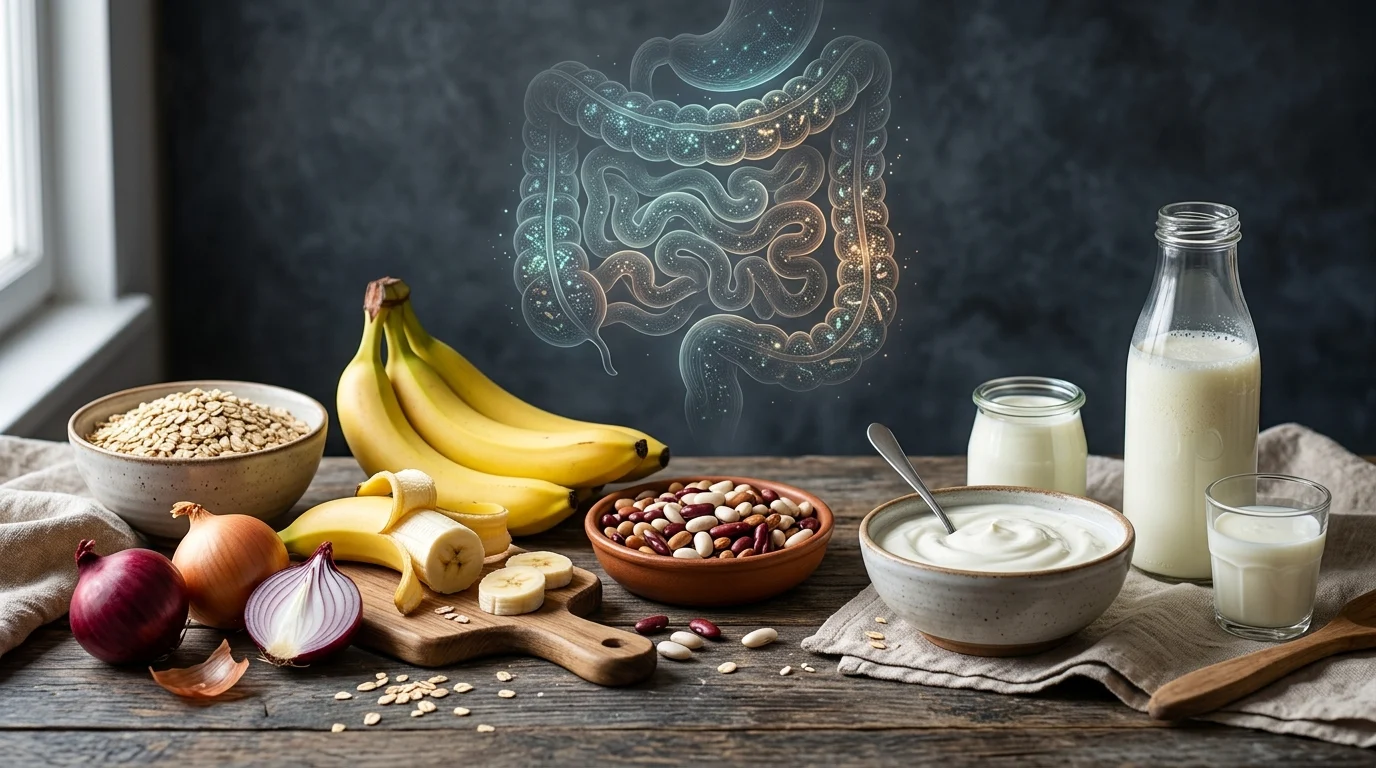
Quick Answer: The main difference between prebiotics and probiotics is their role in gut health. Prebiotics are substances, usually certain types of fiber, that beneficial gut microbes use as food. Probiotics are live microorganisms that provide health benefits when consumed in adequate amounts. Both can support digestive health, but they work in different ways.
Gut health plays an important role in digestion and overall well-being. Your digestive system contains trillions of microorganisms, including bacteria that help break down food and support normal body functions. Maintaining a healthy balance of these microbes can benefit your digestive system.
That is where prebiotics and probiotics come in. Although their names sound similar, they serve different purposes. Prebiotics help feed beneficial microorganisms already living in your gut, while probiotics introduce specific live microorganisms that may provide health benefits.
You can find both in certain foods and dietary supplements. However, you do not necessarily need to buy expensive products to support your gut health. A varied diet that includes fiber-rich plant foods and suitable fermented foods can be a useful starting point.
In this guide, you will learn the difference between prebiotics and probiotics, their benefits, common food sources, and how to decide which option may suit your needs.
What Are Prebiotics?
Prebiotics are substances that beneficial microorganisms in your body can selectively use. Many familiar prebiotics are types of dietary fiber that reach the large intestine without being fully digested.
Gut bacteria ferment these substances, producing compounds such as short-chain fatty acids that help support the intestinal environment.
Common prebiotic foods include:
- Garlic and onions
- Asparagus
- Oats and barley
- Bananas, particularly less-ripe bananas
- Beans, lentils, and chickpeas
- Chicory root
Benefits of Prebiotics
Prebiotics can help nourish beneficial gut microbes and support regular bowel movements. Depending on the type and amount, they may also help improve stool consistency and support digestive function.
However, increasing fiber too quickly can cause gas, bloating, or abdominal discomfort. Therefore, add fiber-rich foods gradually and drink enough water.
What Are Probiotics?
Probiotics are live microorganisms that provide a health benefit when consumed in adequate amounts. Specific strains of bacteria and yeasts have been studied for different digestive and other health effects.
You can find probiotics in certain fermented foods and dietary supplements.
Common probiotic food sources include:
- Yogurt containing live cultures
- Kefir
- Some fermented vegetables
- Certain fermented soy foods
- Some probiotic drinks
Not every fermented food contains live microorganisms when you eat it. For example, heat treatment or pasteurization after fermentation can kill live cultures.
Benefits of Probiotics
Certain probiotic strains may help with specific digestive problems. For example, some have evidence supporting the management of particular types of diarrhea or symptoms associated with irritable bowel syndrome.
However, probiotic benefits depend on the strain, dose, and condition. Not every probiotic product works for every person, and more microorganisms do not automatically mean better results.
Pre vs Probiotic: Key Differences
| Feature | Prebiotics | Probiotics |
|---|---|---|
| What they are | Substances used by beneficial microbes | Live microorganisms that provide health benefits |
| Main role | Help nourish selected gut microbes | Provide specific benefits when suitable strains are used |
| Common sources | Onions, oats, beans, garlic | Yogurt with live cultures, kefir, certain fermented foods |
| Supplement form | Often fiber-based powders | Live bacteria or yeasts in capsules or powders |
| Possible side effects | Gas and bloating | Gas or digestive discomfort in some people |
| Main consideration | Type and amount of fiber | Strain, dose, quality, and intended use |
The simplest way to remember the difference is this: prebiotics feed beneficial gut microbes, while probiotics are beneficial live microorganisms.
Can You Take Prebiotics and Probiotics Together?
Yes. You can consume prebiotic foods and probiotic foods as part of the same diet. Some products combine both and are called synbiotics.
For example, you could eat yogurt containing live cultures with oats and a banana. The yogurt may provide probiotics, while the oats and banana supply fiber that gut microbes can use.
Nevertheless, combining prebiotics and probiotics does not guarantee better results. The benefits depend on the specific ingredients, microorganisms, and your individual needs.
Which Is Better: Prebiotic or Probiotic?
Neither is universally better. The right choice depends on your diet, symptoms, and health goals.
Choose more prebiotic-rich foods if:
- You want to increase your dietary fiber intake.
- Your diet contains few fruits, vegetables, legumes, or whole grains.
- You want to support regular bowel movements.
Consider a probiotic product if:
- You have a specific digestive concern for which a particular strain has evidence.
- A healthcare professional recommends one for your situation.
- You understand the product’s intended use and limitations.
For most healthy people, a varied diet rich in plant foods is a sensible starting point. If you have a medical condition or persistent digestive symptoms, seek professional advice before relying on supplements.
People with severely weakened immune systems or serious underlying illnesses should consult a healthcare professional before using probiotic supplements, because certain products may carry risks.
Frequently Asked Questions
1. What is the main difference between prebiotics and probiotics?
Prebiotics are substances that beneficial gut microbes use as food. Probiotics are live microorganisms that can provide health benefits when consumed in adequate amounts.
2. Can I take prebiotics and probiotics every day?
Many people can consume prebiotic foods and probiotic foods regularly. However, supplements are not necessary for everyone. Your needs depend on your diet, health, and the product you choose.
3. Do bananas contain prebiotics or probiotics?
Bananas contain fiber, including resistant starch in less-ripe bananas, that can support gut microbes. They are not naturally a significant source of live probiotic cultures.
4. Is yogurt a prebiotic or probiotic?
Yogurt containing live cultures can provide probiotics. Plain yogurt may also be paired with prebiotic-rich foods, such as oats or bananas, for a fiber-rich meal.
5. Do prebiotics cause bloating?
They can. Gut bacteria ferment certain fibers, which may produce gas. Start with small amounts and increase your intake gradually to improve tolerance.
6. Are probiotic supplements better than probiotic foods?
Not necessarily. Foods can provide useful nutrients alongside live cultures, while supplements may offer specific strains in measured amounts. The best option depends on your goal and the evidence for the product.
7. How long does it take for prebiotics and probiotics to work?
There is no universal timeline. Effects vary according to the product, dietary habits, and the outcome being measured. Some people notice digestive changes within days, while others may not notice a clear benefit.
8. Can prebiotics and probiotics improve gut health?
Both may support gut health in different ways. However, results depend on the type of prebiotic or probiotic, and neither guarantees relief from digestive symptoms.
Conclusion
Prebiotics and probiotics both play useful roles in gut health, but they work differently. Prebiotics nourish selected gut microbes, while probiotics provide live microorganisms that may offer specific health benefits. Include a variety of fiber-rich foods in your diet, enjoy suitable fermented foods, and choose supplements carefully. If digestive problems persist, consult a healthcare professional.
1 thought on “Pre vs Probiotic: What’s the Difference? Benefits, Foods & How to Choose”