
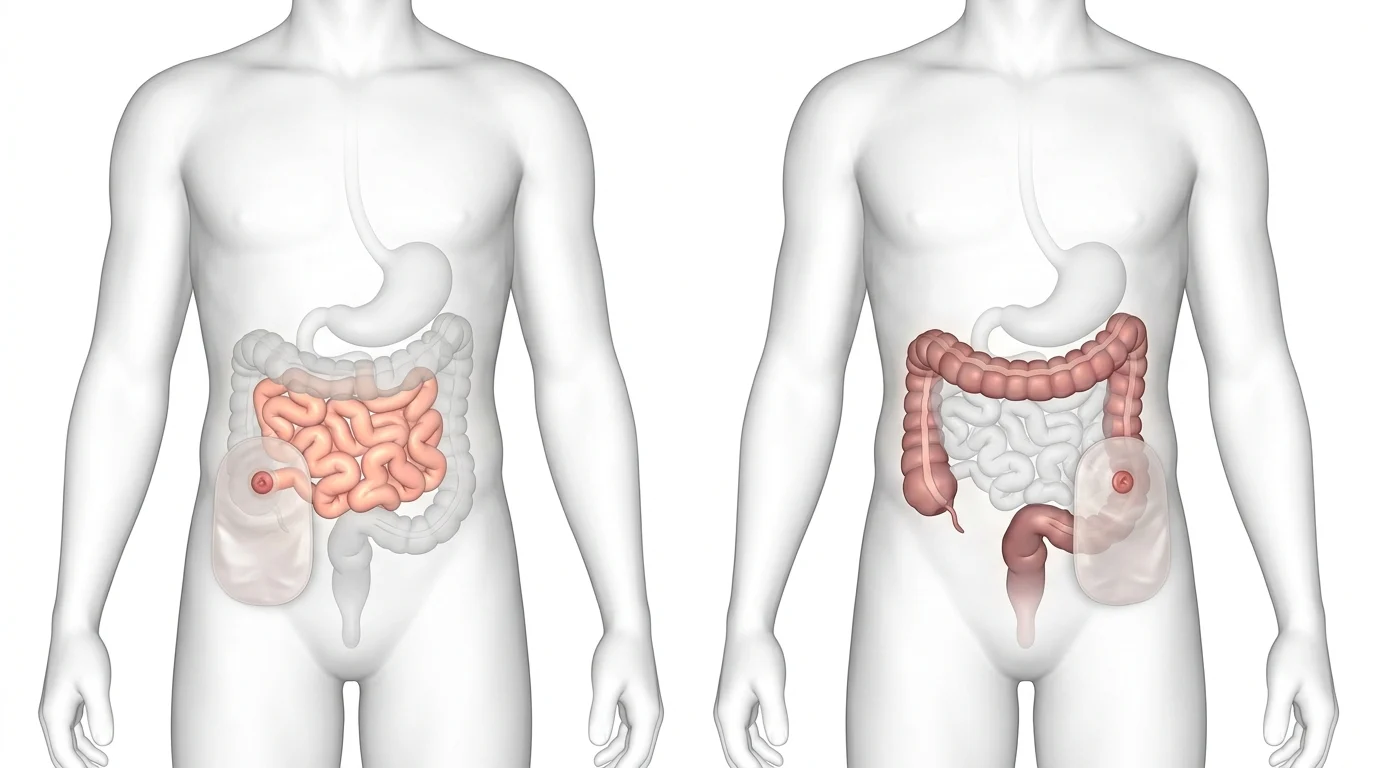
Quick Answer: Ileostomy vs colostomy describes two types of surgery that create an opening in the abdomen, called a stoma, to remove waste from the body. An ileostomy uses the ileum, the end of the small intestine, while a colostomy uses part of the large intestine, or colon. The main differences involve stool consistency, fluid loss, and daily care.
An ileostomy or colostomy can help waste leave the body when part of the digestive system needs to rest, heal, or no longer works as it should. Doctors may recommend either procedure after bowel surgery, an injury, or certain digestive conditions.
Although both procedures create an opening in the abdomen, they involve different parts of the intestine. As a result, they can produce different types of stool and require different approaches to daily care.
Understanding these differences can help patients and caregivers prepare for life with a stoma. It can also make conversations with a healthcare professional easier. However, the best option depends on the person’s condition, the part of the bowel affected, and the goals of surgery.
What Is an Ileostomy?
<AsyncImage query=”medical illustration ileostomy stoma end of small intestine ileum abdominal wall ostomy pouch anatomical diagram” aspectRatio=”16:9″ width=”100%” />
An ileostomy is a surgical opening made from the ileum, which is the final section of the small intestine. Surgeons bring the end or a loop of the ileum through an opening in the abdominal wall to create a stoma.
Waste then passes through the stoma into a special pouch instead of traveling through the entire large intestine and leaving through the anus.
Common reasons for an ileostomy include:
- Ulcerative colitis or Crohn’s disease in selected cases
- Familial adenomatous polyposis
- Colorectal surgery that requires the lower bowel to rest or heal
- Certain bowel injuries or complications
What Is Ileostomy Output Like?
Ileostomy output is usually loose, liquid, or paste-like because the waste bypasses the colon, where the body normally absorbs much of its water. Therefore, people with an ileostomy need to pay close attention to hydration and electrolyte balance.
What Is a Colostomy?
<AsyncImage query=”medical illustration colostomy stoma large intestine colon abdominal wall ostomy pouch anatomical diagram” aspectRatio=”16:9″ width=”100%” />
A colostomy is a surgical opening made from the colon, which is part of the large intestine. The surgeon brings a section of the colon through an opening in the abdominal wall, allowing stool to pass into an ostomy pouch.
Doctors may recommend a colostomy for conditions such as:
- Colorectal cancer
- Diverticulitis with complications
- Bowel obstruction or injury
- Certain birth defects or bowel disorders
What Is Colostomy Output Like?
Colostomy output depends on where the stoma sits along the colon. A colostomy created higher in the colon may produce softer stool, while one created closer to the rectum often produces more formed stool.
Because some of the colon remains involved in absorbing water, colostomy output is generally more formed than ileostomy output.
Ileostomy vs Colostomy: Key Differences
| Feature | Ileostomy | Colostomy |
|---|---|---|
| Intestinal section | Ileum, the end of the small intestine | Colon, part of the large intestine |
| Stool consistency | Usually liquid or paste-like | Varies from soft to formed |
| Fluid loss | Higher risk of fluid and salt loss | Usually lower risk |
| Pouch emptying | Often more frequent | Depends on stool consistency and frequency |
| Diet and hydration | Hydration is especially important | Diet depends on individual tolerance |
| Possible complications | Dehydration and bowel blockage | Skin irritation, constipation, or prolapse |
| Temporary or permanent | Can be either | Can be either |
Both procedures require stoma care and a pouching system. Neither type is automatically better for everyone.
Diet and Daily Care: What Should You Know?
Diet With an Ileostomy
After surgery, the healthcare team may recommend introducing foods gradually and chewing thoroughly. Some high-fiber foods can increase the risk of blockage, particularly during recovery.
Drink fluids according to your care team’s advice. Because an ileostomy can cause substantial fluid and salt loss, your clinician may recommend specific fluids or oral rehydration solutions, especially if output increases.
Diet With a Colostomy
Many people with a colostomy can gradually return to a varied diet. However, certain foods may cause gas, odor, constipation, or looser stool.
Eating regular meals, chewing thoroughly, and drinking enough fluids may help. Keep track of foods that cause discomfort, and ask your healthcare professional before making major dietary changes.
Stoma and Pouch Care
For both procedures, empty the pouch before it becomes too full and keep the skin around the stoma clean and dry. Make sure the pouch opening fits properly to help prevent leaks and skin irritation.
An ostomy nurse can teach you how to change the pouch, recognize skin problems, and choose suitable supplies.
Can an Ileostomy or Colostomy Be Reversed?
Yes, some ileostomies and colostomies are temporary and can be reversed with another operation. However, reversal depends on the original condition, healing, and whether the remaining bowel can function safely.
Other ostomies are permanent because the rectum or anus has been removed or the bowel cannot be reconnected. Your surgeon can explain which outcome is likely in your situation.
Frequently Asked Questions
1. Which is easier to live with, an ileostomy or colostomy?
Experiences vary. A colostomy may produce more formed stool, while an ileostomy requires closer attention to hydration. Comfort also depends on pouch fit, the underlying condition, and personal needs.
2. Does an ileostomy produce more output than a colostomy?
Ileostomies often produce frequent liquid or paste-like output. Colostomy output varies with the location of the stoma and may be more formed.
3. Can you eat normally with an ostomy?
Many people eventually enjoy a varied diet. However, recommendations depend on the type of ostomy, recovery stage, output, and individual tolerance.
4. Is an ileostomy more dangerous than a colostomy?
Neither is always more dangerous. An ileostomy carries a greater risk of dehydration, while both procedures can cause complications such as skin irritation, blockage, or stoma problems.
5. Can you still pass stool through the anus?
Sometimes. If the rectum remains, mucus or some discharge may still pass through the anus, even when stool leaves through a stoma. The amount depends on the surgery.
6. How often do you empty an ostomy pouch?
It depends on output and pouch type. Many people empty a pouch several times a day, before it becomes too full. Ileostomy pouches often need more frequent emptying.
7. When should you contact a healthcare professional?
Seek prompt medical advice if you develop very high output, signs of dehydration, persistent vomiting, severe abdominal pain, or little or no stoma output with cramps or swelling. Severe symptoms may require emergency care.
Conclusion
The main difference between an ileostomy and a colostomy is the part of the intestine used to create the stoma. An ileostomy comes from the small intestine and usually produces looser output, while a colostomy comes from the colon and often produces more formed stool. Both require regular pouch care, and the right procedure depends on your medical needs.
4 thoughts on “Ileostomy vs Colostomy: Key Differences, Output, Diet & Daily Care”