
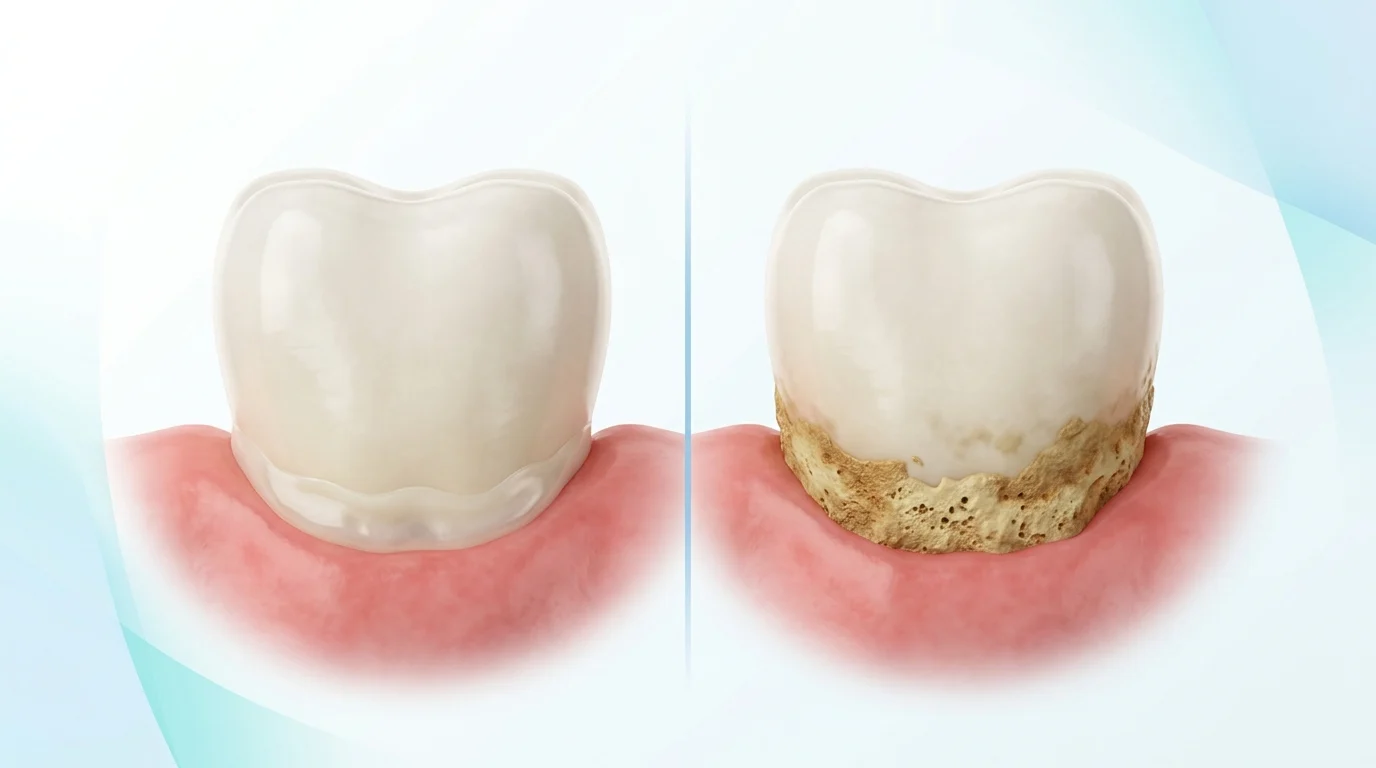
Quick Answer: The main difference between tartar vs plaque is that plaque is a soft, sticky film of bacteria that you can remove by brushing and flossing, while tartar is hardened plaque that sticks firmly to your teeth. You can control plaque at home, but a dentist or dental hygienist must remove tartar safely.
Have you ever noticed a sticky feeling on your teeth or a hard yellow buildup near your gums? These signs may point to plaque or tartar. Although people often use these terms interchangeably, they describe different stages of buildup on your teeth.
Plaque forms naturally throughout the day as bacteria mix with saliva and food particles. However, when you fail to remove plaque regularly, minerals in your saliva can harden it into tartar. Once this happens, ordinary brushing and flossing cannot remove the hardened deposit.
Understanding the difference helps you choose the right approach to oral care. More importantly, it can help you prevent cavities, gum inflammation, bad breath, and other dental problems. Here is how plaque and tartar differ, how to identify them, and what you can do to protect your smile.
What Is Dental Plaque?
Dental plaque is a soft, sticky film that constantly forms on your teeth. It contains bacteria and develops as bacteria interact with food particles and saliva.
Plaque is often colorless, so you may not notice it easily. However, your teeth might feel fuzzy when you run your tongue over them.
Common signs of plaque include:
- A sticky or fuzzy feeling on your teeth
- Bad breath
- Red or irritated gums
- Gums that bleed during brushing or flossing
The good news is that you can remove plaque with proper daily brushing and flossing. If you leave it on your teeth, however, it can contribute to tooth decay and gum disease.
What Is Tartar?
Tartar, also called dental calculus, forms when plaque hardens through mineral deposits from saliva. Unlike soft plaque, tartar attaches firmly to the surface of your teeth.
It often develops along the gumline or between teeth. Depending on its location and exposure to stains, tartar may appear yellow, brown, or dark.
Common signs of tartar include:
- Hard, rough deposits on your teeth
- Yellow or brown buildup near the gums
- Persistent bad breath
- Red, swollen, or bleeding gums
Because tartar bonds firmly to teeth, brushing and flossing cannot remove it. A dentist or dental hygienist must use professional instruments to clean it away safely.
Tartar vs Plaque: Main Differences
| Feature | Plaque | Tartar |
|---|---|---|
| Texture | Soft and sticky | Hard and rough |
| Appearance | Usually clear or colorless | Often yellow or brown |
| Formation | Develops continuously | Forms when plaque hardens |
| Removal | Brushing and flossing | Professional dental cleaning |
| Main concern | Cavities and gum inflammation | Gum disease, staining, and plaque retention |
In short, plaque is the soft buildup you can remove at home, while tartar is the hardened deposit that requires professional care.
How Does Plaque Turn Into Tartar?
Plaque begins forming soon after you clean your teeth. If you do not remove it consistently, minerals in your saliva gradually harden the deposit.
As a result, plaque can become tartar within days, although the timing varies from person to person. Once tartar develops, it creates a rough surface where additional plaque can collect.
Therefore, daily oral care is essential. Removing plaque before it hardens helps reduce tartar buildup and keeps your gums healthier.
How to Remove Plaque and Tartar
How to Remove Plaque at Home
You can control plaque by following a consistent oral hygiene routine.
- Brush twice daily: Brush for two minutes with fluoride toothpaste and a soft-bristled toothbrush.
- Clean between your teeth: Use dental floss or suitable interdental cleaners every day.
- Limit frequent sugary snacks: Oral bacteria use sugars to produce acids that can damage tooth enamel.
- Consider an appropriate mouthwash: Ask your dentist whether a fluoride or therapeutic mouthwash would benefit you.
Additionally, schedule regular dental checkups to catch early signs of decay or gum disease.
How to Remove Tartar Safely
If tartar has already formed, book a professional dental cleaning. A dentist or hygienist can remove hardened deposits using specialized instruments.
Do not try to scrape tartar off with metal tools, sharp objects, or aggressive home remedies. These methods may injure your gums or damage your teeth. Although brushing helps prevent new buildup, it cannot remove existing tartar.
How to Prevent Tartar and Plaque Buildup
Prevention is easier than treating advanced buildup. To protect your teeth:
- Brush thoroughly twice a day with fluoride toothpaste.
- Floss or clean between your teeth daily.
- Drink water regularly, especially after meals.
- Avoid tobacco products, which can stain teeth and increase oral health risks.
- Visit your dentist regularly for examinations and professional cleaning.
Your ideal cleaning schedule depends on your oral health and how quickly plaque and tartar develop. Therefore, follow your dentist’s recommendations rather than relying on a fixed schedule.
Common Questions About Tartar vs Plaque
1. Is tartar worse than plaque?
Tartar is harder to remove and can encourage further plaque accumulation. Both can contribute to oral health problems if you do not manage them properly.
2. Can brushing remove tartar?
No. Brushing and flossing remove soft plaque, but a dental professional must remove hardened tartar.
3. Can plaque turn into tartar overnight?
Tartar usually develops as plaque mineralizes over time. The process varies, so consistent daily cleaning is important.
4. Does tartar cause bad breath?
Yes, tartar can contribute to bad breath because its rough surface can trap bacteria and debris.
5. Can tartar cause gum disease?
Yes. Tartar buildup can contribute to gum inflammation and periodontal disease, particularly when it collects around or below the gumline.
6. Is yellow buildup on teeth always tartar?
Not always. Yellow buildup may be plaque, tartar, or surface staining. A dentist can identify the cause during an examination.
7. Can mouthwash remove tartar?
No. Mouthwash may help control bacteria or prevent certain oral health problems, but it cannot dissolve and remove hardened tartar.
8. How often should I get my teeth professionally cleaned?
The right frequency depends on your dental health and tartar buildup. Many people benefit from regular six-month checkups, but some need more frequent visits.
Conclusion
The key difference between tartar and plaque is their texture and how you remove them. Plaque is a soft bacterial film that you can control with brushing and flossing. Tartar is hardened plaque that requires professional removal.
Ultimately, a consistent oral hygiene routine, healthy habits, and regular dental visits can help prevent buildup and protect your teeth and gums.