
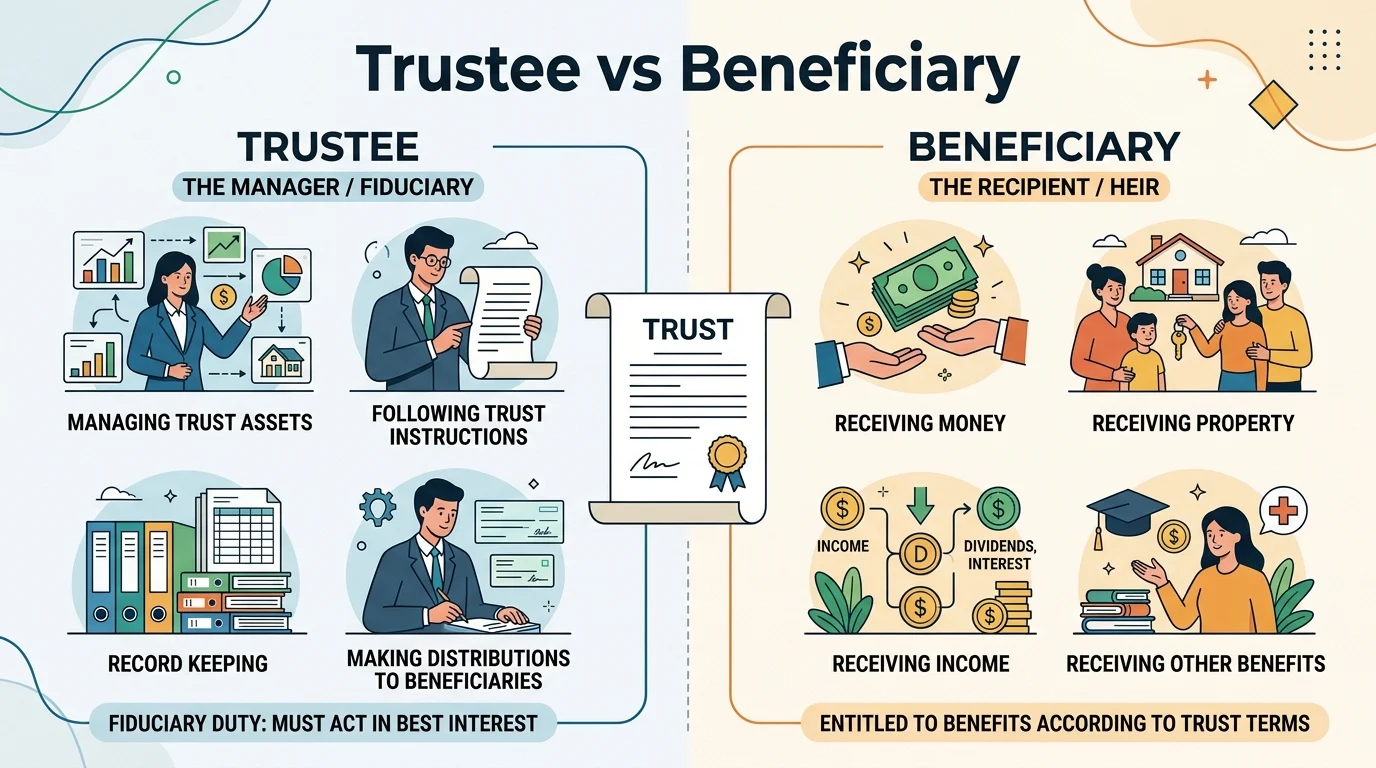
Quick Ans: A trustee manages trust assets according to the trust document and acts for the benefit of the beneficiaries. A beneficiary is the person or organization entitled to receive benefits from the trust. In simple terms, the trustee manages the trust, while the beneficiary receives its benefits.
Trustee vs beneficiary can be confusing because both roles are connected to the same trust, but they have very different responsibilities. A trust usually involves property, money, or other assets that someone holds and manages for another person.
The trustee is responsible for managing those assets according to the trust document and applicable law. The beneficiary is the person or organization intended to benefit from the trust.
For example, a parent may create a trust for a child. Another person may become the trustee and manage the money until the child reaches a certain age. The child is the beneficiary because the trust was created for the child’s benefit.
Understanding the difference matters when reading estate planning documents, discussing inheritance, or dealing with trust administration. Let’s look at each role in simple terms.
Quick Answer and Key Takeaway
The trustee manages trust property, while the beneficiary receives or may receive benefits from that property.
| Role | Main Function | Typical Responsibility |
|---|---|---|
| Trustee | Manages the trust | Follows the trust terms and manages assets |
| Beneficiary | Receives trust benefits | Receives money, property, income, or other benefits |
A trustee can sometimes also be a beneficiary, depending on the trust and applicable law.
Trustee vs Beneficiary: Definition and Explanation
What Is a Trustee?
A trustee is a person or organization responsible for managing property held in a trust. The trustee must follow the instructions in the trust document and applicable legal duties.
Typical trustee responsibilities may include:
- Managing investments and other trust assets
- Keeping accurate records
- Distributing assets according to the trust
- Communicating with beneficiaries
- Paying appropriate expenses or taxes
- Acting in accordance with fiduciary duties
The trustee does not simply own the trust property for personal use. The trustee manages it for the purposes established by the trust.
What Is a Beneficiary?
A beneficiary is a person or organization that is entitled to receive a benefit from a trust.
Depending on the trust terms, a beneficiary might receive:
- Money
- Investment income
- Real estate
- Other property
- Educational or medical expenses
- Assets at a specified future date
A beneficiary’s exact rights depend on the wording of the trust and the law that applies.
Is This a Legal or Vocabulary Difference?
Trustee vs beneficiary is primarily a legal and estate planning distinction rather than a grammar issue.
The words describe different roles within a trust relationship. A trustee generally has management responsibilities, while a beneficiary has rights to benefits established by the trust.
Because trusts can differ considerably, the exact powers and rights of each party should be determined from the trust document and applicable law.
Real World Usage Examples
Workplace Example
A financial institution may serve as trustee and manage investments for several beneficiaries.
Recap: The institution manages the trust, while the beneficiaries receive its benefits.
Academic Example
A textbook might explain that a trustee must manage trust property for the benefit of the beneficiaries.
Recap: The trustee has a management role, while the beneficiary has a beneficial interest.
Everyday Example
A grandmother creates a trust for her grandchildren and names her daughter as trustee.
Recap: The daughter manages the trust, while the grandchildren are beneficiaries.
Regional or Global Usage Differences
The terms trustee and beneficiary are widely used in common law legal systems, including the United States, United Kingdom, Canada, Australia, and other jurisdictions.
However, trust law can vary significantly between countries and even between jurisdictions within a country. The powers of a trustee and the rights of a beneficiary may therefore differ depending on the applicable law and the specific trust document.
When NOT to Use These Terms Interchangeably
Avoid treating trustee and beneficiary as synonyms.
1. When describing who manages assets
Incorrect: “The beneficiary manages the trust.”
Better: “The trustee manages the trust.”
2. When describing who receives trust benefits
Incorrect: “The trustee receives the trust for the child.”
Better: “The child is the beneficiary of the trust.”
3. When discussing fiduciary duties
A trustee may have fiduciary duties toward beneficiaries. Calling the beneficiary the trustee can incorrectly describe the legal relationship.
4. When reading estate documents
Don’t assume that someone named in a trust automatically has the same role as the person managing it.
5. When discussing distributions
A beneficiary may receive a distribution, while the trustee may be responsible for making that distribution under the trust terms.
Common Mistakes and Corrections
| Correct Sentence | Incorrect Sentence | Why |
|---|---|---|
| The trustee manages the trust assets. | The beneficiary manages the trust assets. | Management is generally the trustee’s role. |
| The beneficiary receives benefits from the trust. | The trustee is always the beneficiary. | The roles are different and do not have to belong to the same person. |
| The trustee must follow the trust terms. | The beneficiary writes the trust terms. | The trust document establishes the governing instructions. |
| The beneficiary may receive a distribution. | The beneficiary manages every distribution. | Distribution responsibilities generally belong to the trustee. |
Simple Decision Rule
Remember:
Trustee = manages the trust.
Beneficiary = benefits from the trust.
Exercises With Answers
Choose trustee or beneficiary.
- Who manages the trust assets?
- Who may receive money from the trust?
- Who generally follows the instructions in the trust document?
- Who is intended to benefit from the trust?
- Can one person sometimes serve as both roles?
Answers
- Trustee
- Beneficiary
- Trustee
- Beneficiary
- Yes, depending on the trust and applicable law.
Related Concepts and Comparisons
A trustor, sometimes called a grantor or settlor depending on the jurisdiction, is generally the person who creates the trust.
The trustee manages the trust property.
The beneficiary receives benefits from the trust.
So, in a simple trust structure:
Trustor → creates the trust
Trustee → manages the trust
Beneficiary → benefits from the trust
These roles can sometimes overlap, but they describe different functions.
FAQs
Can a trustee also be a beneficiary?
Yes, in some trusts a trustee can also be a beneficiary. Whether this is permitted and what restrictions apply depends on the trust structure and applicable law.
What is the main difference between a trustee and a beneficiary?
The trustee manages trust property according to the trust terms. The beneficiary is the person or organization entitled to receive benefits from the trust.
Does a beneficiary own the trust assets?
Not necessarily. Trust ownership and beneficial interests are legal concepts that can vary depending on the trust and applicable law.
Can a beneficiary remove a trustee?
Sometimes, but the answer depends on the trust document and applicable law. Some trusts provide specific procedures for removing or replacing a trustee.
Can there be more than one beneficiary?
Yes. A trust can have multiple beneficiaries, and the trust document can establish different rights or distributions for each beneficiary.
Does a trustee get paid?
A trustee may be entitled to compensation depending on the trust terms and applicable law. Professional trustees may charge fees for their services.
What happens if a trustee does not follow the trust?
A trustee who fails to follow applicable duties or trust terms may face legal consequences. The available remedies depend on the circumstances and governing law.
Is a beneficiary responsible for managing the trust?
Generally, no. The trustee usually has the responsibility of administering and managing the trust unless the trust structure provides otherwise.
Conclusion
Understanding trustee vs beneficiary becomes much easier when you remember their basic functions. The trustee is responsible for managing trust property and carrying out the instructions established by the trust. The beneficiary is the person or organization that receives, or may receive, benefits from that trust.
A trust may have one or several trustees and beneficiaries. In some situations, one person can hold more than one role, but the responsibilities attached to each role remain distinct.
The exact rights and duties can vary according to the trust document and applicable law. That’s especially important when dealing with inheritance, estate planning, investments, or disputes involving a trust.
The easiest rule to remember is simple: the trustee manages, while the beneficiary benefits. If you’re reading a trust document, identify who has management duties and who is entitled to receive benefits. That distinction will help you understand the basic structure of the trust.
2 thoughts on “Trustee vs Beneficiary: What’s the Difference? Easy Guide & Examples”