
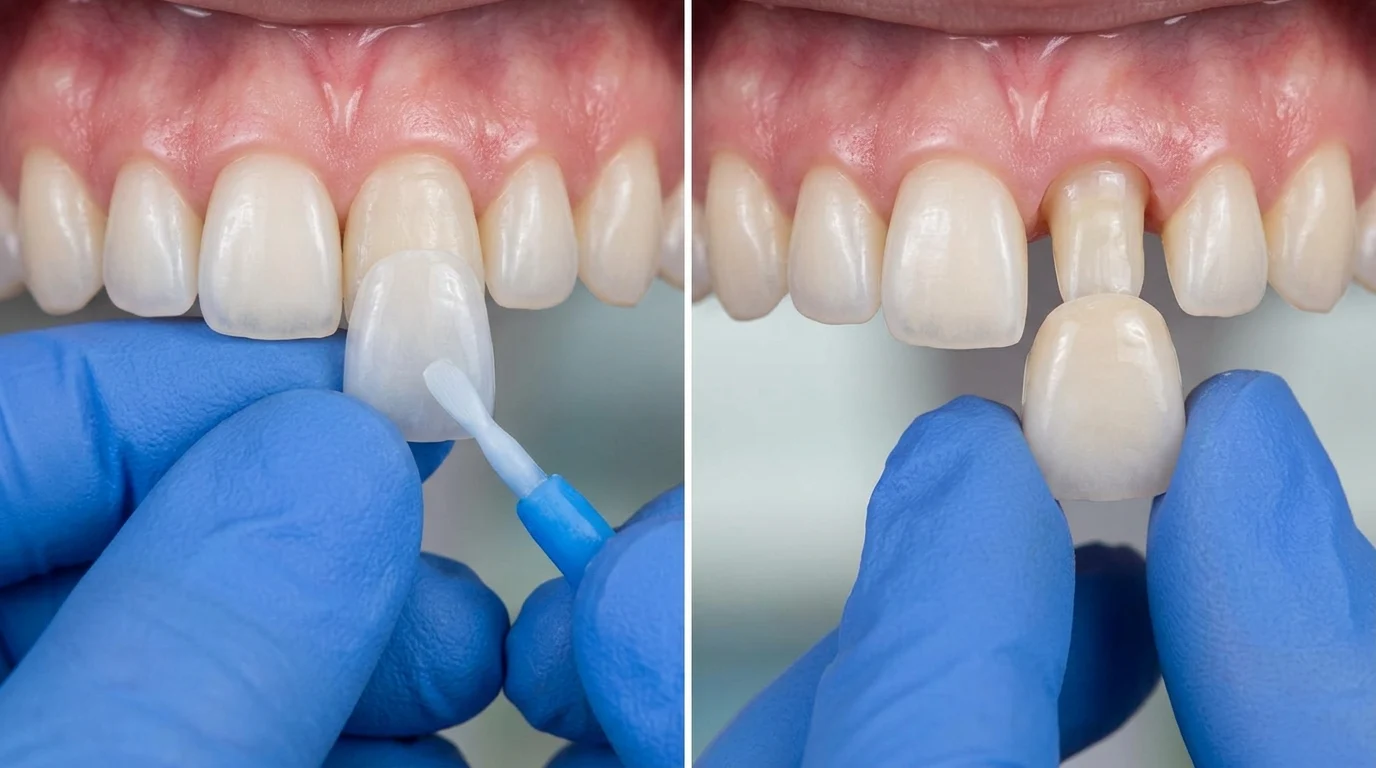
Quick Answer: Veneers and crowns are dental restorations that improve the appearance of teeth, but they serve different purposes. Veneers cover only the front surface of a tooth, while crowns cover most or all of its visible portion. Veneers usually suit cosmetic concerns, whereas crowns are often better for teeth that are damaged, weakened, or heavily restored.
If you want to improve your smile, you may be considering dental veneers or crowns. Both treatments can make teeth look better, correct certain imperfections, and restore a more attractive smile. However, they differ in how much of the tooth they cover, how much natural tooth structure they require, and the problems they are designed to address.
The choice between veneers and crowns depends mainly on the condition of your teeth and your treatment goals. Veneers are often used to improve the color, shape, or appearance of relatively healthy front teeth. Crowns, on the other hand, provide more complete coverage and can protect teeth that have become weak, cracked, or extensively damaged.
Cost, durability, appearance, and long term maintenance also matter when comparing these treatments. Understanding these differences can help you discuss suitable options with your dentist and avoid choosing a procedure based on appearance alone.
Veneers vs Crowns: Quick Answer
Veneers are thin shells attached to the front surface of teeth. They are commonly used to address discoloration, small chips, minor shape problems, and certain cosmetic gaps.
Crowns cover most or all of the visible part of a tooth. Dentists often recommend them when a tooth needs additional strength or protection because of significant damage or previous dental treatment.
Choose based on your tooth’s health, not just the appearance you want. A dental examination can help determine which option is appropriate.
What Are Dental Veneers?
<AsyncImage query=”natural looking porcelain dental veneers front teeth smile close up dental photography” aspectRatio=”16:9″ width=”100%” />
Dental veneers are thin coverings, usually made from porcelain or composite resin, that attach to the front surfaces of teeth. They are designed mainly to improve appearance while preserving more tooth structure than a full crown in suitable cases.
Dentists may recommend veneers for:
- Stubborn discoloration that does not respond well to whitening
- Small chips or worn edges
- Minor irregularities in tooth shape
- Small gaps between certain teeth
- Cosmetic improvements to the smile
Porcelain veneers generally resist staining well and can provide a natural appearance. Composite veneers may cost less initially, although they can stain or chip more easily.
However, veneers are not suitable for every tooth. They may be inappropriate when a tooth has extensive decay, significant structural damage, or insufficient enamel for reliable bonding. Some veneer treatments require removing a small amount of enamel, and that change is often irreversible.
What Are Dental Crowns?
<AsyncImage query=”porcelain dental crown on prepared tooth dental model close up” aspectRatio=”16:9″ width=”100%” />
A dental crown is a custom made restoration that covers most or all of the visible portion of a tooth. It restores the tooth’s shape, function, and appearance while helping protect weakened structure.
Crowns may be recommended for:
- Teeth with extensive decay
- Cracked or significantly weakened teeth
- Teeth with large fillings
- Teeth treated with root canal therapy when additional protection is needed
- Severely worn or damaged teeth
- Certain dental implant restorations
Crowns can be made from porcelain, ceramic, zirconia, metal, or combinations of materials. Your dentist will recommend a suitable option based on the tooth’s location, bite pressure, appearance requirements, and clinical condition.
Because a crown covers more of the tooth, preparing it usually requires removing more natural tooth structure than preparing a veneer.
Veneers vs Crowns: Key Differences
| Feature | Veneers | Crowns |
|---|---|---|
| Coverage | Front surface of the tooth | Most or all of the visible tooth |
| Main purpose | Primarily cosmetic improvement | Protection, restoration, and appearance |
| Tooth preparation | Usually less extensive | Usually more extensive |
| Common materials | Porcelain or composite resin | Ceramic, zirconia, metal, or porcelain combinations |
| Best suited for | Selected cosmetic concerns | Weakened or extensively damaged teeth |
| Stain resistance | Porcelain resists stains well | Depends on the crown material |
| Reversibility | Often irreversible | Irreversible once tooth preparation is performed |
Neither option is automatically better. The right choice depends on how much healthy tooth structure remains and what treatment is needed.
Veneers vs Crowns: Cost Comparison
The cost of veneers and crowns varies by location, dental clinic, material, laboratory fees, and the complexity of treatment.
Veneers can be expensive, particularly when made from porcelain or used across several front teeth. Composite options may be more affordable.
Crowns also vary in price. Their cost depends on the material, the condition of the tooth, and whether additional treatment is necessary before placement.
There is no single price that applies to every patient. Ask your dentist for a written estimate that includes examinations, preparation, temporary restorations if needed, laboratory fees, and follow up visits. Also, check whether your dental insurance covers the proposed treatment.
Which Lasts Longer: Veneers or Crowns?
Both treatments can last many years with proper care, but their lifespan depends on the material, bite, oral hygiene, and habits such as teeth grinding.
Porcelain veneers often last around 10 to 15 years, while dental crowns may last around 10 to 15 years or longer. These are general estimates, not guarantees. Some restorations need replacement sooner, while others remain functional for much longer.
You can help protect either restoration by brushing twice daily, cleaning between your teeth, attending dental checkups, and avoiding biting hard objects. If you grind your teeth, your dentist may recommend a night guard.
Which Is Better for You?
Veneers may be suitable if your teeth are generally healthy and your main concern is improving their color, shape, or appearance. They can preserve more natural tooth structure than crowns when the tooth is an appropriate candidate.
Crowns may be more appropriate when a tooth has extensive decay, a large existing restoration, a significant fracture, or substantial structural weakness.
However, neither treatment should be used to cover up untreated decay or gum disease. Your dentist should address underlying problems before placing a restoration.
If your teeth only need whitening, orthodontic treatment, or minor reshaping, you may not need veneers or crowns at all. Ask about the least invasive option that can safely achieve your goals.
Frequently Asked Questions
Are veneers better than crowns?
Veneers may be better for selected cosmetic concerns, while crowns are often better for teeth that need substantial protection. The best choice depends on your dental health.
Do veneers look more natural than crowns?
Both can look natural when properly designed and fitted. The final appearance depends on the material, color matching, tooth shape, and dentist’s technique.
Are crowns stronger than veneers?
Crowns provide more complete coverage and are often used to protect weakened teeth. Veneers are thinner and primarily address cosmetic concerns, so they are not interchangeable.
Is getting veneers or crowns painful?
Dentists use local anesthesia during tooth preparation when needed. Some sensitivity or soreness can occur afterward, but your dentist can explain what to expect for your specific treatment.
Can veneers or crowns be whitened?
Porcelain veneers and most crown materials do not respond to whitening products like natural enamel does. Discuss tooth whitening before choosing a final restoration shade.
Can you replace veneers with crowns?
Sometimes, but suitability depends on the tooth’s condition and the amount of remaining structure. A dentist must examine the tooth before recommending replacement.
Do veneers and crowns require special care?
Both need regular brushing, cleaning between teeth, and dental checkups. Avoid chewing hard objects, and follow your dentist’s advice if you grind your teeth.
Conclusion
When comparing veneers vs crowns, the biggest difference is coverage and purpose. Veneers cover the front surface of a tooth and are mainly used to improve its appearance. Crowns cover most or all of the visible tooth and are often used when more extensive protection or restoration is necessary.
Veneers may suit healthy teeth with cosmetic imperfections, while crowns may be a better choice for teeth weakened by decay, fractures, or extensive dental work. Both can provide attractive results and last for many years with appropriate care.
Before deciding, ask your dentist to assess your tooth structure, bite, gum health, and long term needs. A suitable treatment should improve your smile while preserving as much healthy natural tooth structure as possible.
1 thought on “Veneers vs Crowns: Cost, Differences & Which Is Better?”