
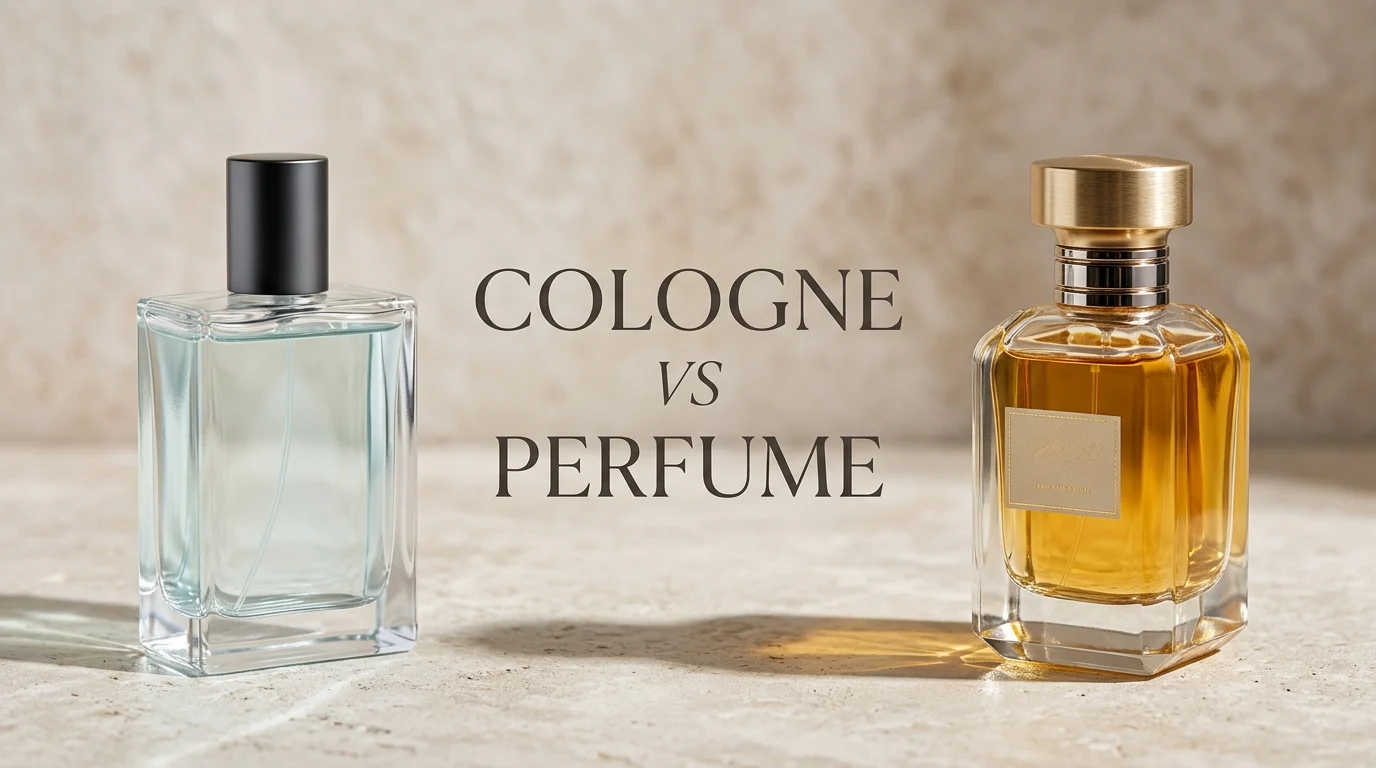
Quick Answer: Cologne vs perfume mainly comes down to fragrance concentration, scent intensity, and longevity. Perfume usually contains a higher concentration of aromatic ingredients, so it often lasts longer on the skin. Cologne generally has a lighter fragrance concentration and may need more frequent reapplication. However, the exact strength and lasting power depend on the specific fragrance formula.
Choosing between cologne and perfume can feel confusing, especially when fragrance bottles use different labels and price points. Both products are designed to make you smell pleasant, but they can differ in fragrance concentration, intensity, longevity, and price.
Many people assume cologne is exclusively for men and perfume is exclusively for women. That is not necessarily true. Anyone can wear either type, and modern fragrances are often marketed as unisex. The better choice depends on your preferred scent, budget, lifestyle, and how long you want the fragrance to last.
Understanding cologne vs perfume can also help you avoid paying more than necessary for a fragrance that does not suit your needs. In this guide, you will learn how each fragrance type works, how long it may last, how much to apply, and which option may suit different occasions.
Cologne vs Perfume: Quick Answer
Perfume generally has a higher concentration of fragrance oils than cologne, making it more concentrated and often longer lasting. Cologne is usually lighter and may be more suitable for people who prefer a subtle scent.
However, fragrance terminology can vary by brand and market. The label alone does not guarantee how strong a fragrance smells or how long it will last.
What Is Cologne?
Cologne commonly refers to Eau de Cologne, a fragrance category traditionally associated with a relatively low concentration of aromatic ingredients.
Because it is often lighter, cologne can be appealing for everyday wear, warm weather, or situations where you prefer a less intense scent. Depending on the formula, it may feature fresh, citrusy, herbal, or clean notes.
Typical characteristics of cologne include:
- A relatively light fragrance concentration
- A fresh or subtle scent profile in many traditional formulas
- Shorter lasting power in many cases
- A need for occasional reapplication
- Options across a wide range of prices
Although cologne is often marketed toward men, it is not limited to them. Anyone who enjoys the fragrance can wear it.
What Is Perfume?
Perfume is a broad term for scented products, but it can also refer specifically to highly concentrated fragrances, often labeled Parfum or Extrait de Parfum.
These products generally contain a higher proportion of aromatic ingredients than Eau de Cologne. As a result, they may provide a richer scent and longer wear, although performance varies with the formula and the person wearing it.
Common characteristics include:
- A relatively high fragrance concentration
- Potentially longer lasting power
- A more noticeable scent in some formulas
- Fewer reapplications for many users
- A potentially higher price per bottle
Perfume is available in fresh, floral, woody, spicy, sweet, and many other scent profiles. A higher concentration does not automatically mean that a fragrance will smell better or project more strongly.
Cologne vs Perfume: Key Differences
| Feature | Cologne | Perfume |
|---|---|---|
| Fragrance concentration | Usually lower | Often higher |
| Scent intensity | Frequently lighter | Can be richer or more concentrated |
| Longevity | Often shorter | Often longer |
| Reapplication | May be needed more often | May be needed less often |
| Price | Varies by brand and formula | Often more expensive at comparable brands |
| Best use | Everyday wear and subtle fragrance preferences | Longer wear or a more concentrated scent |
| Gender | Anyone can wear it | Anyone can wear it |
These are general comparisons rather than strict rules. Ingredients, skin chemistry, application, and product formulation all affect performance.
Understanding Fragrance Concentrations
Fragrances are often categorized by their concentration of aromatic ingredients. The following ranges are approximate because definitions vary between manufacturers.
| Fragrance type | Common approximate concentration |
|---|---|
| Eau de Cologne | 2% to 5% |
| Eau de Toilette | 5% to 15% |
| Eau de Parfum | 15% to 20% |
| Parfum or Extrait | 20% to 40% |
These ranges are not universal standards. Some products fall outside them, and concentration alone does not determine how long a fragrance lasts.
For example, a well formulated Eau de Toilette may last longer than a particular Eau de Parfum because fragrance ingredients evaporate at different rates.
How Long Do Cologne and Perfume Last?
Cologne often lasts a few hours, while concentrated perfumes may remain noticeable for much longer. However, there is no guaranteed duration for either type.
Several factors influence fragrance longevity:
- Ingredients: Some citrus notes fade quickly, while certain woody or musky notes may linger.
- Skin chemistry: A fragrance can smell and perform differently on different people.
- Weather: Heat can change how a scent develops and projects.
- Application: Applying fragrance to suitable skin areas may affect how noticeable it remains.
- Storage: Heat, sunlight, and air exposure can gradually affect fragrance quality.
If longevity matters to you, test a fragrance on your skin and observe it over several hours before purchasing a full bottle.
Which Is Better: Cologne or Perfume?
Neither option is universally better. Your ideal fragrance depends on your preferences and circumstances.
Choose cologne if:
- You prefer a lighter, fresher fragrance.
- You enjoy reapplying scent throughout the day.
- You want an option for casual everyday wear.
- You prefer a subtle fragrance in shared spaces.
Choose perfume if:
- You want a more concentrated fragrance.
- You prefer a scent that may last longer.
- You want fewer reapplications.
- You enjoy richer or more noticeable fragrance profiles.
You can also choose based on scent rather than concentration. A fragrance that smells wonderful on your skin may be a better purchase than a more expensive product with greater concentration.
How to Apply Cologne or Perfume
A few simple habits can help you enjoy your fragrance without overwhelming others.
- Start with one or two sprays and adjust according to the product’s strength.
- Apply to clean, dry skin.
- Avoid rubbing your wrists together, as this can alter how the fragrance develops.
- Be considerate in offices, classrooms, public transport, and other shared spaces.
- Follow product instructions and avoid spraying near your eyes or onto irritated skin.
You do not need to use a large amount of fragrance to smell pleasant. A subtle application is often enough.
Frequently Asked Questions
Is cologne weaker than perfume?
Cologne usually has a lower fragrance concentration than concentrated perfume. However, the actual scent intensity depends on the formula.
Does perfume last longer than cologne?
Often, yes. Perfume generally has a higher concentration of aromatic ingredients, but longevity varies by product and wearer.
Is cologne only for men?
No. Cologne can be worn by anyone. The term describes a fragrance category, although some brands market particular scents toward men.
Is perfume only for women?
No. Perfume is not limited to women. Anyone can wear any fragrance they enjoy.
Is cologne cheaper than perfume?
Cologne can be less expensive, but prices vary widely. Brand, bottle size, ingredients, and formulation all influence cost.
Can you wear cologne every day?
Yes. Cologne is commonly used for everyday wear. Apply an appropriate amount for your environment and personal preference.
Can you wear perfume in hot weather?
Yes, but heat can make fragrances more noticeable. Start with a small amount and choose a scent that feels comfortable in warm conditions.
Should you spray fragrance on clothes or skin?
Both methods may work, depending on the product. Skin allows the fragrance to develop with your body chemistry, while some fabrics can hold scents longer. Check the product instructions and test fabrics carefully because fragrance may stain delicate materials.
Conclusion
The main difference in cologne vs perfume is usually fragrance concentration and the way the scent performs. Cologne is often lighter and may fade sooner, while concentrated perfume often lasts longer. Nevertheless, the exact result depends on the ingredients, formulation, skin chemistry, and conditions in which you wear it.
Neither fragrance type is automatically better. Cologne may suit someone who prefers a fresh, subtle scent, while perfume may appeal to someone who wants a more concentrated fragrance with potentially longer wear.
Before buying, test the scent on your skin, check how it develops over several hours, and consider the setting where you plan to wear it. Ultimately, the best fragrance is the one you enjoy wearing comfortably and confidently.