
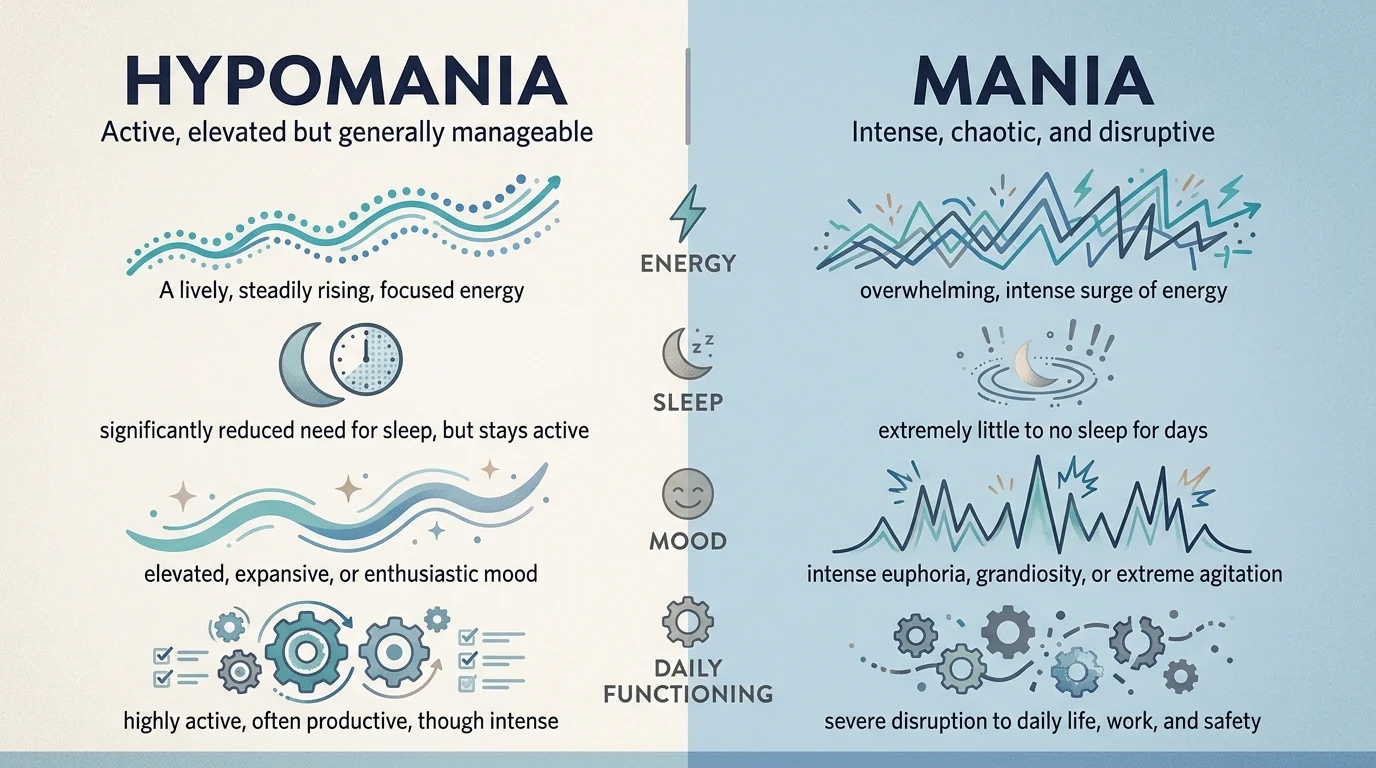
Quick Answer: Hypomania vs mania refers to two episodes of unusually elevated mood, energy, and activity. Hypomania is less severe and usually causes less disruption to daily life. Mania is more intense and can significantly affect work, relationships, judgment, and personal safety. Both may occur in disorder, but they differ in severity, duration, and impact on daily functioning.
Hypomania and mania can look similar at first. A person may feel unusually energetic, confident, talkative, or excited. They might sleep less than usual, experience racing thoughts, or start several projects at once. However, these changes can sometimes indicate a mood episode rather than ordinary happiness or productivity.
The main difference between hypomania and mania is the severity of symptoms and their impact on everyday life. Hypomania involves a noticeable change in mood and behavior, but it generally causes less disruption. Mania is more severe and can interfere significantly with work, relationships, decision making, and personal safety.
Understanding hypomania vs mania can help you recognize possible warning signs and know when to seek professional support. This guide explains the symptoms, duration, key differences, and treatment options for both conditions. Although learning about these episodes can be helpful, only a qualified healthcare professional can make an accurate diagnosis.
Hypomania vs Mania: Quick Answer
Hypomania is a period of unusually elevated or irritable mood accompanied by increased energy and activity. A person may continue working, studying, and maintaining relationships, although others might notice changes in their behavior.
Mania is a more severe episode that can significantly disrupt everyday functioning. It may involve extreme impulsivity, poor judgment, dangerous behavior, or psychotic symptoms.
What Is Hypomania?
Hypomania is a period of unusually elevated, expansive, or irritable mood combined with increased energy or activity. The change is noticeable but generally less severe than a manic episode.
Common symptoms include:
- Feeling unusually happy, confident, or energetic
- Sleeping less without feeling tired as expected
- Talking more quickly or frequently
- Experiencing racing thoughts
- Becoming easily distracted
- Taking on multiple projects
- Feeling unusually sociable or productive
- Making impulsive purchases or decisions
Some people experience hypomania as a positive or productive period. They may feel creative, motivated, and full of ideas. However, others experience irritability, restlessness, or difficulty concentrating.
Even when symptoms seem manageable, hypomania can affect relationships and decision making. It may also occur alongside depressive episodes as part of disorder.
What Is Mania?
Mania is a more intense episode of elevated or irritable mood and increased energy. It can significantly interfere with a person’s ability to manage everyday responsibilities.
Common symptoms include:
- Extremely elevated mood or intense irritability
- A greatly reduced need for sleep
- Rapid speech and racing thoughts
- Inflated confidence or unrealistic beliefs about personal abilities
- Impulsive spending or risky behavior
- Difficulty focusing on tasks
- Increased agitation or restlessness
- Hallucinations or delusions in severe cases
During mania, a person may make decisions without considering the consequences. For example, they might spend large amounts of money, take serious risks, or behave in ways that are very different from their usual personality.
Mania can require urgent medical attention, particularly when someone experiences psychosis, cannot care for themselves, or puts themselves or others in danger.
Hypomania vs Mania: Key Differences
| Feature | Hypomania | Mania |
|---|---|---|
| Severity | Less severe | More severe |
| Mood | Elevated or irritable | Often intensely elevated or irritable |
| Energy | Increased | Often markedly increased |
| Sleep | Reduced need for sleep | May involve very little sleep |
| Daily functioning | Usually less disrupted | Often significantly impaired |
| Psychosis | Not part of hypomania | Can occur |
| Hospitalization | Not typically required for the episode itself | May be necessary |
| Duration in adults | At least 4 consecutive days under standard diagnostic criteria | Usually at least 1 week, or any duration if hospitalization is necessary |
Duration alone does not determine the diagnosis. A healthcare professional also considers the person’s symptoms, behavior, medical history, and changes from their usual functioning.
How to Recognize the Difference
Consider these hypothetical examples to understand how the two episodes may appear in everyday life.
Example of hypomania: A person sleeps less than usual for several days, feels unusually energetic, talks more, and begins several new projects. They continue attending work, although colleagues notice that they seem different.
Example of mania: A person barely sleeps, speaks rapidly, spends money they cannot afford, and develops unrealistic beliefs about their abilities. Their behavior seriously disrupts their life and may require urgent medical care.
These examples illustrate general patterns rather than diagnostic rules. Real experiences vary, and professional assessment is necessary to distinguish mood episodes from other possible causes.
Can Hypomania Turn Into Mania?
Hypomania does not always progress into mania. However, mood symptoms can change over time, and some people may experience episodes of different severity.
Changes in sleep, energy, irritability, impulsivity, and behavior can provide important clues that a mood episode is developing or worsening.
If you notice these changes in yourself or someone close to you, consider contacting a healthcare professional. Avoid assuming that a period of increased energy is harmless simply because it initially feels positive.
Treatment for Hypomania and Mania
Treatment depends on symptom severity, medical history, and the person’s diagnosis. A healthcare professional may recommend medication, psychotherapy, regular sleep routines, and ongoing monitoring.
Mania may require urgent assessment or hospitalization when symptoms become severe. Hypomania can also require treatment, particularly when it occurs as part of disorder.
Maintaining consistent sleep patterns, avoiding recreational drugs, and limiting alcohol may help support mood stability. However, lifestyle changes alone may not be enough to manage a mood disorder.
Never start, stop, or change prescribed medication without consulting your healthcare professional.
When Should You Seek Help?
Seek professional advice if unusual mood changes, increased energy, reduced need for sleep, or impulsive behavior persist or interfere with daily life.
Urgent medical help is important if someone experiences hallucinations, delusions, severe confusion, dangerous behavior, or an inability to care for themselves. If there is immediate danger, contact local emergency services.
Friends and family can offer support by communicating calmly, avoiding judgment, and encouraging the person to receive appropriate care.
Frequently Asked Questions
Is hypomania less severe than mania?
Yes. Hypomania is generally less severe and causes less disruption to everyday functioning. Mania can seriously affect judgment, relationships, responsibilities, and safety.
What is the main difference between hypomania and mania?
The main difference is severity and functional impact. Hypomania usually causes less disruption, while mania can significantly impair daily functioning and may involve psychosis.
Can someone experience hypomania without feeling happy?
Yes. Hypomania can involve irritability, agitation, restlessness, or racing thoughts rather than happiness.
How long does hypomania last?
Under standard diagnostic criteria, a hypomanic episode lasts at least four consecutive days. However, duration alone is not enough to establish a diagnosis.
How long does mania last?
A manic episode usually lasts at least one week, unless hospitalization is necessary sooner. The exact course varies between individuals.
Can hypomania affect relationships?
Yes. Irritability, impulsive decisions, increased activity, and changes in communication can create relationship difficulties even when a person continues their daily responsibilities.
Are hypomania and mania treatable?
Yes. Professional treatment can help manage symptoms and reduce their impact. The appropriate approach depends on the individual’s condition and needs.
Can you diagnose hypomania or mania yourself?
No. Online information can help you recognize possible warning signs, but a qualified healthcare professional must assess symptoms and other possible causes.
Conclusion
The main difference in hypomania vs mania is the intensity of symptoms and how much they affect everyday life. Hypomania involves increased energy and elevated or irritable mood with relatively less disruption. Mania is more severe and can lead to major functional difficulties, risky decisions, or psychotic symptoms.
Both conditions deserve attention, especially when changes in sleep, mood, speech, or behavior are unusual for the individual. Although hypomania may initially feel productive or enjoyable, it can still be associated with a significant mood disorder. Mania may require urgent medical care.
If you recognize these patterns in yourself or someone close to you, seek guidance from a qualified healthcare professional rather than relying on online comparisons. Early assessment and appropriate treatment can help people manage symptoms and improve their quality of life.