
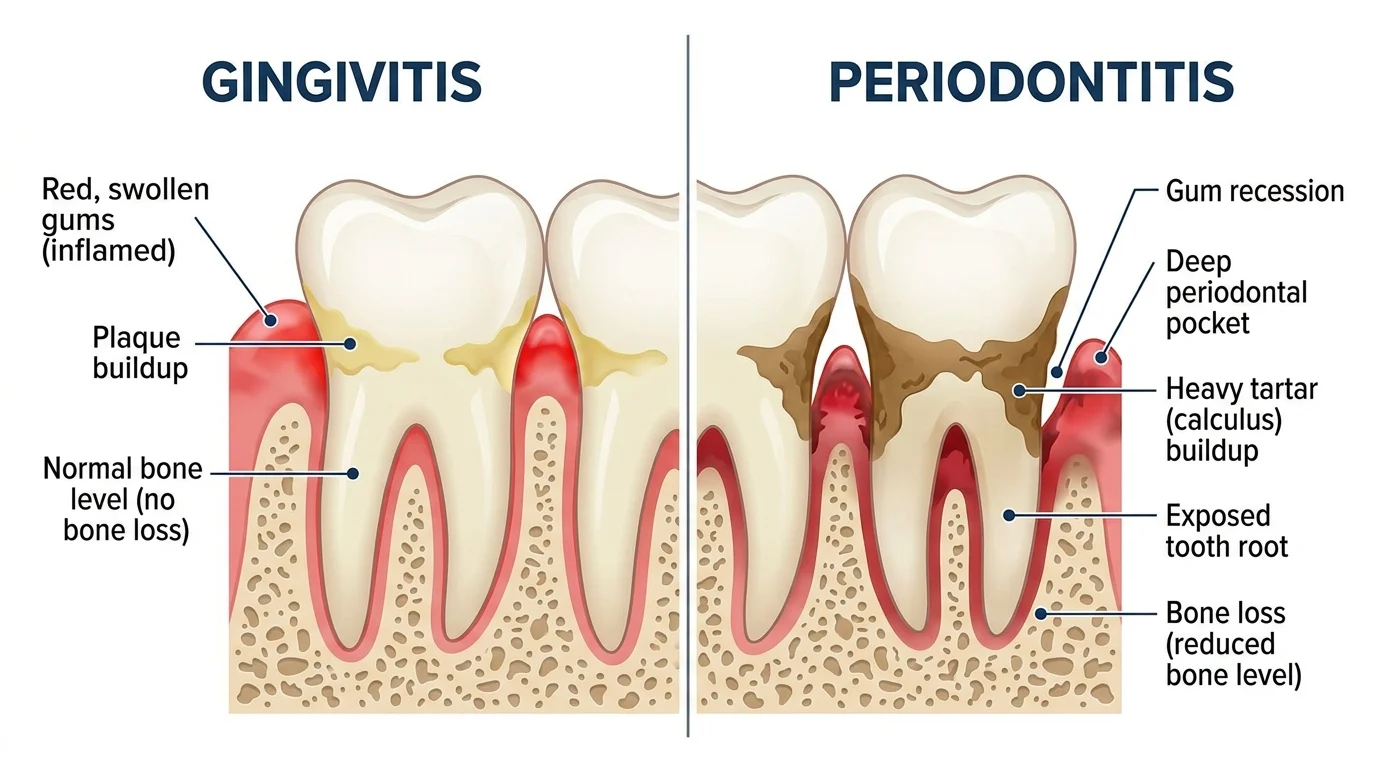
Quick Answer: Gingivitis is an early stage of gum disease that causes red, swollen, or bleeding gums. It is usually reversible with good oral hygiene and professional cleaning. Periodontitis is a more advanced condition that damages the tissues and bone supporting the teeth. It cannot be fully reversed, but professional treatment can help control it and prevent further damage.
Gum problems can begin with something as simple as bleeding while brushing your teeth. However, this symptom may indicate more than one condition. Understanding gingivitis vs periodontitis can help you recognize the warning signs of gum disease and know when to seek dental care.
Both conditions involve inflammation of the gums and often develop because of plaque buildup. However, they differ in severity, the extent of damage, and the treatment required. Gingivitis generally affects the gums without destroying the bone or connective tissues that hold teeth in place. Periodontitis can damage these supporting structures and may eventually cause tooth loss if left untreated.
The good news is that early recognition and appropriate dental care can make a significant difference. This guide explains the main differences between gingivitis and periodontitis, including their symptoms, causes, treatments, and prevention methods.
What Is the Difference Between Gingivitis and Periodontitis?
The main difference is that gingivitis causes inflammation of the gums, while periodontitis damages the tissues and bone that support the teeth. Gingivitis is usually reversible, whereas periodontitis requires professional management to prevent further damage.
| Feature | Gingivitis | Periodontitis |
|---|---|---|
| Severity | Early stage of gum disease | More advanced gum disease |
| Main affected area | Gums | Gums, connective tissue, and supporting bone |
| Common symptoms | Redness, swelling, and bleeding | Bleeding, gum recession, and possible loose teeth |
| Bone loss | No | Yes |
| Reversible | Usually yes | No, existing bone loss cannot generally be restored naturally |
| Treatment | Oral hygiene and professional cleaning | Deep cleaning and sometimes surgery or other treatments |
| Risk of tooth loss | Low when treated promptly | Higher if the condition progresses untreated |
These differences are consistent with guidance from the CDC and the National Institute of Dental and Craniofacial Research.
What Is Gingivitis?
Gingivitis is inflammation of the gums, commonly caused by plaque accumulating around the gumline. Plaque contains bacteria that irritate gum tissue when it is not removed regularly.
Common symptoms include:
- Red or swollen gums
- Bleeding during brushing or flossing
- Tender gums
- Persistent bad breath
Gingivitis does not cause the bone loss associated with periodontitis. With consistent brushing, daily cleaning between the teeth, and professional dental cleaning when needed, it can often be reversed.
For example, if your gums bleed when you brush but your dentist finds no loss of supporting bone, gingivitis may be the cause. A dental examination is necessary to confirm the diagnosis.
What Is Periodontitis?
Periodontitis is a more serious gum disease that damages the tissues supporting the teeth. It can develop when inflammation and infection extend beyond the gums.
Possible symptoms include:
- Gums pulling away from the teeth
- Persistent bad breath
- Sensitive teeth
- Pain or discomfort when chewing
- Teeth that feel loose or shift position
- Changes in how your teeth fit together
Periodontitis can progress without obvious pain, so the absence of discomfort does not rule it out. Dentists may examine gum pockets and use dental X rays to assess supporting bone.
Although existing bone loss is not generally reversible, treatment can control the disease and reduce the risk of additional damage.
Gingivitis vs Periodontitis: Causes and Risk Factors
Both conditions are commonly associated with plaque buildup. When plaque remains on the teeth, it can harden into tartar, which requires professional removal.
Several factors can increase the risk of gum disease:
- Inconsistent brushing and flossing
- Smoking or using other tobacco products
- Diabetes
- Genetic susceptibility
- Hormonal changes
- Certain medications
- Difficulty cleaning crowded teeth
Gingivitis does not always progress to periodontitis. However, untreated gum inflammation can increase the risk, especially when other risk factors are present.
Treatment Options for Both Conditions
Gingivitis treatment
Treatment usually focuses on removing plaque and improving oral hygiene. A dentist may recommend professional cleaning, brushing twice daily with fluoride toothpaste, and cleaning between the teeth every day.
Periodontitis treatment
Periodontitis often requires more extensive care. A dentist may recommend scaling and root planing, commonly called deep cleaning, to remove deposits from below the gumline. Medication or periodontal surgery may be appropriate in certain cases.
Treatment depends on the severity of the disease. Regular follow up visits and daily oral care are important for maintaining results.
When Should You See a Dentist?
Arrange a dental appointment if your gums bleed repeatedly, remain swollen, or appear to be pulling away from your teeth. Loose teeth, painful chewing, or noticeable changes in your bite also require prompt evaluation.
Do not assume that bleeding gums are harmless simply because they do not hurt. A dentist can distinguish gingivitis from periodontitis by examining your gums and checking for supporting tissue damage.
Frequently Asked Questions
1. Is gingivitis the same as periodontitis?
No. Gingivitis affects the gums without the supporting bone loss associated with periodontitis. Periodontitis damages the structures that keep teeth firmly in place.
2. Which is worse, gingivitis or periodontitis?
Periodontitis is more serious because it can destroy supporting tissue and bone, potentially leading to tooth loss.
3. Can gingivitis turn into periodontitis?
Yes. Untreated gingivitis can progress to periodontitis, although this does not happen in every case.
4. Can gingivitis be reversed?
Yes. Gingivitis can often be reversed through effective oral hygiene and professional dental cleaning.
5. Can periodontitis be cured?
Periodontitis cannot generally be reversed completely because lost supporting bone does not naturally return to its original state. However, professional treatment can control the disease.
6. Do both conditions cause bleeding gums?
Yes. Bleeding gums can occur with either condition, so bleeding alone cannot establish which one you have.
7. Can you have periodontitis without pain?
Yes. Periodontitis may develop with few noticeable symptoms, particularly in its earlier stages.
8. How can I prevent gum disease?
Brush twice daily, clean between your teeth every day, avoid tobacco, and attend regular dental checkups and professional cleanings.
Conclusion
Understanding gingivitis vs periodontitis helps you recognize why gum health deserves attention. Although both conditions involve inflammation, gingivitis is an early form of gum disease that can usually be reversed with proper care. Periodontitis is more serious because it damages the tissues and bone supporting the teeth.
The most effective approach is to prevent plaque buildup, maintain a consistent oral hygiene routine, and seek dental advice when symptoms appear. Bleeding gums, persistent swelling, gum recession, and loose teeth should never be ignored. Because gum disease can progress without significant pain, regular dental examinations are important even when your mouth feels normal.
If you notice possible signs of either condition, consult a dentist for an accurate diagnosis and suitable treatment plan. Early care can help protect your gums, preserve your natural teeth, and support long term oral health.