
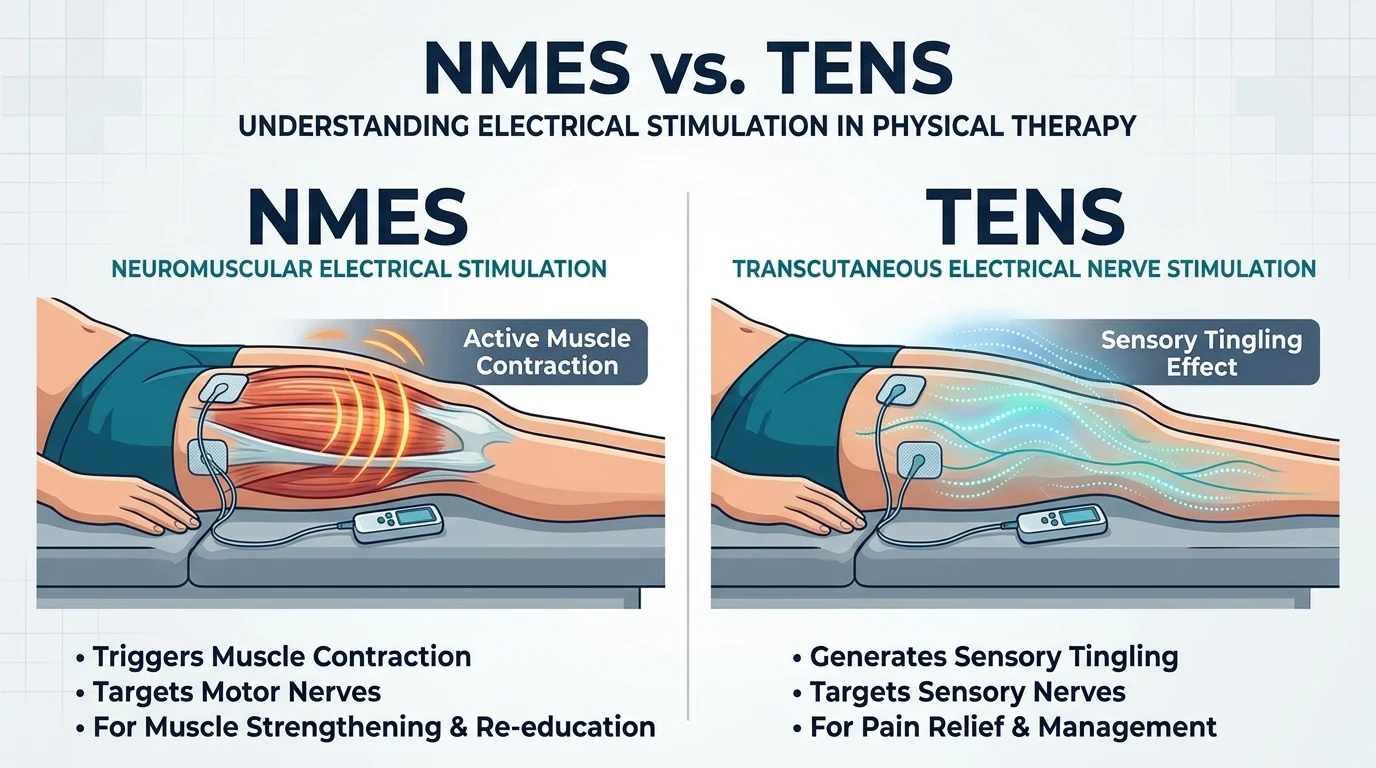
Quick Answer: NMES vs TENS compares two types of electrical stimulation therapy used in rehabilitation. NMES, or neuromuscular electrical stimulation, stimulates muscles to contract and helps support muscle strengthening and rehabilitation. TENS, or transcutaneous electrical nerve stimulation, primarily stimulates sensory nerves to help relieve pain temporarily. The best option depends on the treatment goal and guidance from a healthcare professional.
Electrical stimulation is commonly used in physical therapy and rehabilitation to help manage pain, activate muscles, and support recovery. Two methods you may encounter are NMES and TENS. Although both use electrical impulses delivered through electrodes placed on the skin, they serve different purposes.
NMES focuses on stimulating muscles to produce contractions. Physical therapists may use it to help activate weak muscles, support muscle reeducation, and reduce muscle loss associated with inactivity. TENS, on the other hand, primarily targets sensory nerves to help reduce the perception of pain.
Understanding NMES vs TENS can help you learn why a therapist might recommend one treatment instead of the other. However, neither device is suitable for every condition, and results vary from person to person.
In this guide, we explain how each therapy works, compare its common uses, discuss potential benefits and precautions, and help you understand the difference between muscle stimulation and pain relief.
NMES vs TENS: Quick Answer
The main difference between NMES and TENS is their primary purpose.
- NMES: Activates muscles and produces visible muscle contractions to support rehabilitation.
- TENS: Stimulates sensory nerves to help provide temporary pain relief.
NMES is often considered when muscle activation or strengthening is a treatment goal. TENS may be considered when pain relief is the main objective. A healthcare professional can determine whether either method is appropriate for a particular condition.
What Is NMES?
NMES stands for neuromuscular electrical stimulation. It uses electrical impulses delivered through electrodes to activate motor nerves and make targeted muscles contract.
Physical therapists may use NMES when a person has difficulty activating a muscle voluntarily. For example, muscle activation can become difficult after surgery, injury, or a period of immobilization.
Common uses of NMES
NMES may be used to:
- Support muscle strengthening during rehabilitation
- Help activate weak muscles
- Reduce disuse related muscle loss
- Support neuromuscular reeducation
- Assist selected rehabilitation programs after neurological injury
During treatment, you may feel tingling followed by a noticeable muscle contraction. The intensity and contraction pattern depend on the device settings and the treatment plan.
NMES is generally used as part of a broader rehabilitation program. It does not automatically restore strength or replace appropriate exercise.
What Is TENS?
TENS stands for transcutaneous electrical nerve stimulation. It delivers low voltage electrical impulses through electrodes placed on the skin to stimulate nerves involved in pain signaling.
The stimulation may change how the nervous system processes pain signals. It may also encourage the release of natural pain relieving chemicals. However, the response varies, and TENS does not work equally well for everyone.
Common uses of TENS
TENS may be used to help manage certain types of pain, including:
- Back pain
- Joint pain
- Some sports related injuries
- Period pain
- Certain chronic pain conditions
During treatment, people usually experience a tingling sensation. The setting should feel strong but comfortable rather than painful.
TENS primarily addresses symptoms. It does not necessarily treat the underlying cause of pain, so an appropriate assessment remains important.
NMES vs TENS: Key Differences
| Feature | NMES | TENS |
|---|---|---|
| Full name | Neuromuscular electrical stimulation | Transcutaneous electrical nerve stimulation |
| Main target | Motor nerves and muscles | Primarily sensory nerves |
| Primary purpose | Produce muscle contractions | Help relieve pain |
| Typical sensation | Tingling with muscle contraction | Comfortable tingling |
| Common setting | Physical therapy and rehabilitation | Pain management |
| Main goal | Support muscle activation and function | Reduce pain perception |
| Replaces exercise or medical treatment? | No | No |
Both therapies use electrical stimulation, but the intended treatment outcome differs.
How Do NMES and TENS Work?
NMES stimulates motor nerves, causing the targeted muscles to contract. These contractions can help therapists work on muscle activation when ordinary voluntary movement is difficult or limited.
TENS primarily stimulates sensory nerves. This input can influence pain signaling and may reduce the intensity of pain during or shortly after treatment.
The difference is not simply the amount of electricity used. Devices also differ in their settings, pulse patterns, electrode placement, and intended physiological effects.
Which Is Better: NMES or TENS?
Neither therapy is universally better. The right choice depends on what you want to achieve and what is causing your symptoms.
NMES may be more appropriate when:
- A muscle needs help activating.
- Rehabilitation focuses on muscle function.
- A therapist wants to address weakness associated with inactivity.
- Electrical stimulation is part of a structured recovery plan.
TENS may be more appropriate when:
- Pain relief is the primary goal.
- A healthcare professional recommends trying electrical stimulation for a suitable pain condition.
- Temporary symptom relief could help you participate more comfortably in daily activities.
Some rehabilitation plans use different methods for different purposes. A therapist can explain which approach fits your needs and whether combining treatments is appropriate.
Safety and Precautions
Both NMES and TENS are generally noninvasive, but incorrect use can cause skin irritation, discomfort, or burns. Follow the device instructions and your healthcare professional’s guidance.
Seek medical advice before using either therapy if you have a pacemaker or another implanted electronic device, reduced skin sensation, a significant medical condition, or a recent operation. Extra precautions may be necessary during pregnancy.
Do not place electrodes over the front of the neck, across the chest, or on damaged or irritated skin unless a qualified professional specifically directs you. Never use a device in water or while driving.
Stop treatment if you experience pain, unusual symptoms, or significant skin irritation.
Frequently Asked Questions
Is NMES the same as TENS?
No. NMES primarily stimulates muscles to contract, while TENS primarily stimulates sensory nerves to help manage pain.
Does NMES build muscle?
NMES can support muscle activation and strengthening as part of an appropriate rehabilitation program. Results depend on the condition, treatment settings, and overall exercise plan.
Does TENS make muscles contract?
Conventional TENS is generally designed to produce a comfortable tingling sensation without a strong muscle contraction. Some stimulation methods may produce contractions, depending on their settings.
Which is better for pain relief?
TENS is primarily intended for pain relief. NMES may have a role in rehabilitation when muscle activation is the main goal, although treatment needs can overlap.
Can you use NMES and TENS together?
A healthcare professional may recommend different stimulation methods within the same rehabilitation plan. Whether they should be used together depends on the condition, device, and treatment goals.
Are NMES and TENS safe to use at home?
Some devices are designed for home use, but correct placement, settings, and safety screening matter. Ask a healthcare professional for advice before starting treatment.
Does TENS cure the cause of pain?
No. TENS may provide temporary symptom relief, but it does not necessarily address the underlying cause of pain.
Conclusion
The main difference in NMES vs TENS is the goal of treatment. NMES activates motor nerves to produce muscle contractions and support rehabilitation, while TENS primarily stimulates sensory nerves to help reduce pain.
If your treatment goal involves muscle activation or weakness, a therapist may consider NMES. If your main concern is pain, TENS may be an option for certain conditions. However, neither method guarantees results, and both should be used appropriately.
Before choosing a device, consider your symptoms, medical history, and rehabilitation goals. A qualified healthcare professional can help determine which approach is suitable and explain how to use it safely. Electrical stimulation may support recovery, but it should complement rather than replace necessary medical care and rehabilitation exercises.