Discrete or Discreet: What’s the Difference? Easy Rules, Examples & Tips
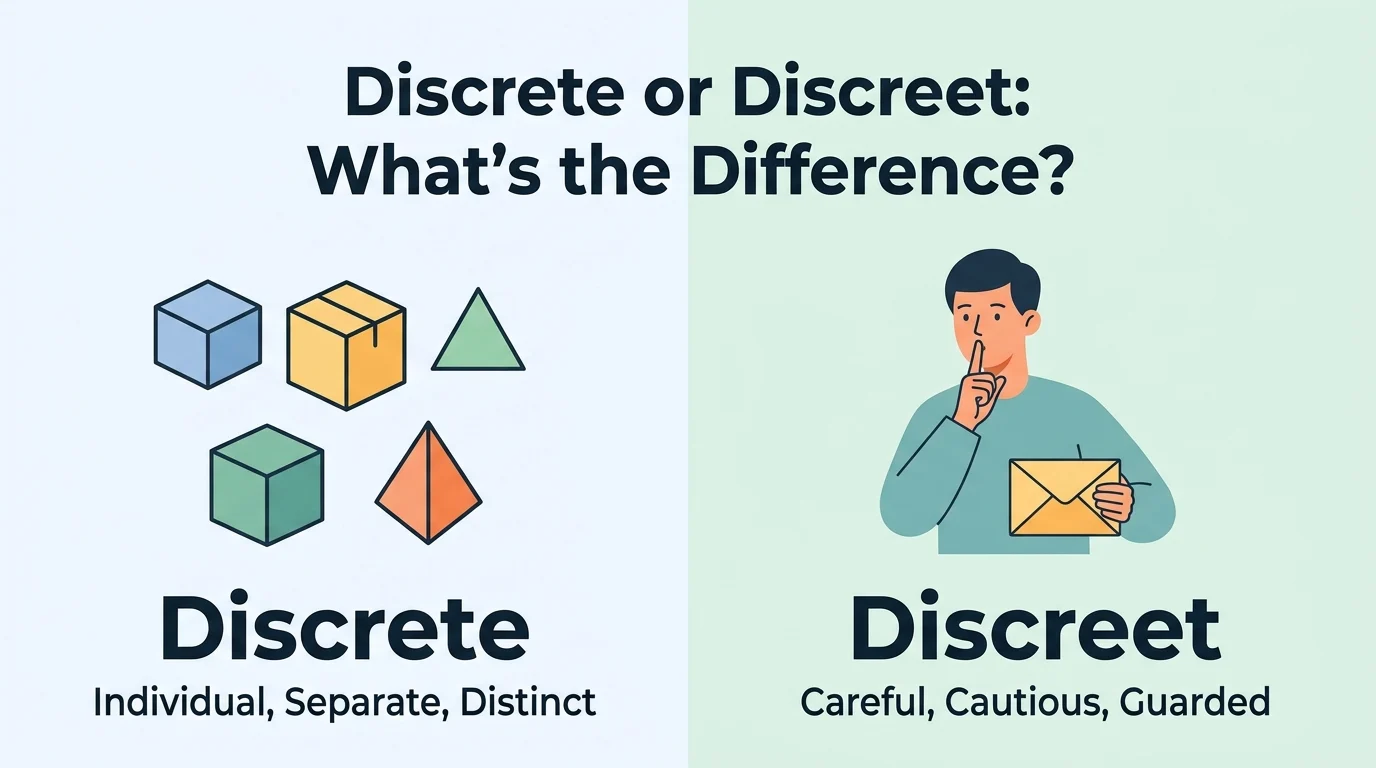
discrete or discreet

Quick Ans: Discrete and discreet are different words with different meanings. Discrete means separate, distinct, or individually different. Discreet means careful, tactful, and not likely to attract attention. A simple way to remember them is that discrete is about things being separate, while discreet is about behaving carefully or privately. Discrete or discreet can be … Read more
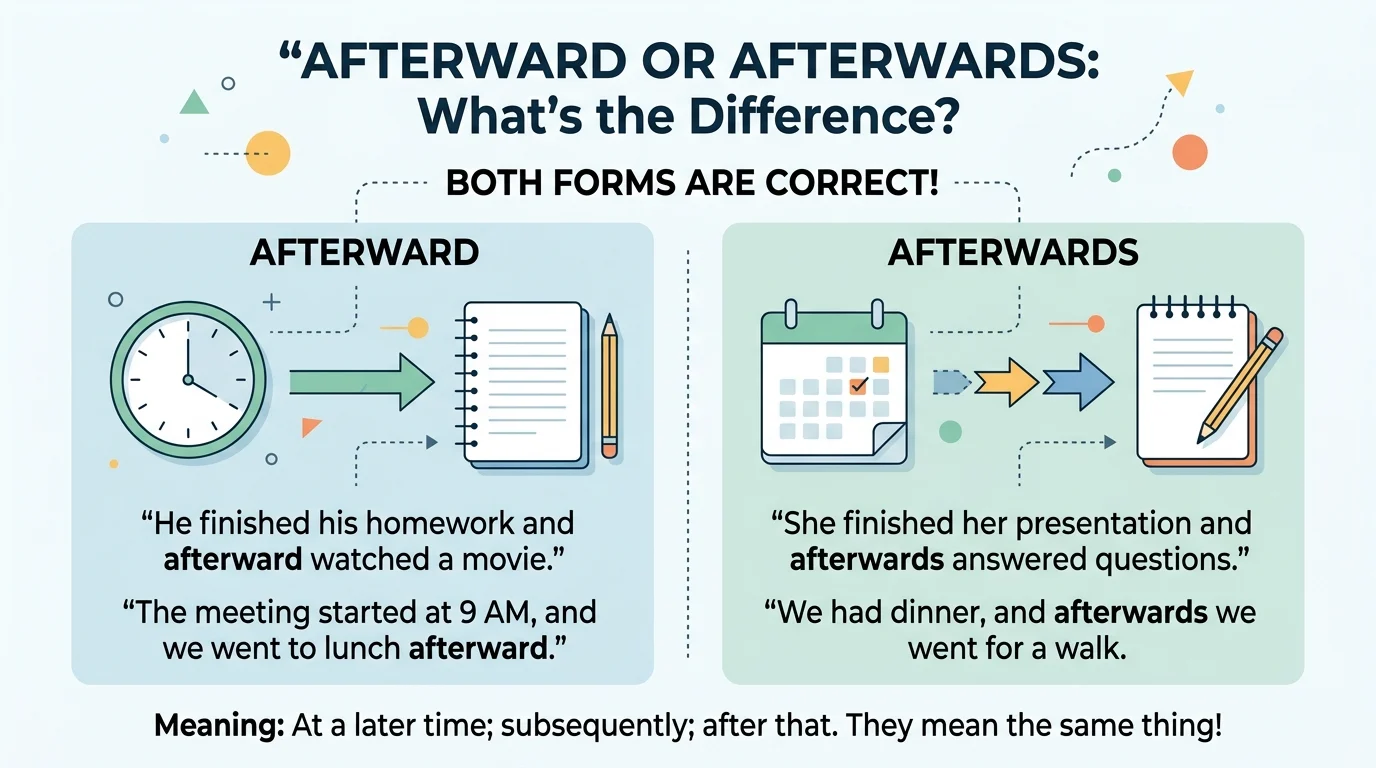
Afterward or Afterwards: What’s the Difference? Easy Rules & Examples

afterward or afterwards

Quick Ans: Afterward and afterwards are both correct adverbs meaning “at a later time” or “later.” Afterward is more common in American English, while afterwards is more common in British English and other varieties. The two words have the same meaning and can usually be used interchangeably. Choose one based on your preferred style and … Read more

Por or Para: What’s the Difference? Easy Rules, Examples & Tips

por or para

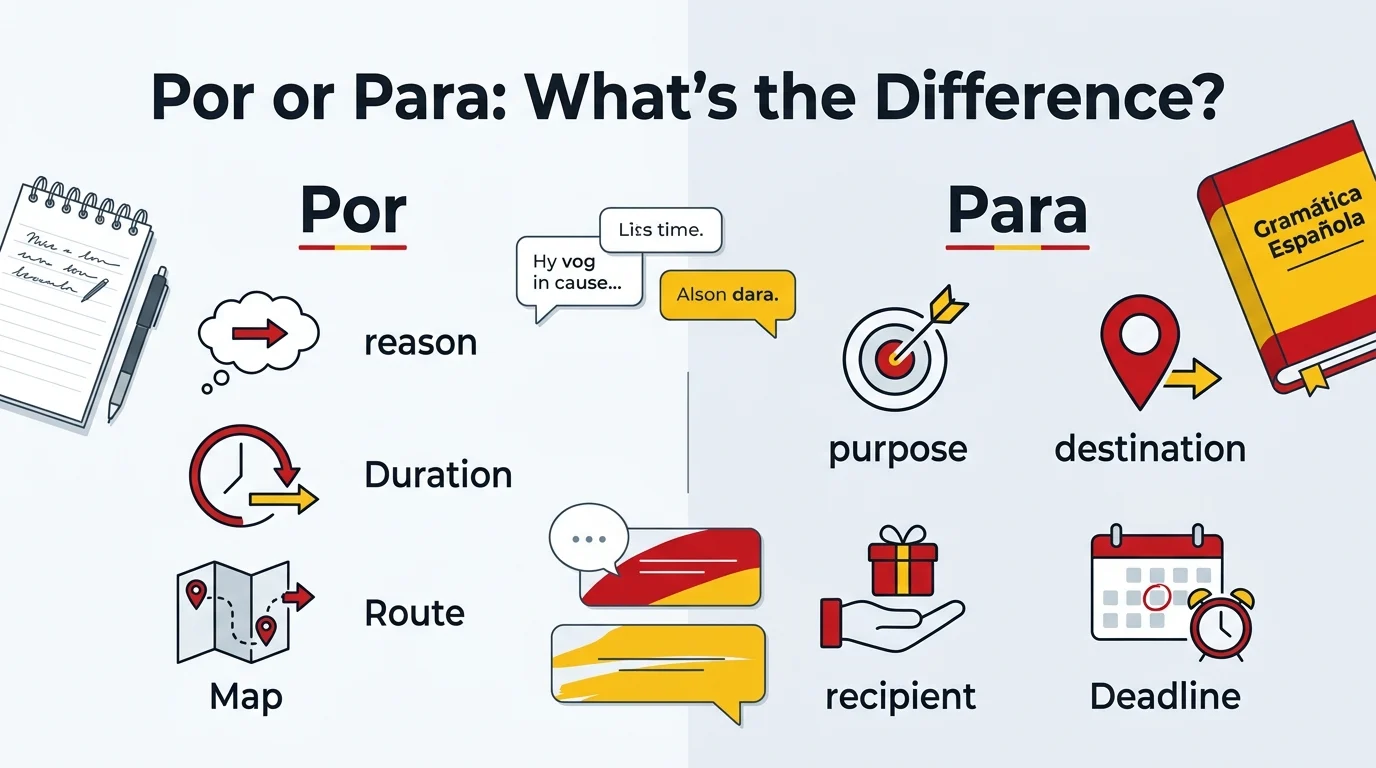
Quick Ans: Por and para are both Spanish prepositions, but they have different uses. Para often expresses purpose, destination, a recipient, or a deadline, while por commonly expresses a reason, duration, exchange, movement through an area, or means. Learning the basic patterns makes it much easier to choose between por and para correctly. Por or … Read more

Further or Farther: What’s the Difference? Easy Rules, Examples & Tips

further or farther

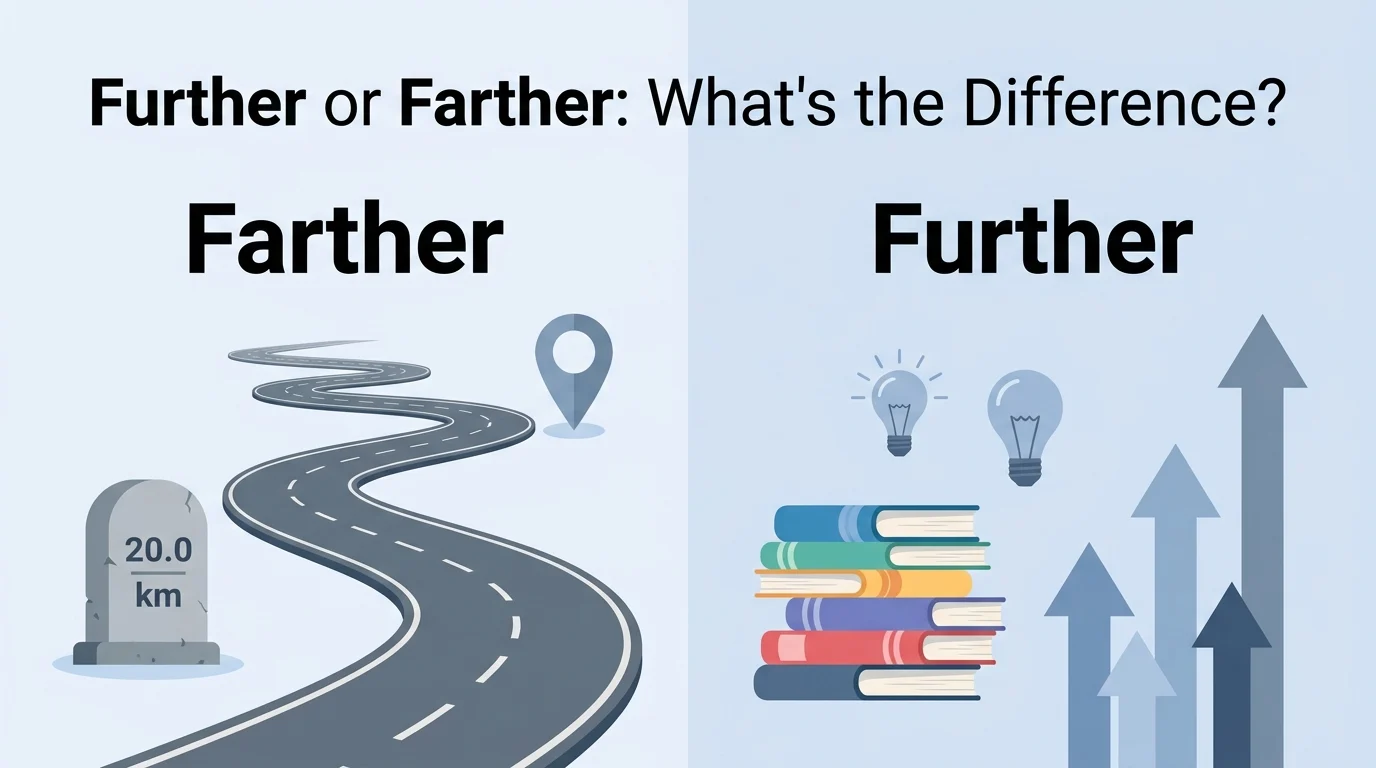
Quick Ans: Further and farther both describe distance, but they are used differently. Farther usually refers to physical distance, while further often refers to figurative distance, progress, or additional information. However, in modern English, further can also describe physical distance in some situations. Are you confused about whether to use further or farther? These two … Read more

Extinct or Alive: What’s the Difference? Easy Meaning, Examples & Tips

extinct or alive

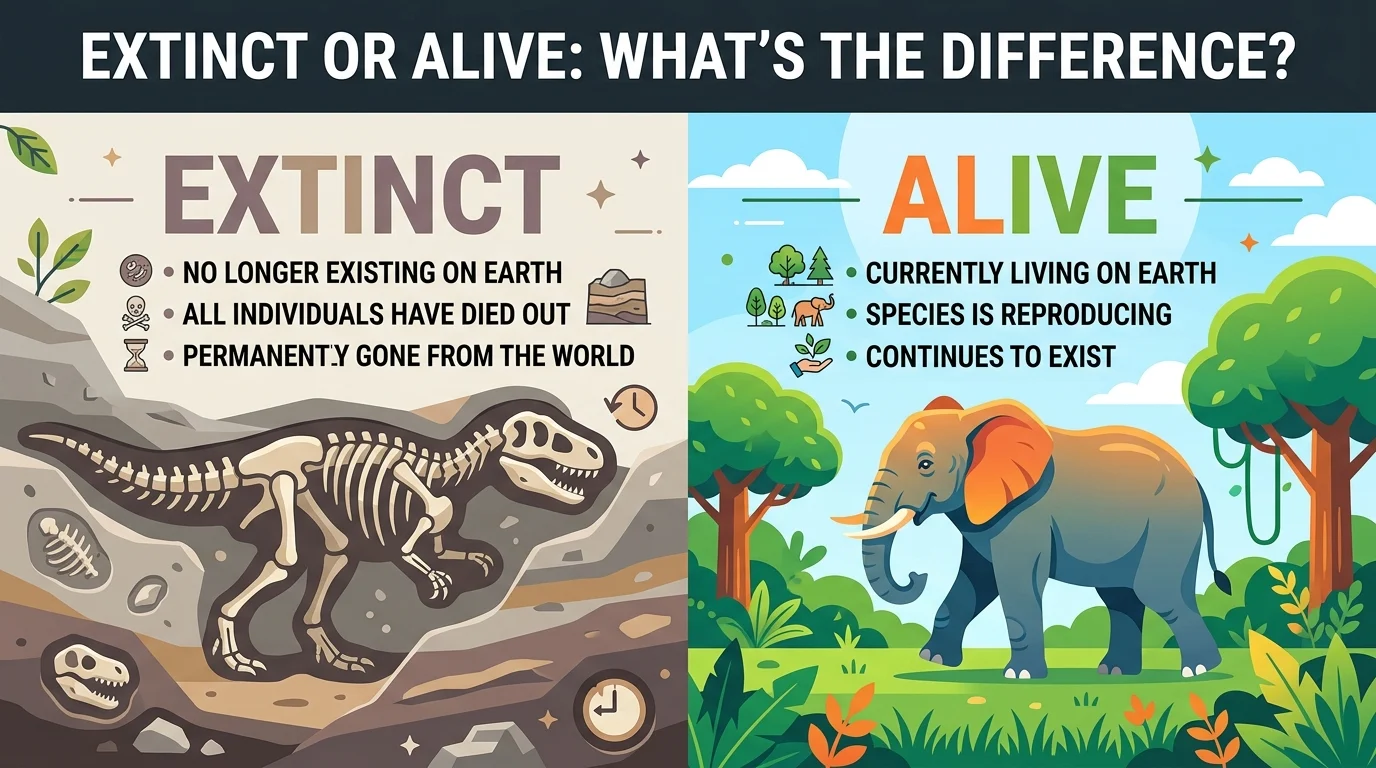
Quick Ans: Extinct means a species, language, tradition, or thing no longer exists. Alive means it still exists or continues to function. The phrase “extinct or alive” is used to compare whether something has disappeared completely or is still present today. Are you wondering about the difference between extinct or alive? These two words describe … Read more

Nosy or Nosey: What’s the Difference? Easy Rules, Examples & Tips

nosy or nosey

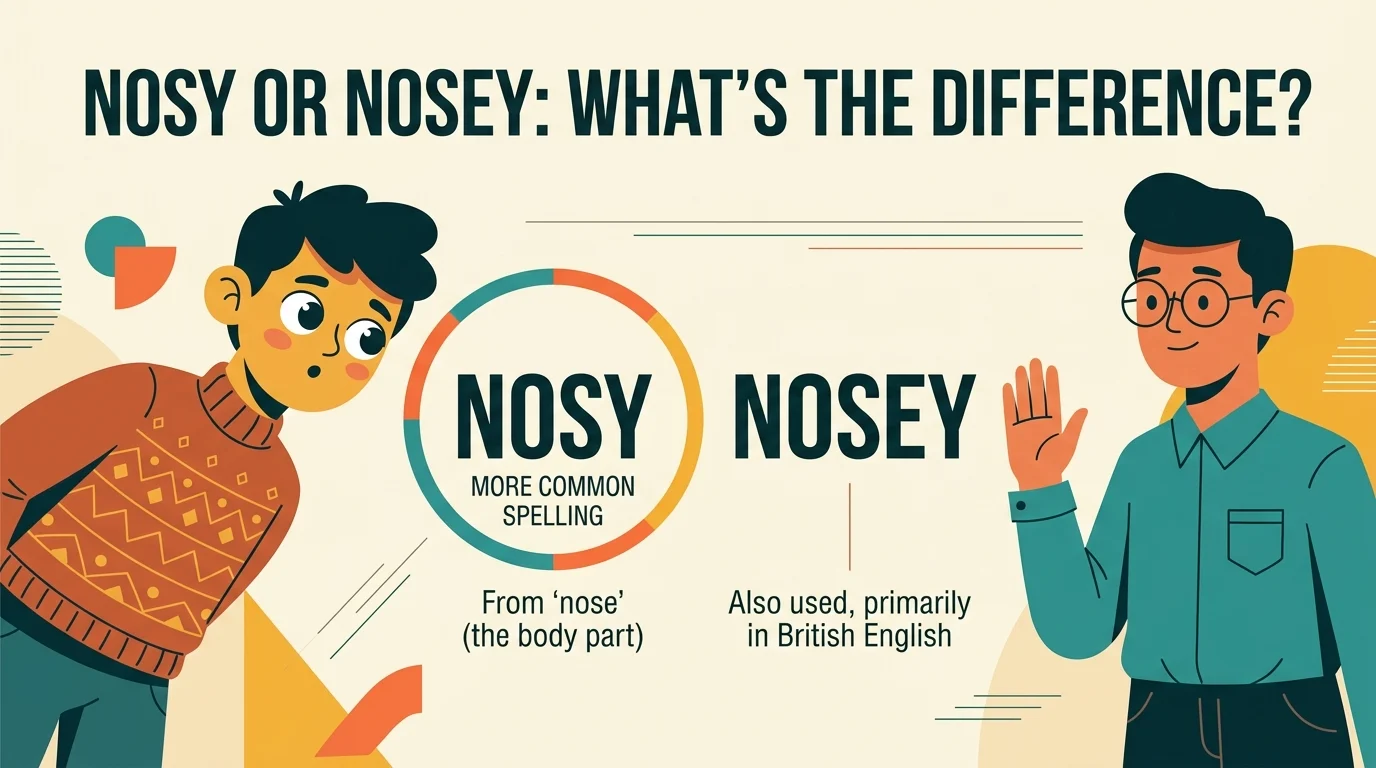
Quick Ans: Nosy and nosey are both accepted spellings of the same adjective meaning too interested in other people’s private matters. However, “nosy” is the more common spelling, especially in American English. Both forms describe someone who asks too many personal questions or tries to discover information that does not concern them. Are you confused … Read more

Do or Die Meaning, Definition & Examples in English 2026

do or die

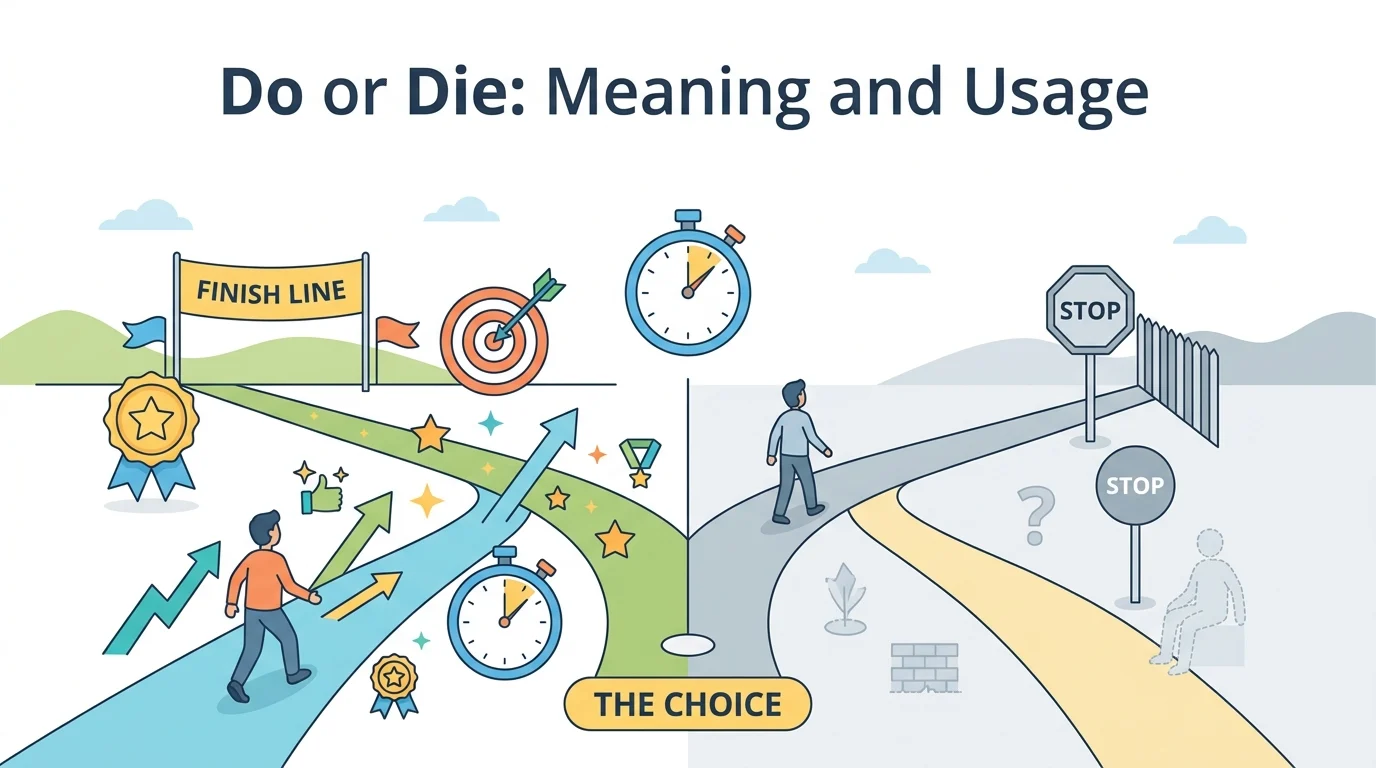
Quick Ans: “Do or die” is an expression that means a situation is extremely important and requires complete effort because failure may have serious consequences. It can describe a final attempt, urgent decision, or moment when someone must succeed. The phrase is often used in sports, work, and everyday conversations. What does “do or die” … Read more